by Teet Carle
I met her only twice briefly, once just after the start of her film career and finally just before the end of that career and of her life. Yet the actress whom I knew not even slightly wrapped up a part of my memory in one of the most poignant impressions that survive after forty years as a studio press agent.
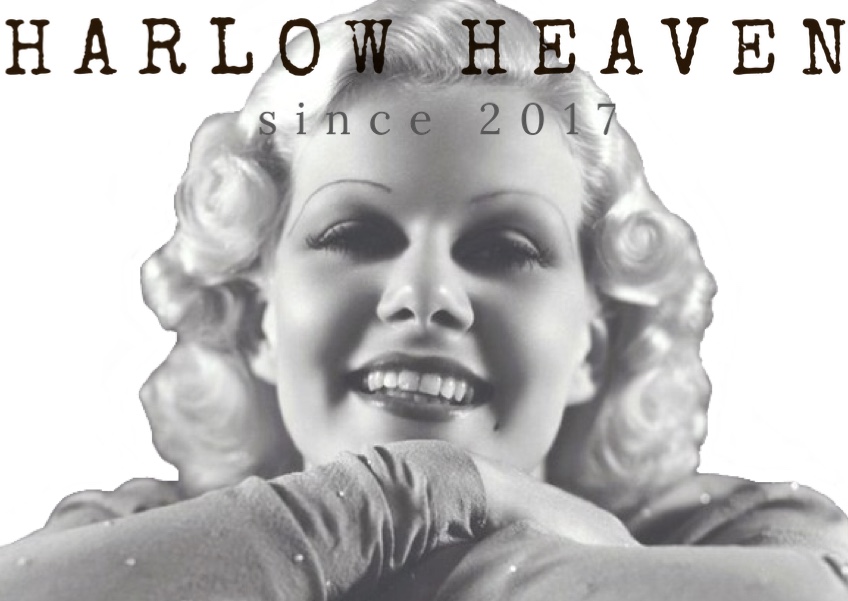
She was Jean Harlow, on whom was hung the apt tag, The Platinum Blonde. It was a trade-mark as lasting in the world of show business as are the “It” Girl, The Keystone Kops and The Floradora Girl.
The first meeting was on the set of a Clara Bow starrer called “The Saturday Night Kid”. I was the unit publicist and it was the summer of 1929. Talking pictures had just revolutionized the movie industry and jostled the lives of many silent film favorites. That was one of Miss Bow’s first talkies. Ironically, it was among the very last appearance she was to make on the screen.
She had been Paramount’s biggest box office star, a public favorite who received 20,000 letters a week. But when she began to speak from the mammoth screen, her Brooklyn “brogue” irritated the ear drums of theatre audiences. Paramount soon was to let her contract lapse and she was to finish her brilliant career with two “dogs” at 20th Century-Fox.
The male star of “The Saturday Night Kid” was James Hall, now long forgotten since he died much too young. Jean Arthur was a young studio contractee and was cast as the conniving, man-stealing, bitchy younger sister of Miss Bow. One of the featured actors was Frank Ross, who has since become a top film producer.
The story concerned a group of department store sales girls and one of them was played by an 18-year-old newcomer named Jean Harlow. She was not billed on the opening title but was credited in the cast of characters at the end.
I had my job well defined in plugging Hall and Miss Bow. She was shakey [sic] about her future, which was as important to money-conscious Paramount as to her. The last thing I needed as a bit player sex-pot who might steal the limelight as Jayne Mansfield had done with Jane Russell at a junket in Florida.. Jayne and her pair of cantaloupes. But neither Harlow nor Miss Bow were bosomy. In fact, both were quite flat-chested–if that’s important!
All castings rate a press release, of course. So I took the young Miss Harlow at one side and talked with her for about a half hour. I got all the necessary facts. After that, the most I did for Miss Harlow was to wave her way when I came on the stage.
There was some minor “relating”. She said she had been born in Kansas City (in 1911) as Harlean Carpenter, daughter of a dentist and a mother whose maiden name was Jean Harlow. Kansas City ignited slight rapport. As a high school lad in Emporia, Kansas, it had been the only “big city” I knew. My buddies and I would weekend there to catch the vaudeville bill at the Orpheum and see a traveling-company play starring Lionel Barrymore or Otis Skinner. And come home with cartons of cigarettes which were unlawful to sell or buy in Kansas. But not to inhale, if you can figure that. So the girl and I talked some about Kansas City.
The young blonde admitted being freshly up from the extra ranks, with only two bits to her credit — in Hal Roach comedies. Those were all the facts. But there was must [sic] conjecture about her and I shied from asking about it. Like I said, I didn’t relish waving a bit player’s notoriety in our jittery star’s face. You see, Miss Harlow was driven to work and picked up at day’s end by a gigantic, shiny limousine driven by a chauffeur in livery. It was reported she was an heiress. I refrained from probing. I asked myself what if she was a gangster’s “protege”? Best not to know too much.
I was told later that the chauffeur was her step-father, Marino Bello, who was helping the girl build a mysterious image. It was true that she was from a family of affluence, especially her grandfather. She had just been divorced from a businessman with whom she had eloped from a swanky school when she was sixteen. Doing extra work and playing bits had been a lark — a hobby. From now on, she knew it could be the way to make a living — a fortune, a niche with the immortals.
It was a bit of more irony that this nonentity in a Clara Bow movie was to become the chief Sex Queen of the Thirties, as Miss Bow was in the Twenties. Howard Hughes had to replace Greta Nissen in “Hell’s Angels”
*[article, unfortunately, cuts off as it continues on a much different paragraph on its next page]
Harlow, age 26, had died. “Saratoga” seemed a jinxed movie. It was on the set of this picture that Lionel Barrymore, playing Jean’s grandfather, stumbled over an electric cable and sustained a hip injury that was to keep him in a wheel chair, on screen and off, the remainder of his life. Now, the bright female star had died.
But there were only a few Harlow scenes left to be made. Luckily, in the sequence unfinished, she had worn a large hat that flopped over part of her face. The casting office found an actress named Mary Dees. Made up, she looked so much like the so-recently one star that it was startling. Lunchers gasped when she came into the commissary the first noon. After that, she was served lunch in privacy.
The movie was finished and released quickly. It was immensely successful. The studio had, at first, considered junking everything. Had it never been exhibited, Walter Pidgeon might never have been star he became. The studio had been about to drop him. In “Saratoga”, he blossomed. So did his career.
Bu what I most vividly remember about Jean Harlow was one morning in the chapel at Forest Lawn. Her funeral was so beautifully handled. I was assigned to ride in a studio car to Nelson Eddy’s home and see that he arrived safely and on time at the rear entrance of the chapel. A publicist named John Woolfenden brought Jeanette MacDonald.
We were all there behind the thick curtains surrounding the flower-decked casket. Nelson Eddy was the first soloist, singing unseen from behind those drapes. He was, as always, magnificent.
There was a eulogy, some other words. And it was time for Jeanette MacDonald to sing “Ah, Sweet Mystery of Life”. The organ began. Her voice rose. A few words clothed in her familiar soprano. Then a faltering. We looked her way. She was swaying. Then there was Eddy, so often her partner in famous movie duets, joining her in song at a funeral.
They sang together all the way. Strongly. Effectively, No one would have guessed it had never been thusly planned. Memorable? Yes! One time when “I was there”.

