“The story of a platinum blonde who wouldn’t go off the gold standard!”
Metro-Goldywn-Mayer / Dir. Jack Conway
71 mins.
Production: late March or April 1934 — June 6, 1934 (AFI cites a late March state, David Stenn’s Bombshell cites April. Either way, Harlow was taking publicity portraits for it as early as January)
Release date: August 3, 1934
Release status: Available to watch online and on DVD.
Cast: Jean Harlow (Eadie Chapman), Patsy Kelly (Kitty Lennihan), Lionel Barrymore (T.R. Paige), Franchot Tone (Tom Paige, Jr.), Lewis Stone (Frank Cousins), Alan Mowbray (Lord Douglas), Clara Blandick (Miss Newberry), Hale Hamilton (Charlie Turner), Henry Kolker (Senator Titcombe), Nat Pendleton (Lifeguard), Wyndham Standing (Butler), Carol Tevis (Baby talker), Gladys Hulette (Secretary)
Summary: Eadie Chapman (Jean Harlow), daughter of a seedy Missouri beer hall matron and her tough-talking husband, has a clue she can get more out of life than working for her stepfather, taking a train to New York City with her best friend Kitty (Patsy Kelly) to find it. Things go topsy turvy when the girls land a spot in the chorus line for a party at millionaire Frank Cousins (Lewis Stone)’s mansion: Eadie starts in to flirt with Cousins in his study, but when he kills himself behind her back, she’s implicated in a crime. However, the kindly diplomat who helps her escape the police happens to have a pair of hefty pockets, too…
Trivia:
- As The Girl From Missouri‘s genesis came before the new enforcement of the Production Code in July 1934, its production was notoriously plagued by rewrites and other roadblocks while shaping the screenplay to fit to the new standards of the Hays Office, who initially rejected it. Its three working titles were Eadie Was a Lady, Born to Be Kissed, and 100% Pure; the last two were tossed as they weren’t chaste enough to market. Once the final film was completed, it became the recipient of Production Code Administration Certificate #91 and was released on August 3.
- Harlow’s first film after returning from a studio suspension over a salary dispute that lasted over the winter of 1933-34, and her only release of the year. Her stepfather, Marino Bello, refused to allow Harlow to work on the picture unless MGM bumped her salary to $5,000; they eventually acquiesced to $3,000 when the dispute dragged out. When Harlow returned to work on January 26, 1934, the title was still Born to Be Kissed.
- One change that was made to the film as a result of the stricter Code was Harlow’s revealing costume during her scene with Lewis Stone: her ruffled halter top was replaced by a sleek black gown. Another costume with a different wide-brimmed hat worn during the carriage scene was replaced entirely by Harlow’s white ruffled number with a circular print.
- Harlow’s third husband and longtime cinematographer at MGM, Harold Rosson, was initially slated to work on this film–he was replaced by Ray June in light of the couple’s 1934 separation and divorce.
- The roadblocks in the film’s production posed by working around the Hays Code came at the cost of its original director, Sam Wood, who had worked with Harlow on Hold Your Man a year earlier. Jack Conway, who directed Red-Headed Woman, replaced him after The Hollywood Reporter stated he’d turned it down, too.
- Harlow met her future beau, William Powell, during a break on the production of this film in late March 1934 when she went to visit the Manhattan Melodrama soundstage (Powell starred in the film). When Harlow and Powell became an official item later that year, MGM publicity releases claim they met well after March; photographs of Harlow and Powell together on the Manhattan Melodrama set say otherwise.
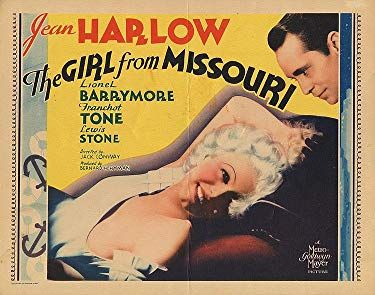
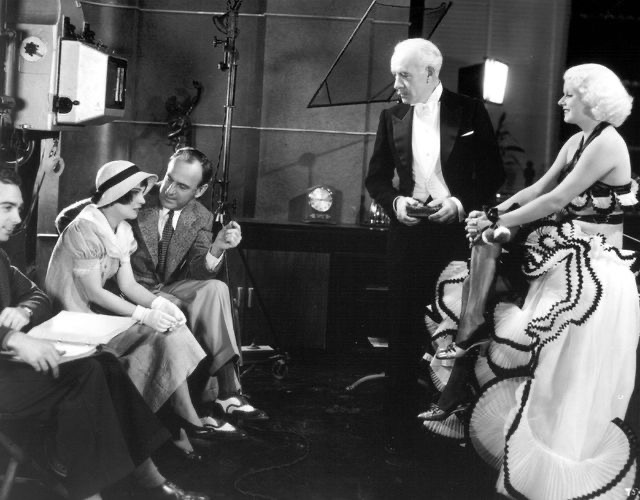
Stills and ad art:



 Harlow Heaven