“No fake heroics! No glittering deeds! No glorified gunmen! Here, at last, truth stripped to the bone!”
Sound film — 83 mins.
Warner Brothers Pictures / Directed by William A. Wellman
Production: January 1931 — February 1931 (according to James Cagney, shooting took only eighteen days)
Release date: May 15, 1931 (David Stenn’s Bombshell lists its New York premiere date of April 23)
Survival/release status: Extant; available to watch online and on DVD.
Cast: James Cagney (Tom Powers), Jean Harlow (Gwen Allen), Edward Woods (Matt Doyle), Joan Blondell (Mamie), Donald Cook (Mike Powers), Leslie Fenton (Nails Nathan), Beryl Mercer (Ma Powers), Robert Emmet O’Connor (Paddy Ryan), Murray Kinnell (Putty Nose), Mae Clarke (Kitty), Frankie Darro (Matt as a boy), Rita Flynn (Molly Doyle).
Summary: The unforgiving underworld of early 20th-century Chicago crime makes hardened men out of two juvenile delinquents, Tom Powers (James Cagney) and Matt Doyle (Edward Woods), who discover that the quick and cheap way to the top of the chain makes for a brutal fall back to the bottom.
Trivia:
- Harlow’s only film with Warner Brothers, and her only experience working with director William A. Wellman (though they almost worked together again on Small Town Girl in 1936 before the role went to Janet Gaynor). Her first scene doesn’t appear until the 47 minute mark. Harlow was Louise Brooks’ tardy replacement, who was in the cast list as recently as nine days before shooting, but ultimately rejected the film. Warner Brothers paid Howard Hughes $1,000 a week for Harlow’s services, of which she received $200 total. Harlow’s stilted, phony English, apparent in Iron Man, carried over to The Public Enemy as her mother continued to take her to vocal coaches for lessons.
- Multiple people on set, including Joan Blondell, noticed Harlow’s self-consciousness around more established actors, though they liked her for being ‘sweet kid’ who wanted to learn. This didn’t stop her from discussing her breast-icing ritual with James Cagney, who chummily asked her “how she held those things up”. In later prints of the film, Harlow’s character Gwen’s reference to her residence at the Congress Hotel was deleted at the request of the hotel’s attorney, who felt she didn’t uphold its stellar reputation.
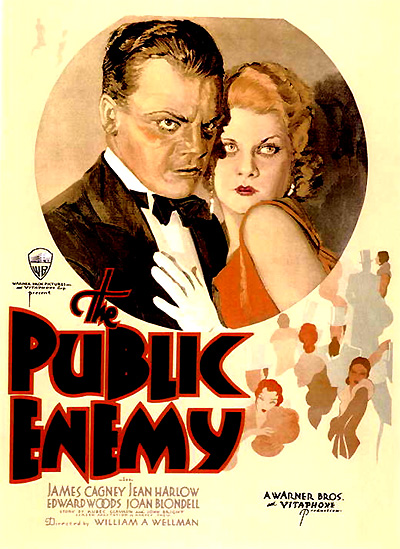
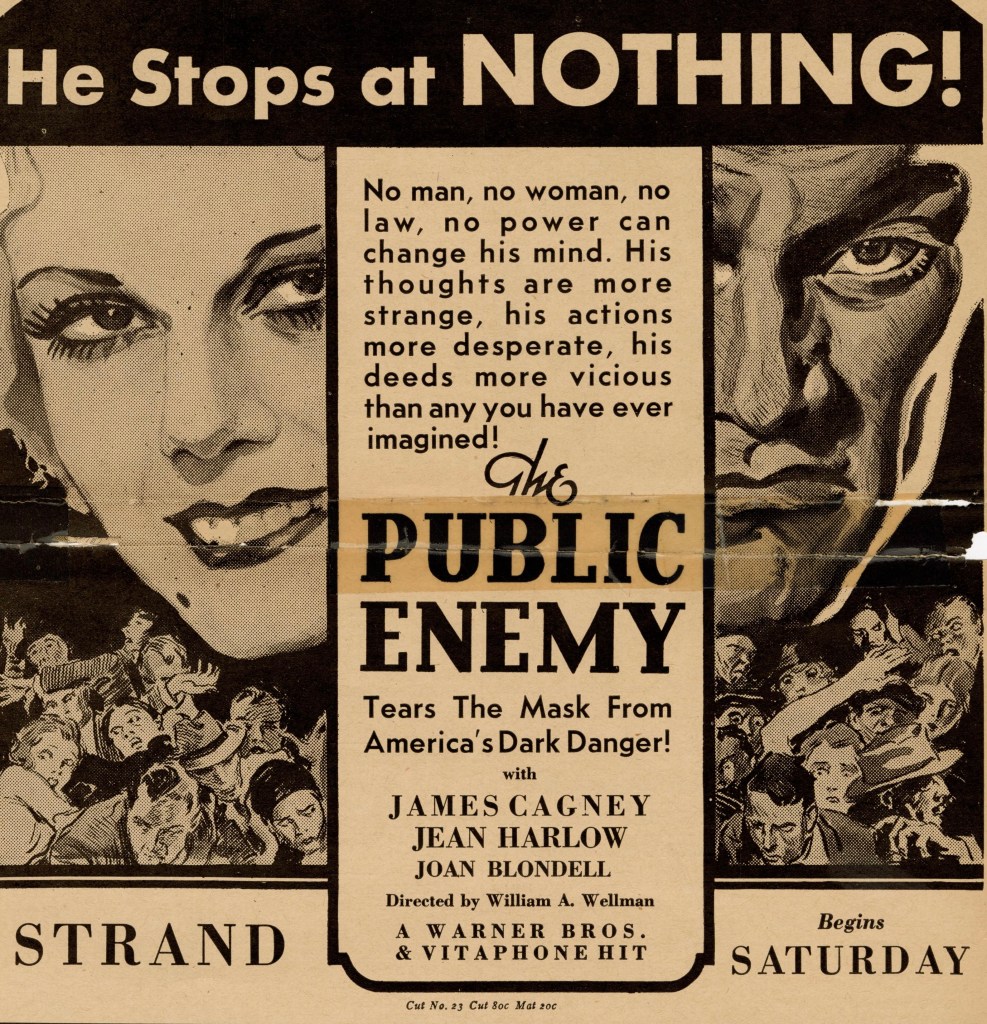
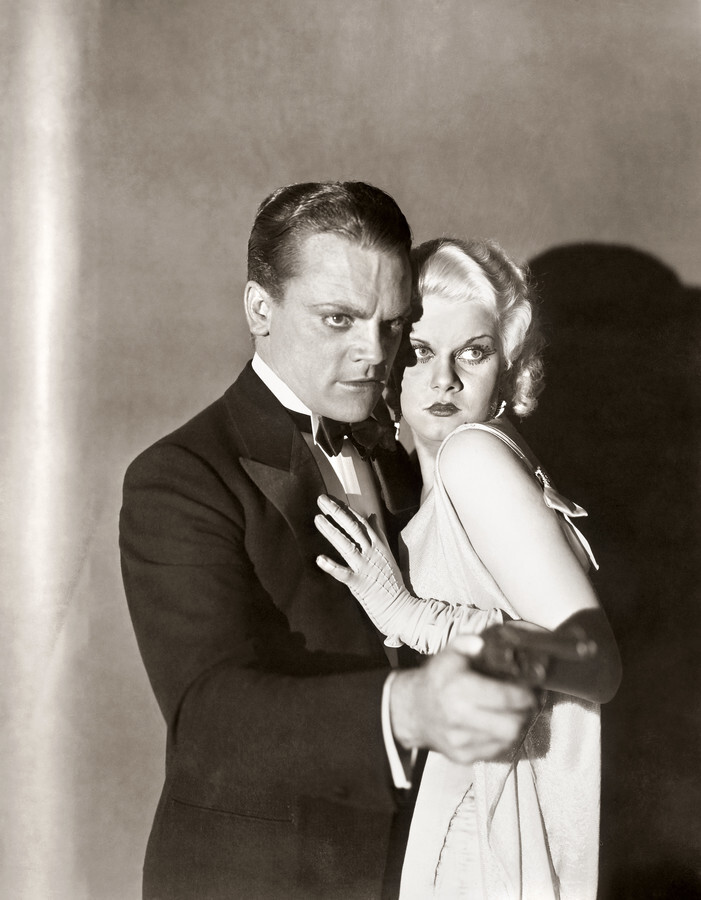
Stills and ad art:
 Harlow Heaven