In early 1932, Jean Harlow, not yet more than a popular starlet, was in the midst of a ten-week cross-country personal appearance tour; you can read more on that here. Arranged by her notoriously greedy stepfather and unsanctioned by her boss, Howard Hughes, the tour was initially a nightmare for Harlow—but by spring, she emerged victorious with an MGM contract.
The excursion saw Harlow featured at multiple theaters across the nation, most of which were on the East Coast. By early January, she had arrived in Brooklyn for a weeklong stint at Loew’s Metropolitan on Fulton Street.
A “Platinum Blonde” contest to be held at the theater was promptly arranged by the Brooklyn Daily Times to stir up publicity—Harlow would personally select her most beauteous doppelgänger and ceremoniously award her with a huge silver loving cup. Sounds like a dream, doesn’t it?
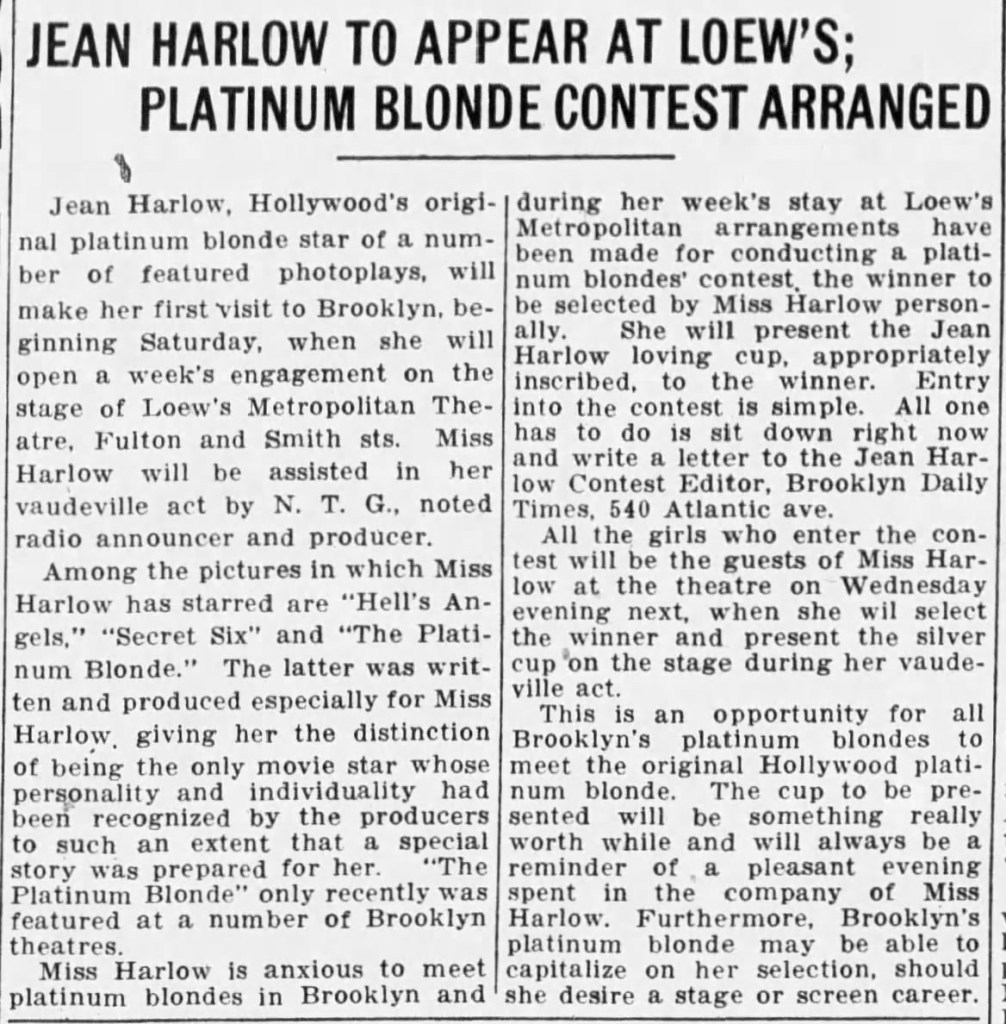
Harlow’s opening nights at the Metropolitan were lightly praised by the press. “There are stars of Hollywood who are not at their best on the stage, but Miss Harlow is not one of them,” declared the Brooklyn Standard Union on the eleventh, “if anything, she is more faultlessly stunning before the footlights than before the Kleig lights.”
This assessment was helped along by the recent addition of emcee N.T.G. (Nils Thor Granlund), whose supervision saved Harlow’s act from certain disaster—he was hired as a writer after a series of humiliating personal appearances in late December, where it was discovered Harlow had been performing without a script.
The morning of the blonde contest arrived on the thirteenth, and excitement mounted as the names of hopefuls were finally published:
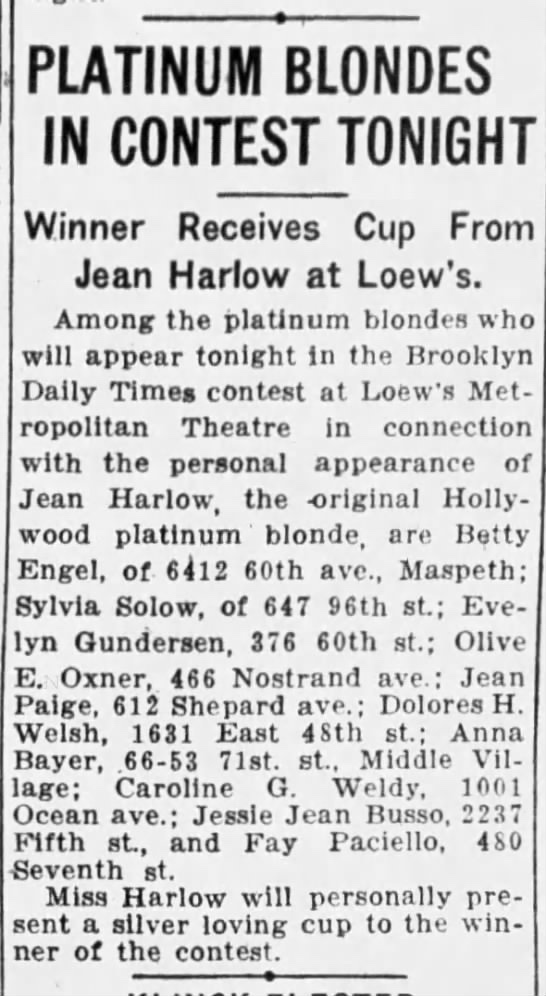
One of these names, Evelyn Gundersen, belonged to a fifteen year old high school student who was the only child of recent Norwegian immigrants. She all but walked away with the title of the foremost Brooklyn platinum blonde, and it’s easy to see why:
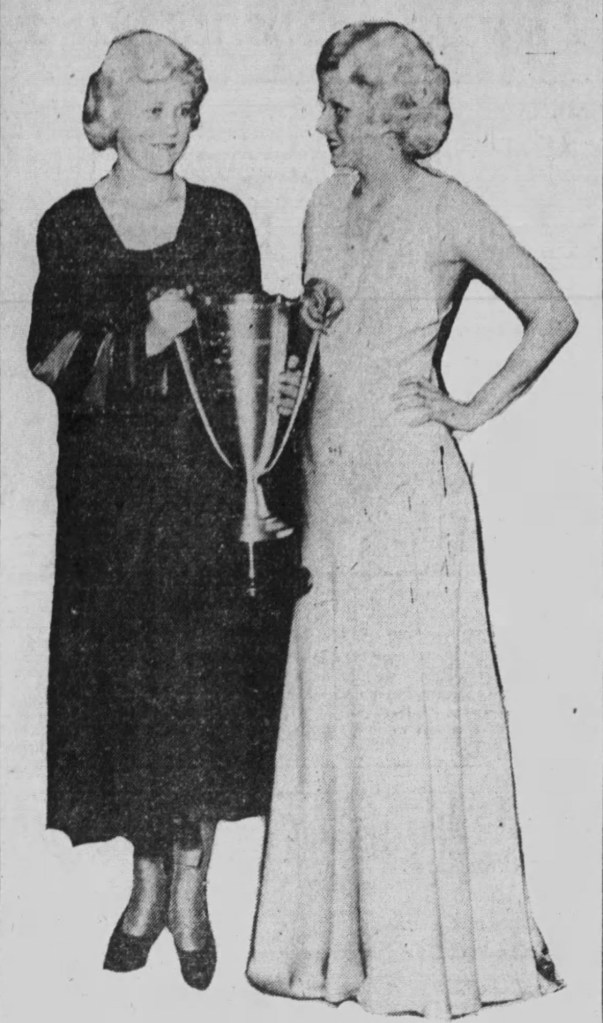
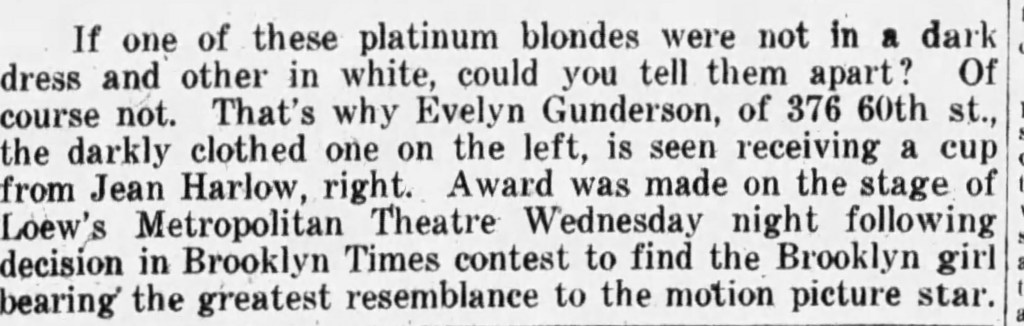
“I have always been an admirer of Jean Harlow and have seen every picture in which she has played,” Evelyn beamed in an interview published the following day, “when I graduate from high school I intend to be an actress.”
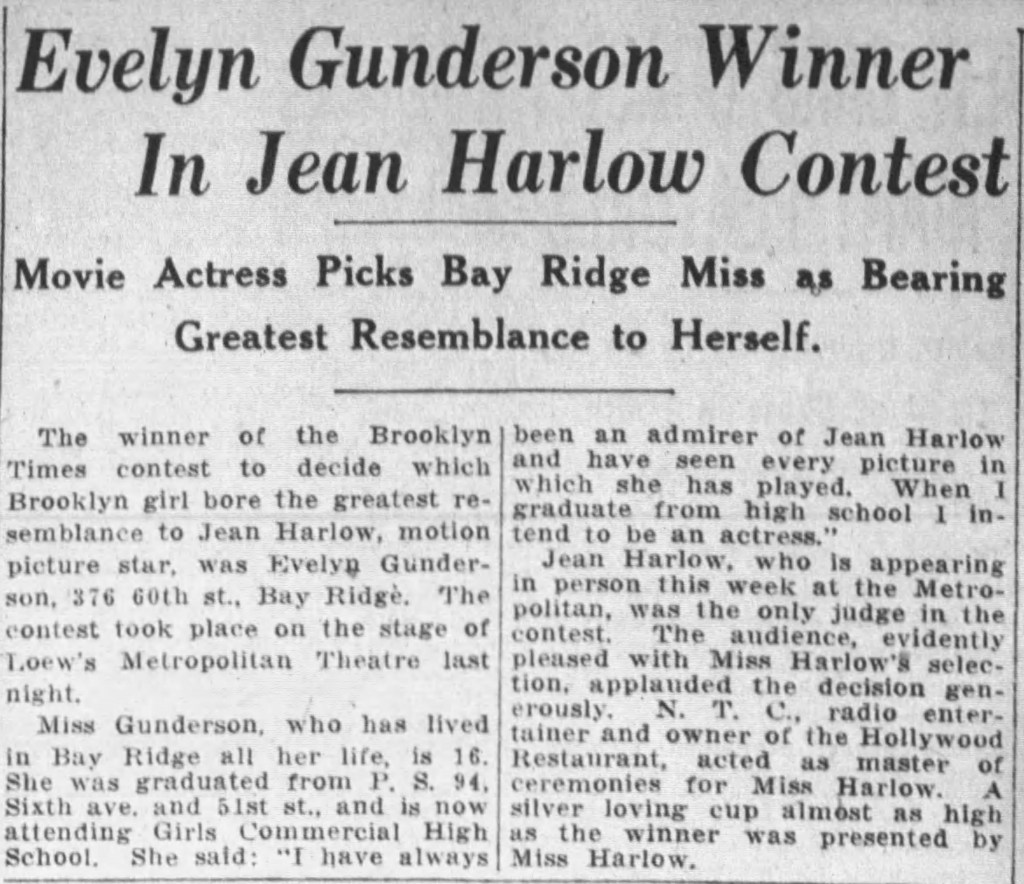
So, who was this precocious Evelyn Gundersen, whose resemblance to Jean Harlow was so striking the actress herself astutely acknowledged it? Early details are scarce, but we know she was born to Olaf and Thelma Gundersen in New York the day before Saint Patrick’s on March 16, 1917. (Harlow herself was born on March 3, six years prior).
Evelyn’s roots were modest—her father Olaf worked as a dry dock rigger, and her mother Thelma worked as a waitress. Like the article says, the family stayed in a predominantly working class Norwegian neighborhood in Bay Ridge.
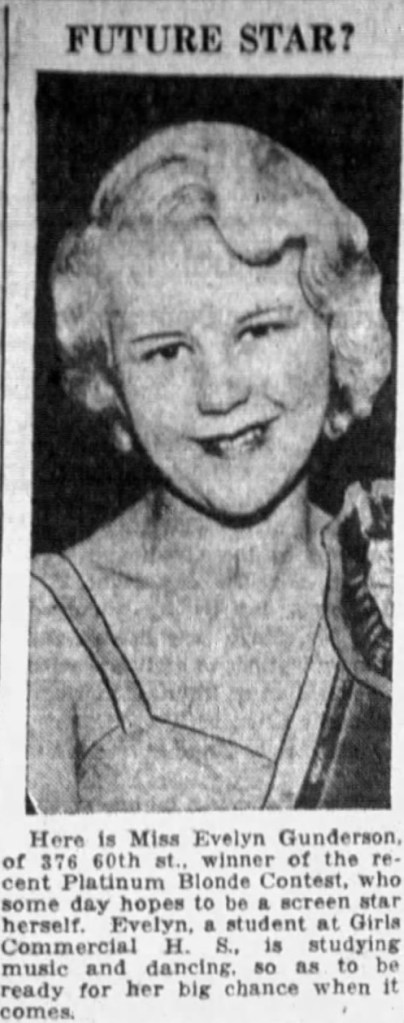
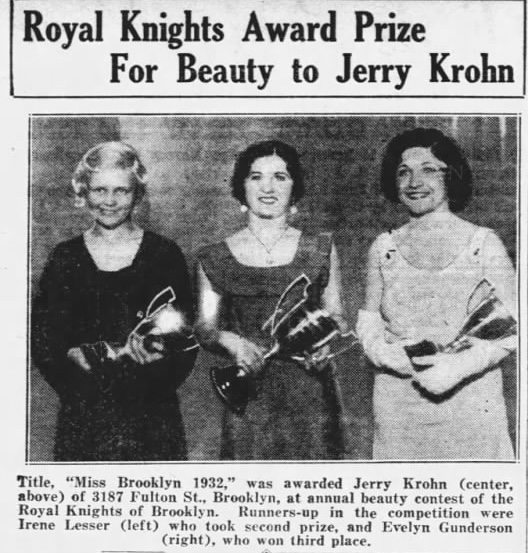
Winning the blonde contest opened up an entire world of possibilities to young Evelyn, and before long her fresh face was appearing in newspapers with increasing frequency. The very next month she took home another beauty prize, though it was only third place:
Evelyn’s streak of popularity continued even after Jean Harlow ended her tour and left the East Coast for her home in Hollywood, culminating in a second win in another blonde contest held at the Hotel St. George that October:
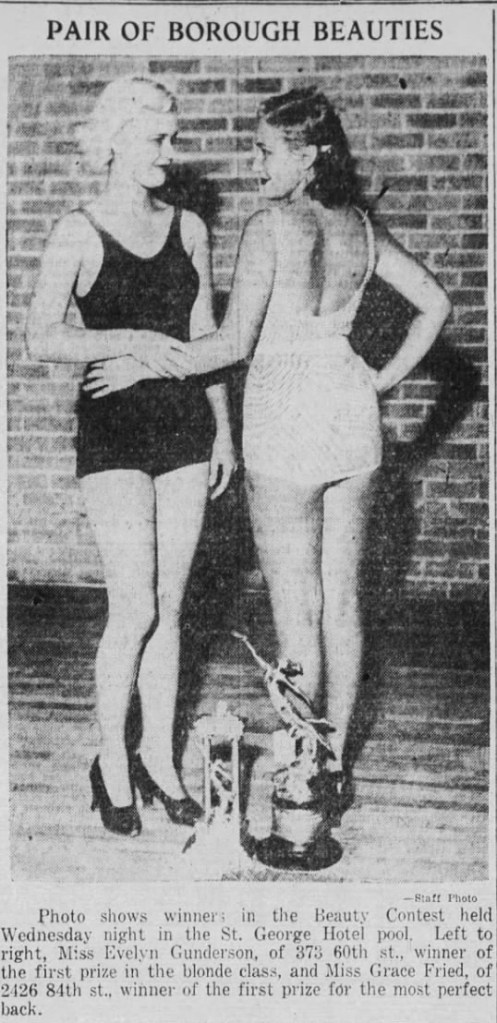
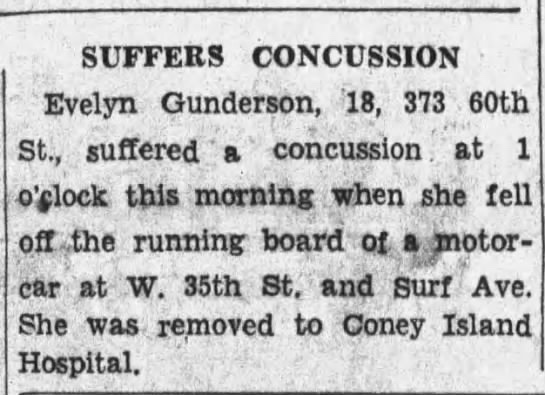
Evelyn’s rising star lasted barely a year before it was instantly diminished in a chance encounter over the summer of 1933. The story goes that on the night of June 30, Evelyn was working as a specialty entertainer at Coney Island when she was invited to a dinner dance by city detective Vincent Cranna.
Some accounts say she was merely invited for an “automobile ride”—whatever the case, Evelyn wanted to go, and promptly ran off to fetch her employer in order to ask for permission to leave. Evelyn returned to Cranna’s car a few moments later to tell him she wasn’t allowed to go—as she spoke, she stepped up onto the running board, only to be thrown to the ground as the vehicle sped off. Evelyn suffered a concussion and a fractured jaw.
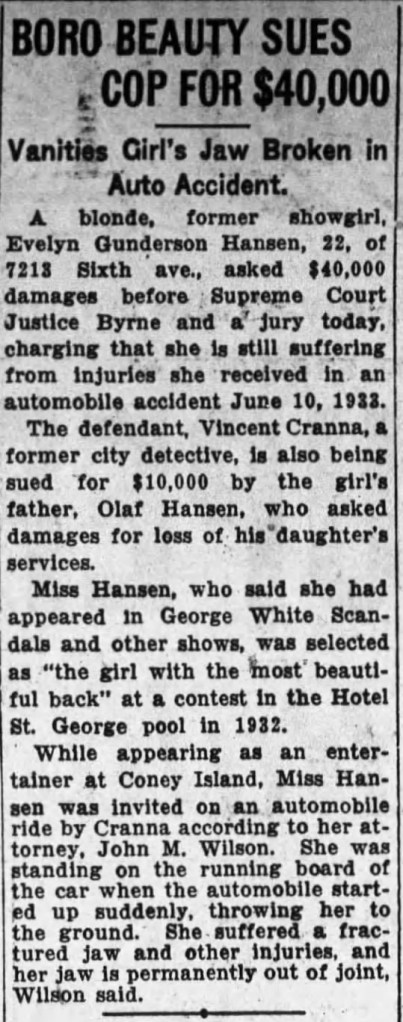
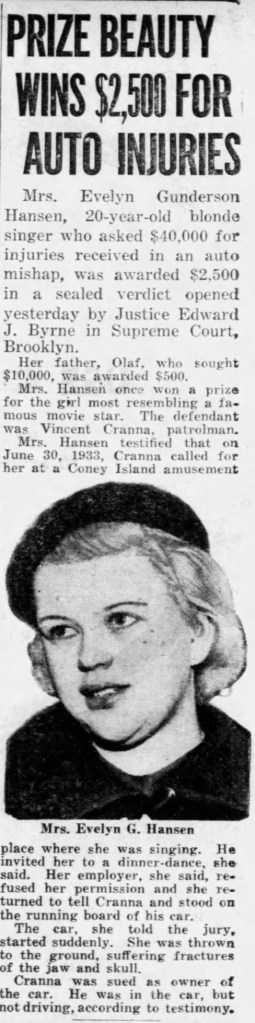
From there, radio silence on Evelyn for over two years—not a single mention or picture was published (as far as this author knows) until December 1935, when she appeared in court, asking Cranna for an exorbitant $40,000 in damages. Evelyn maintained that she was still recovering from the accident, and the resulting injury to her face and head had permanently marred her beauty and put out of work. Her father, Olaf, asked for another $10,000 in damages, bringing the grand total to a whopping $1,014,408 in today’s money—that would more than cover it even today!
Cranna’s only defense was that the accident was “unavoidable”. It was revealed he wasn’t even the one operating the vehicle—only days later, it was decided that Evelyn would only receive $2,500. (Her father, Olaf, received an additional $500 for loss of his daughter’s services).
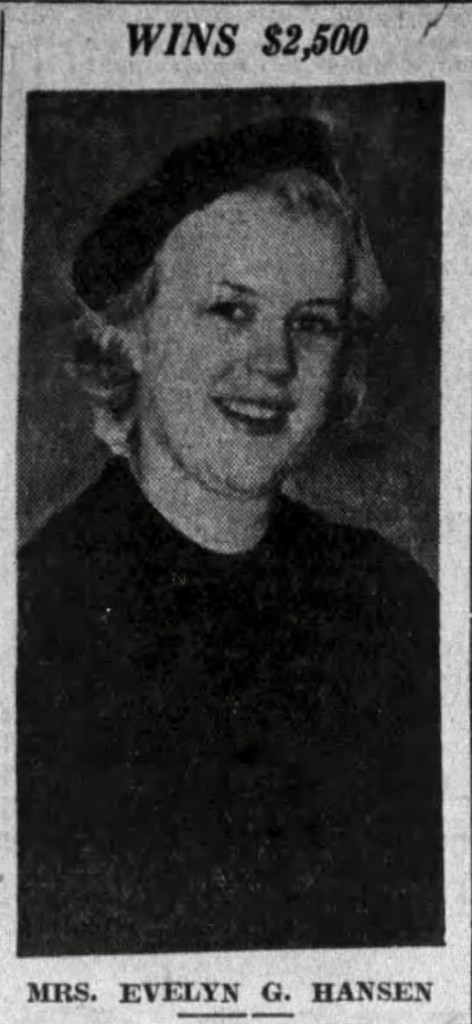
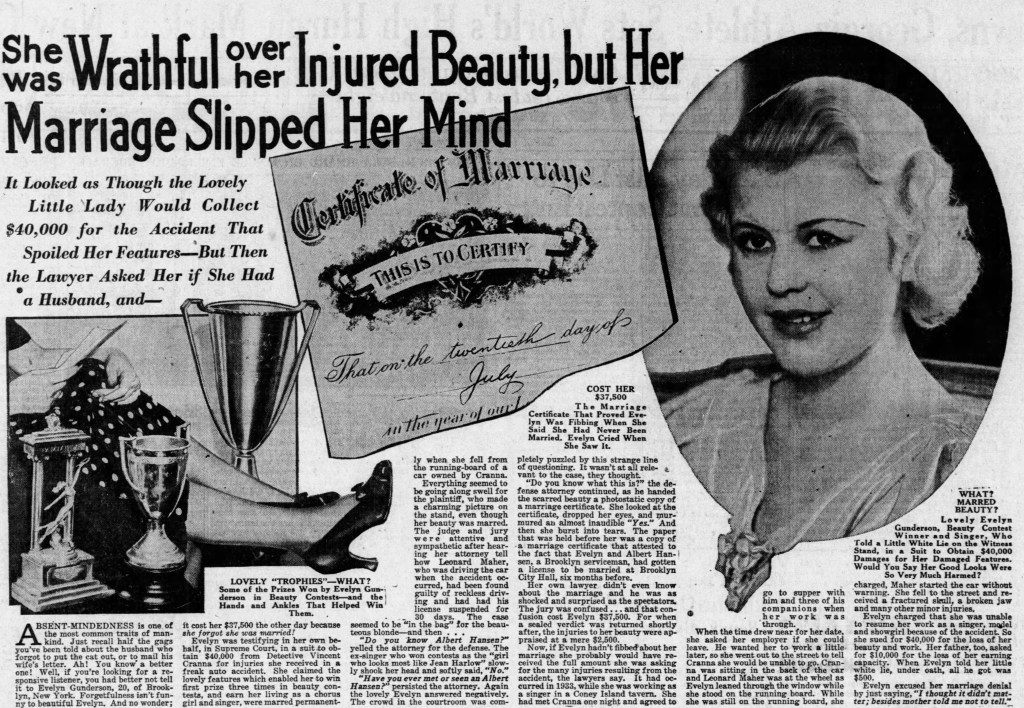
One sensational 1936 article published in The Miami News claimed Evelyn lost out on all that money simply because she lied about being married—in her own words, she simply “thought it didn’t matter”.
One would assume that from here, Evelyn left the business to focus on her marriage or a second career; but a year later, Evelyn pops up in court once again.
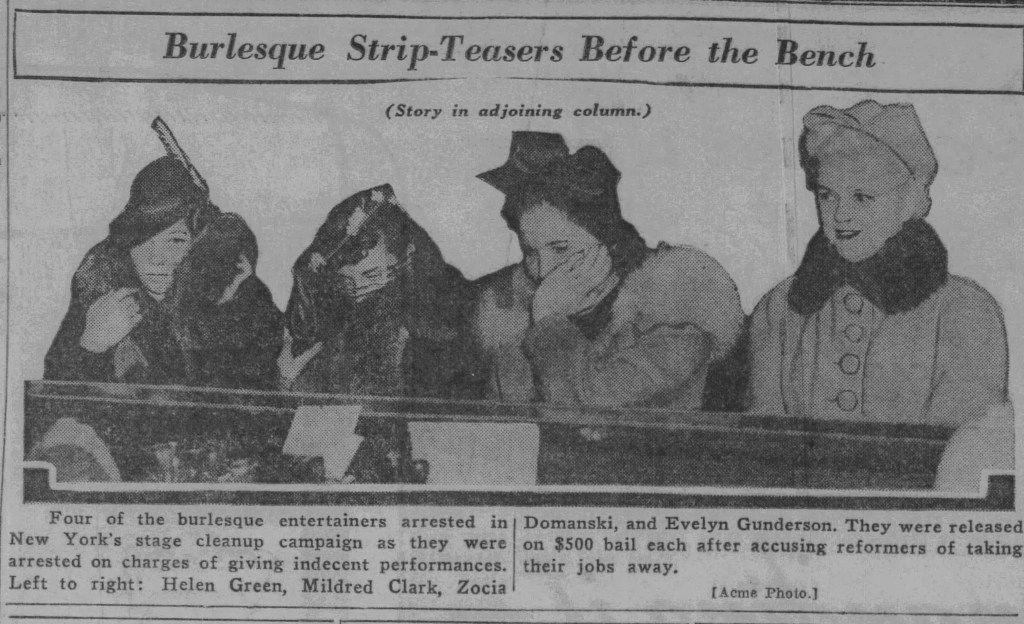
Our final brush with Evelyn comes just a month before Jean Harlow’s death, when it was revealed she had been freed on $500 bail after an indecent exposure arrest during a burlesque raid.
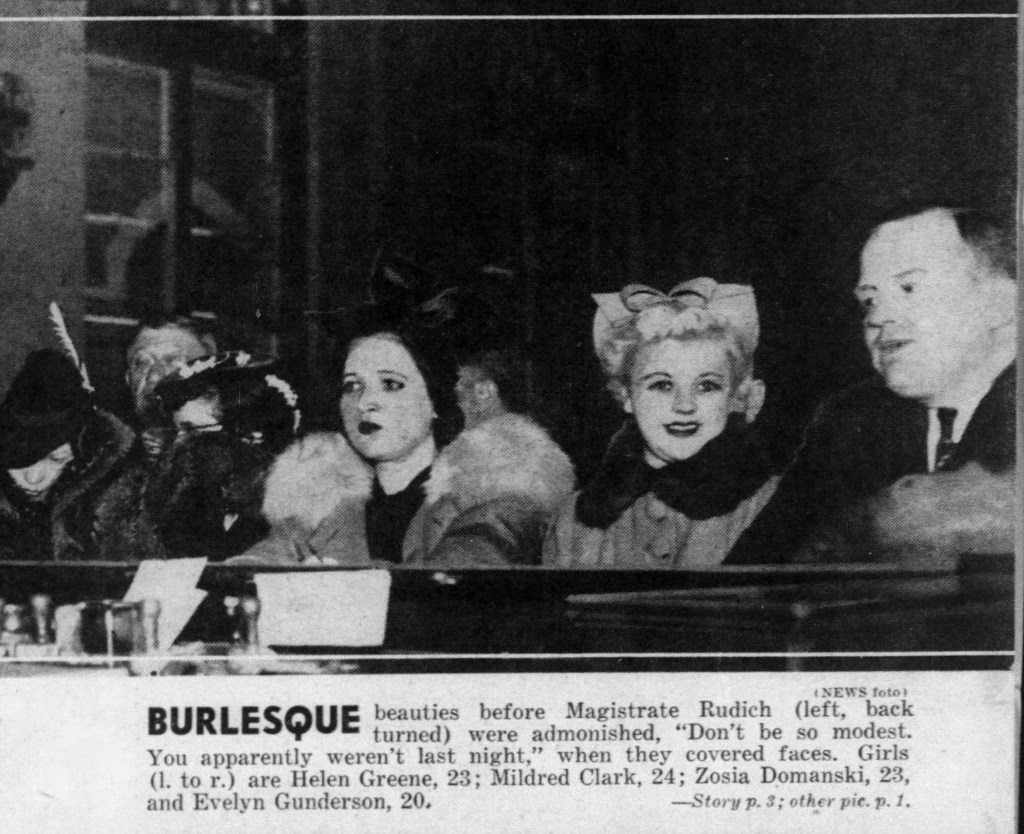
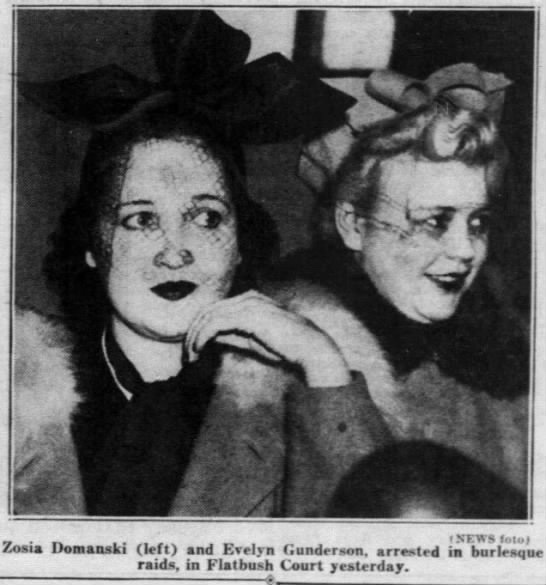
Maybe Evelyn finally called it quits after her arrest, as she isn’t active after 1937, much like Jean Harlow herself. We do know that she probably divorced Albert Hansen sometime before 1940, as his draft card lists him as unemployed, and gives his mother’s name and address as his next of kin.
So far, searches for later records on Evelyn Gundersen Hansen prove fruitless—it seems like both Evelyn Gundersen and Evelyn Hansen were popular names in the melting pot that is New York, especially around the time of her birth, and her final whereabouts are unknown. One wonders if she regaled any skeptical family members with outlandish tales of meeting her lookalike, Jean Harlow—maybe someday we’ll know.


Really enjoyed reading this 🙂
LikeLike
Throughly enjoyed reading the article!
LikeLike