
A peek at what was better known as “The Whitest House in the World,” a 1.3 acre achromatic wonderland built for Hollywood’s crowning “Platinum Blonde” in the early 1930s. You can buy it for $16.8M
There are few sacred spaces left in Los Angeles in 2026, especially celebrity residences from the city’s now long-evaporated Golden Age. Even as recently as 2024, Marilyn Monroe’s last home at Fifth Helena Drive was briefly slated for the wrecking ball before a group of historically-inclined enthusiasts saved it from certain destruction.
This renders the recent market debut of Jean Harlow’s custom-built Holmby Hills estate, up for grabs for the first time in decades, both a miracle and a revelation: like a Dowager Empress descending from her opera booth to commune with her people, the stunning four-bedroom mansion, practically unaltered from how it looked in the 1930s, evokes a similar feeling of hidden Old World luxury suddenly uncovered for the world to see (the Compass listing can be found here.) The galactic neighborhood surrounding it retains a fitting nickname: it and Bel Air form two sides of LA’s exclusive “Platinum Triangle,” which harks back to the first resident to carry the term on her head.
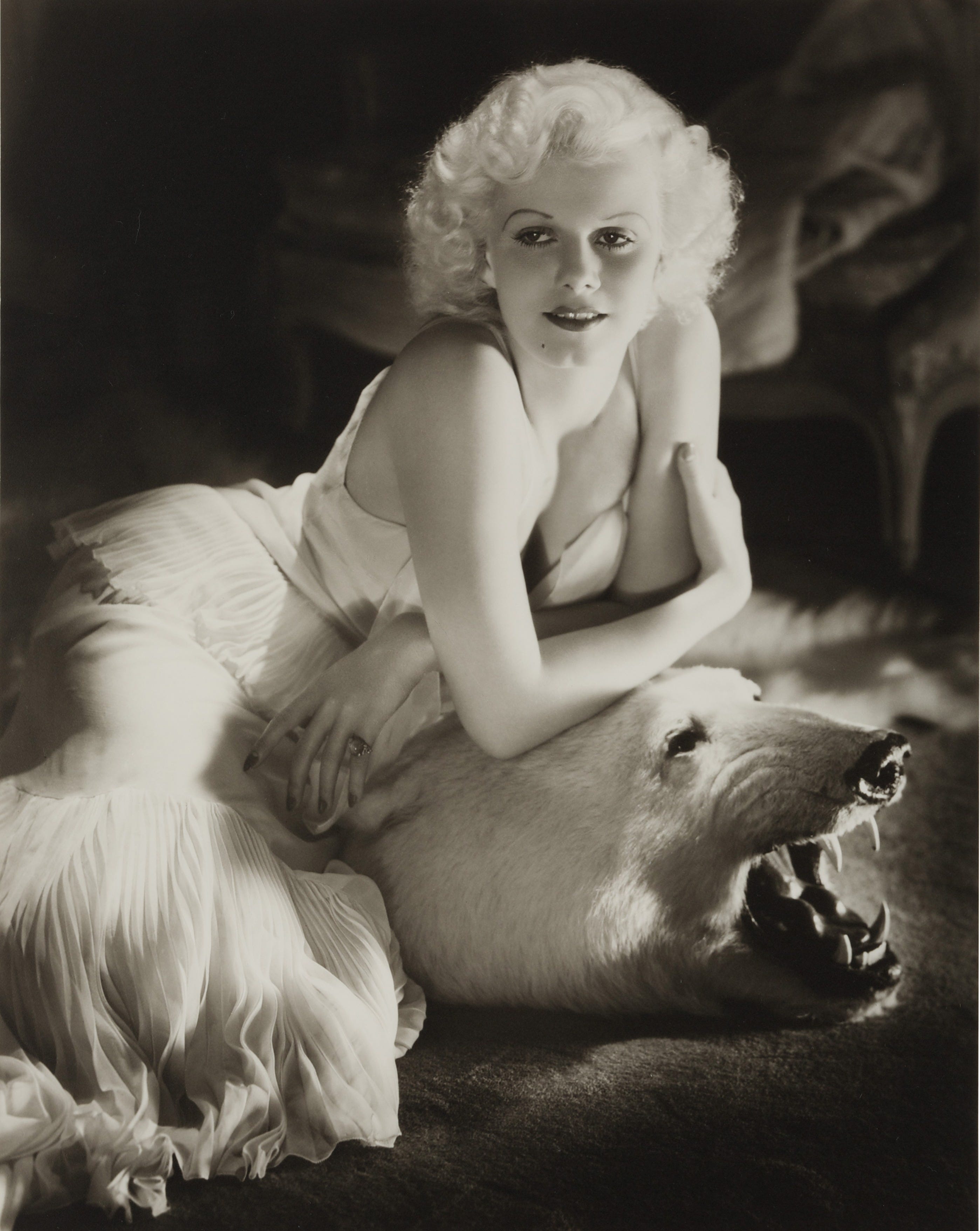
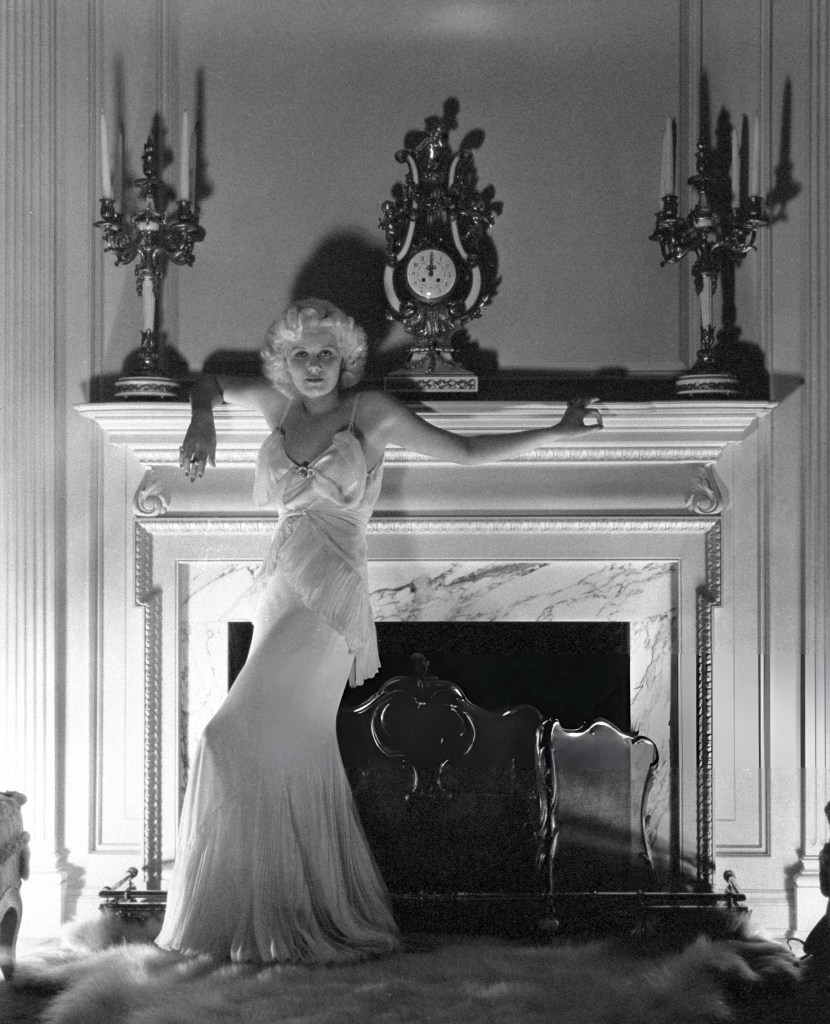
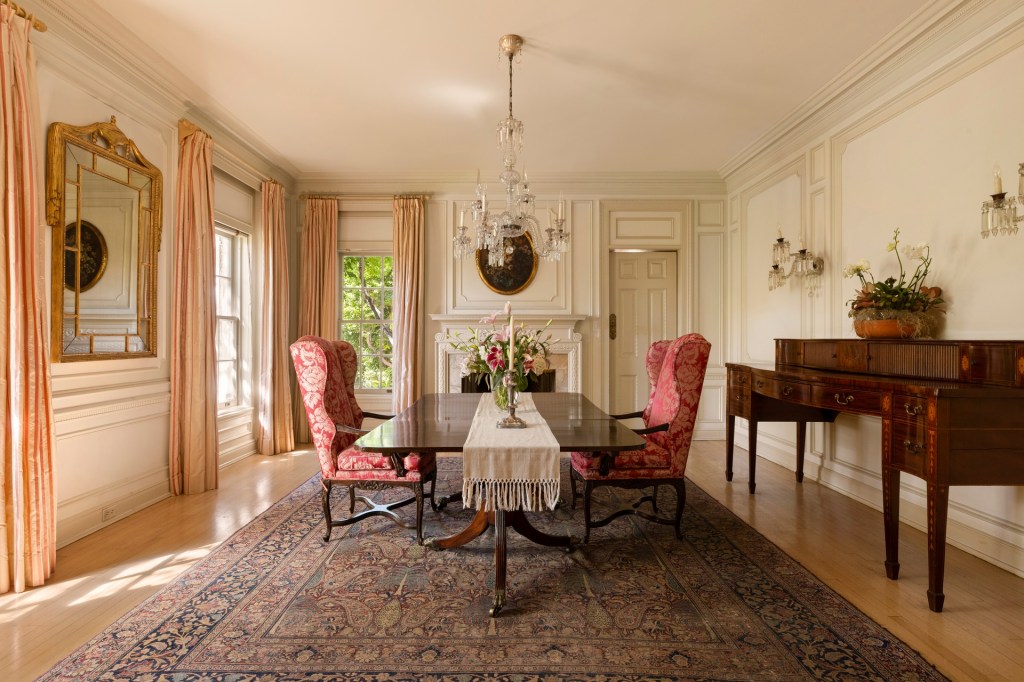
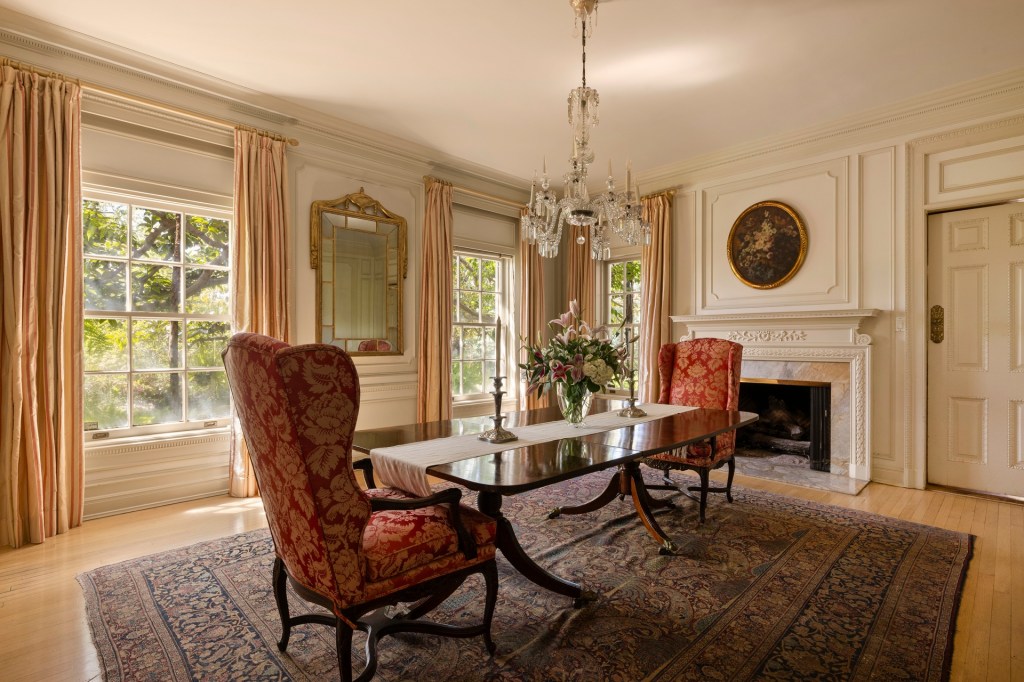
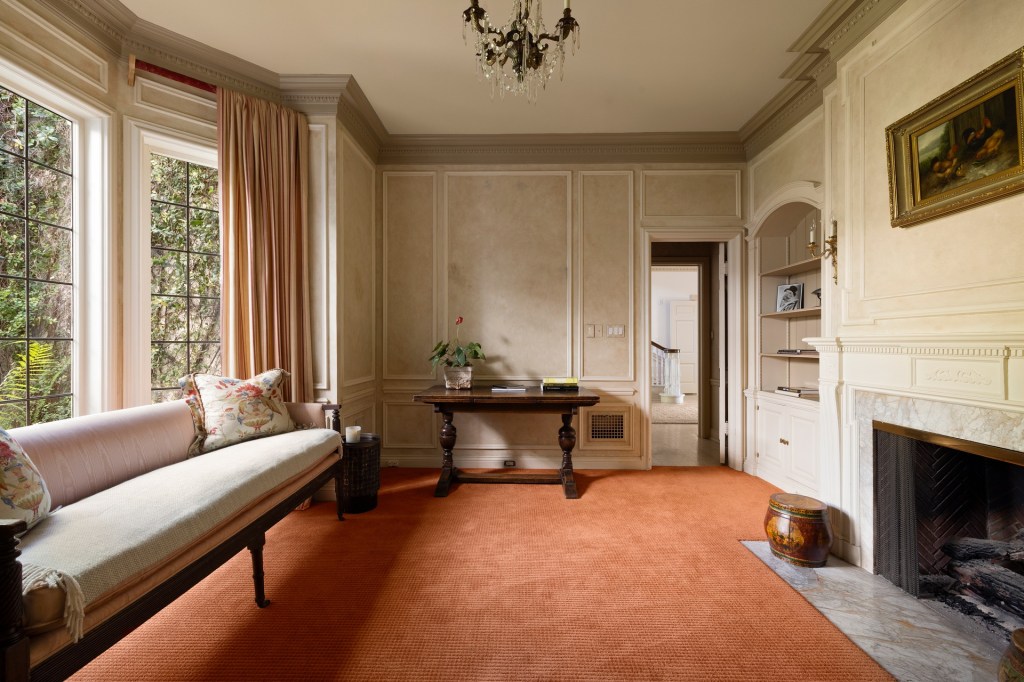
While Harlow herself represented the pinnacle of Art Deco style, her palatial hilltop residence on South Beverly Glen Boulevard did not. The busy actress left her doting mother to do the bulk of the décor and dreaming, over $25,000’s worth; as a result, it catered mostly to her bombastic, Edwardian-era sensibilities. Portraits of Harlow and her mother were everywhere, as were touches of ermine, languorous crystal chandeliers, and Second Estate-worthy French furniture. The famous polar bear rug materialized at this point, as well, which lived in front of the same carved marble mantel still so prominent today in her salon.
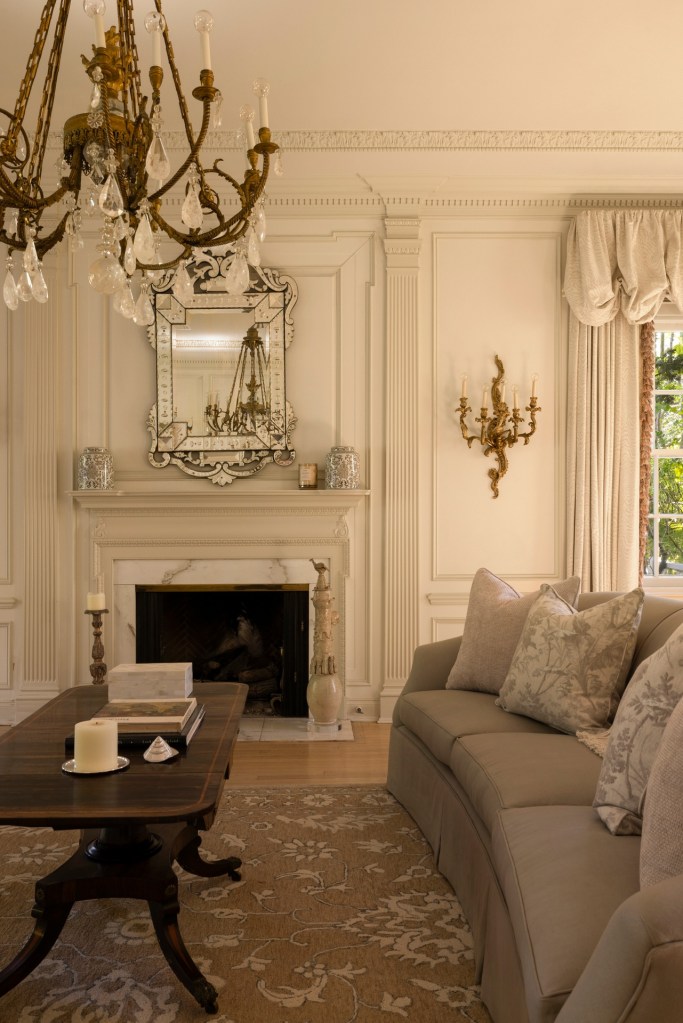
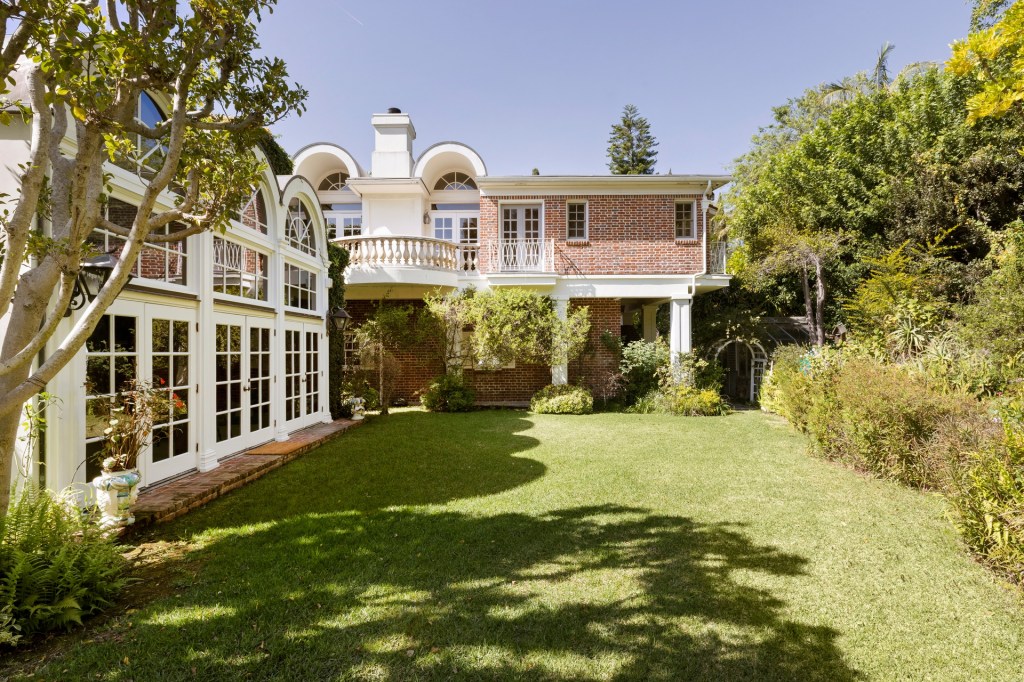
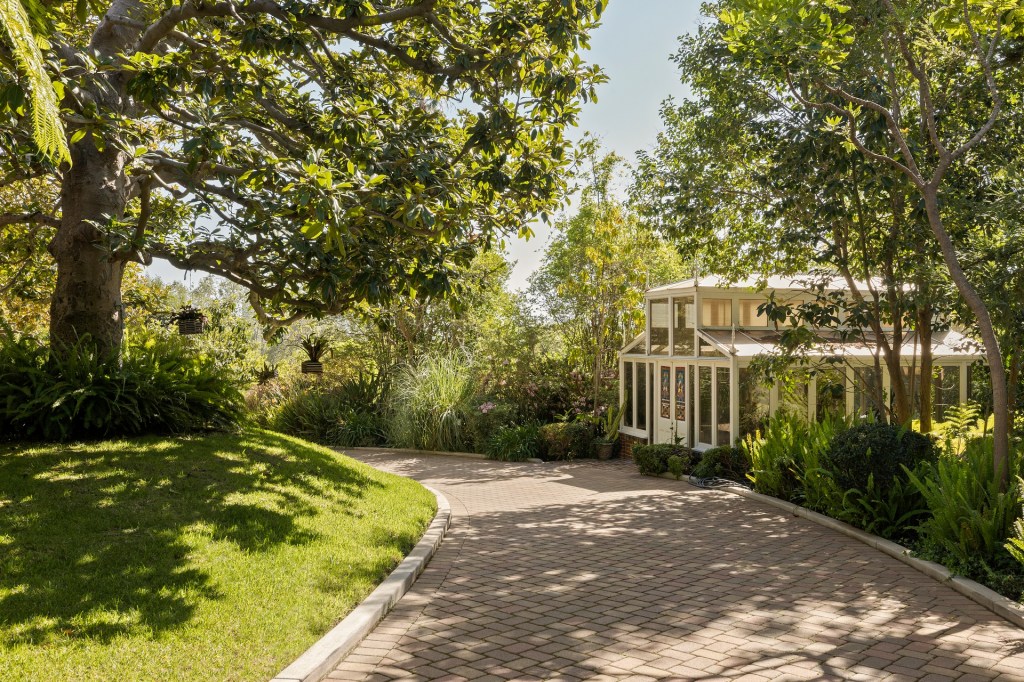
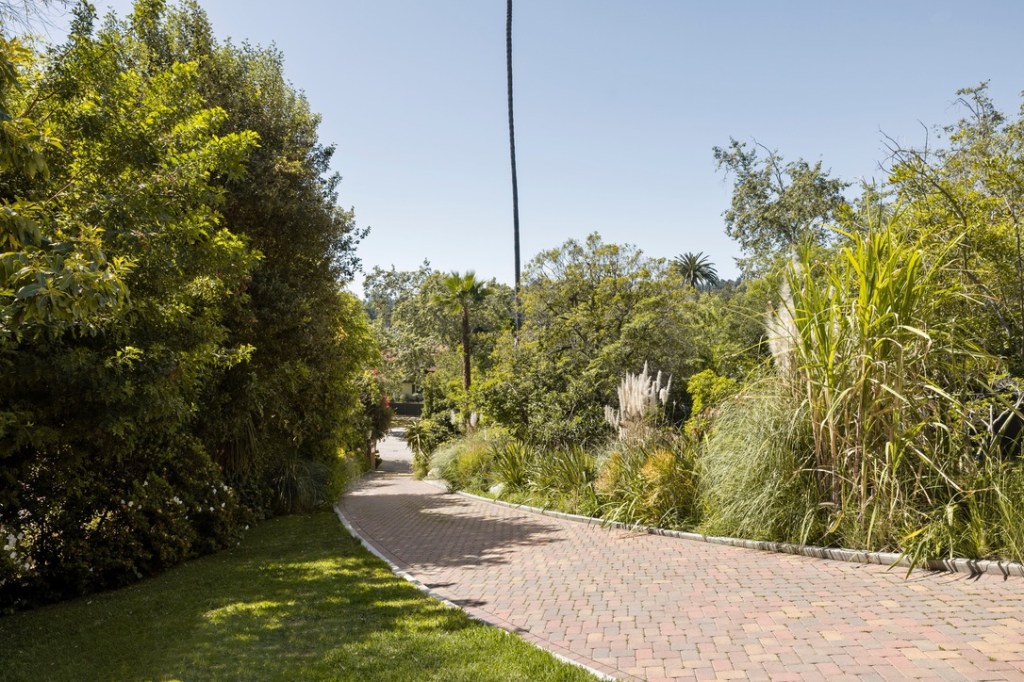
Designed in a stunning Colonial Revival style by obscure civil and chemical engineer Cecil Bruce (“C.B.”) Clyne, the mansion does not reflect its mastermind’s relative anonymity, either. Canadian-born Clyne plopped the glamorous Harlow estate and its original brick façade atop a magnificent, intimate hill, carving a winding driveway leading up to it and dotting magnolia trees in its yard which the wind still whistles through almost a century later.
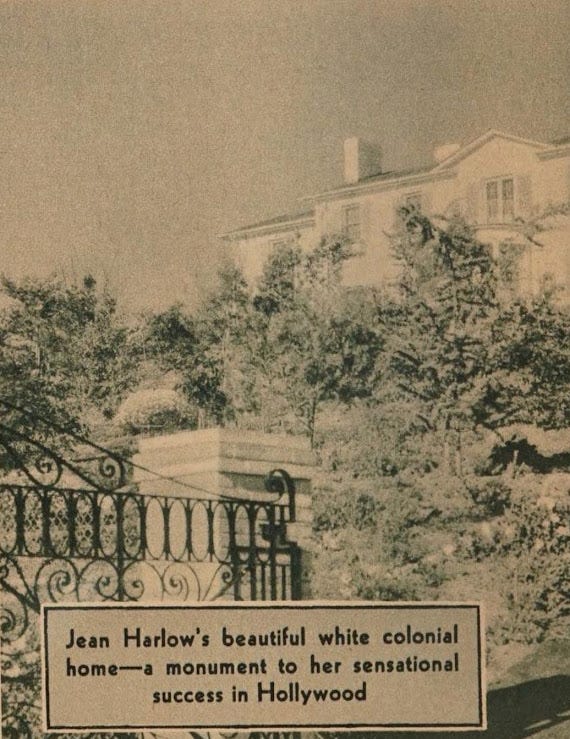
Clyne appeared mostly interested in chemical engineering; fascinatingly, this is the only known home built to his credit. When I spoke to the realtors in charge of the Harlow listing, no one was entirely sure of his history (see notes). How did this unknown, comparative dilettante come away with the task of building the Platinum Blonde’s matching mansion? The answer may be in his location. Clyne, whose socialite wife maintained a steady flow of parties in the 1910s and 20s, lived just blocks away from where Harlow and her mother entertained in Gramercy Park in 1924. Jean Bello liked to put prominent people in her back pocket for use as references for her daughter—a Kansas City businessman to get her into boarding school among them—and Clyne could very well have been a figure encountered by “Mother Jean” during her first round in Los Angeles in the early 1920s, as she was a well-known hostess herself.
“C.B. Clyne, Eng.” is listed as the architect on the home’s original construction permit, which was filed by Jean Bello just one day after the death of Paul Bern on September 6, 1932. While “Mother Jean” had acquired ownership of the land it sat on that May, the Bern scandal exacerbated her plans. The new mansion would now double as a savvy solution to a pressing problem: it was to assist Harlow in rehabilitating her image to one of a bona fide MGM actress after her meteoric rise as a simple sex symbol, now compounded by the sudden suicide of her new producer-husband which threatened to undo all the careful starmaking work their studio had invested in her. The mansion project was completed within a matter of months from first filing: the last construction permits were issued on February 7, 1933. The bulk of it, per the realtor, was built inside of sixteen weeks.
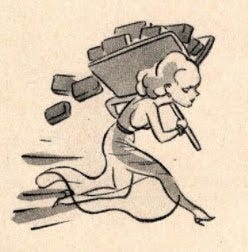
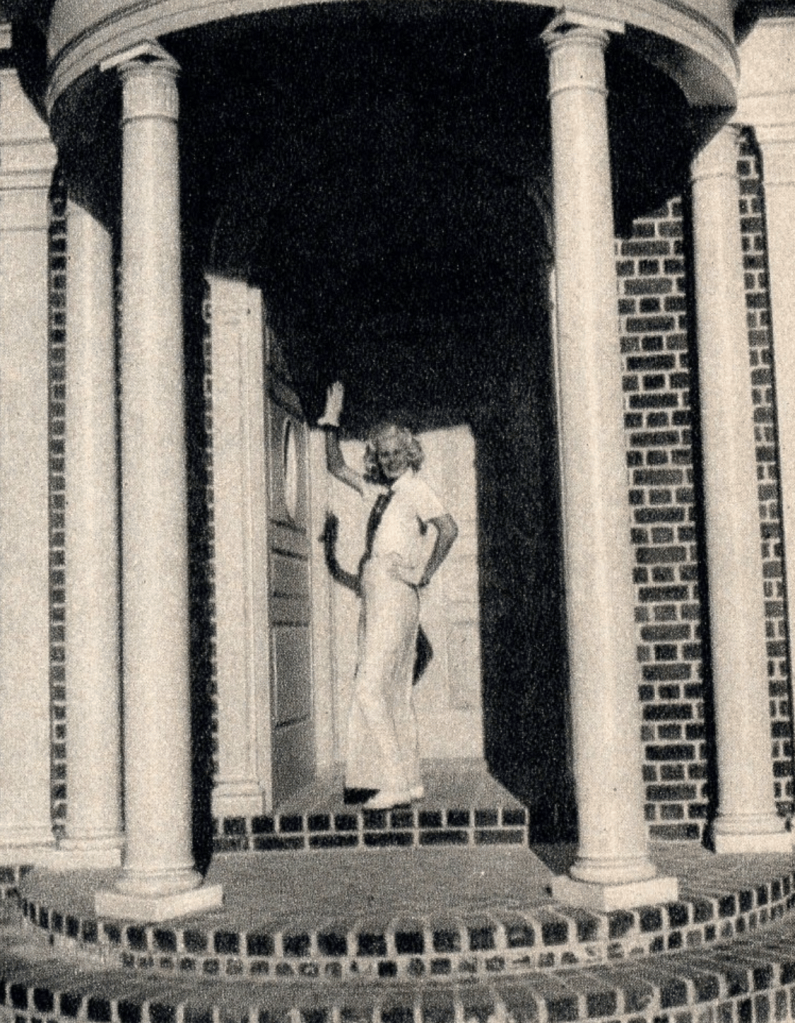
Harlow was photographed “hard at work” on the Beverly Glen construction site throughout late 1932 and early 1933, antithetically outfitted in white slacks and tennis shoes.
“The Whitest House in the World,” as the project was dubbed, was not at first publicized with the express intent to intimidate or impress. It was portrayed firstly as Harlow’s haven, mission, and escape to rightful solitude after the trial of a lifetime. Her return to the set of Red Dust only one week after Bern’s death was lauded by peers and public alike. Pre-approved platitudes for publicity with an emphasis on good, clean, indefatigable modesty in the face of adversity were disseminated in studio-puppeteered fan magazines. As a result, reticent Harlow—whose friends recounted how she never once spoke of the tragedy afterwards—weathered her storm with remarkable resilience. The narrative was controlled, Metro’s files on Paul Bern were culled, and the studio’s investment was saved, with ample room for profit left over.
“Isn’t it true, too, that when some great and terrible thing happens in our lives we are given the strength to bear it?” Harlow was quoted in an issue of Photoplay published after she’d moved into her new mansion, “Try, too, to remember there are always so many things to be grateful for. The more things we’re grateful for, the more things we have to be grateful about.”
The sheer tenacity of “Mother Jean” was one thing Harlow could be grateful for: while the popular narrative poses Harlow’s mother as the evil spendthrift of her daughter’s hard-earned cash on frivolity, there is also the flip side of the coin not so often acknowledged. A grieving Harlow, widowed at only twenty-one while working long hours at a job as public-facing as the President’s, was enabled to focus on her studio schedule and its demands while her mother played house and provided emotional support. Harlow benefited from this extended arrangement, referring to herself as the “man of the house” in one fan magazine interview (a situation magnified by the exit of Mother Jean from her marriage to Marino Bello in 1935.)
“Because, she says, that I am really […] out in the world doing a man’s work,” Harlow told Gladys Hall of her mother in 1934, “And when I come home in the evenings, when I leave home in the morning, I have the right to find her fresh and rested and beautifully gowned.“
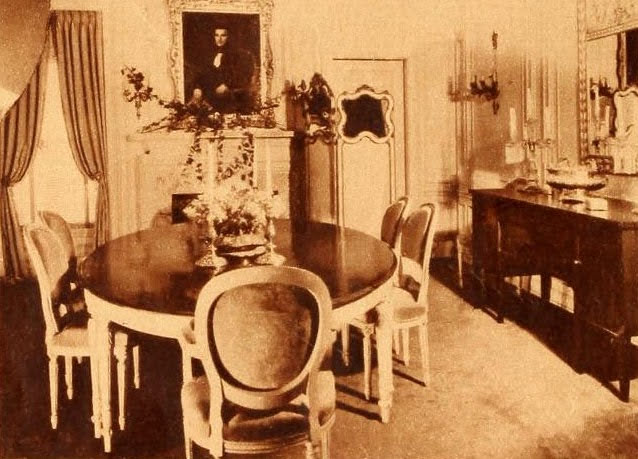
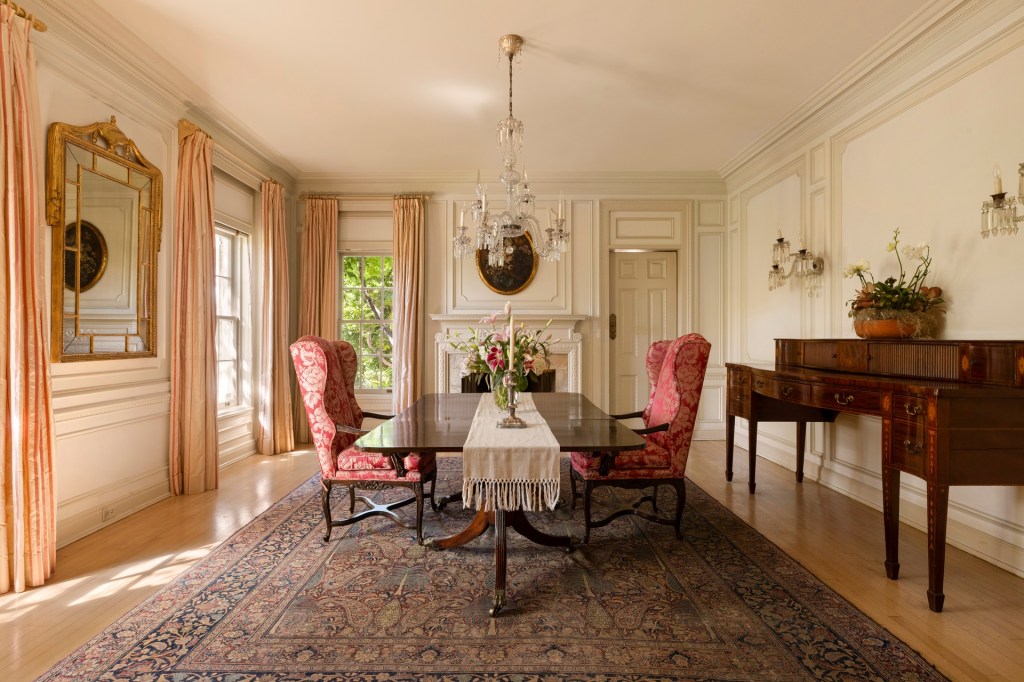
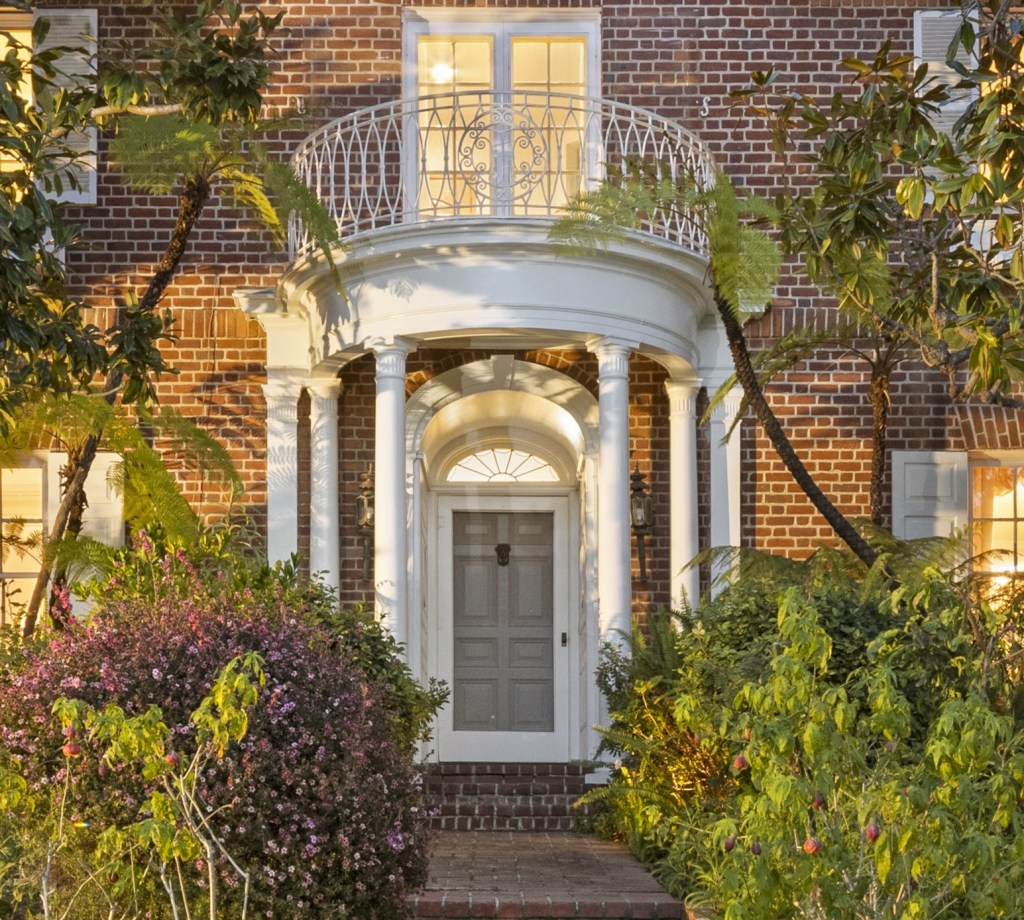
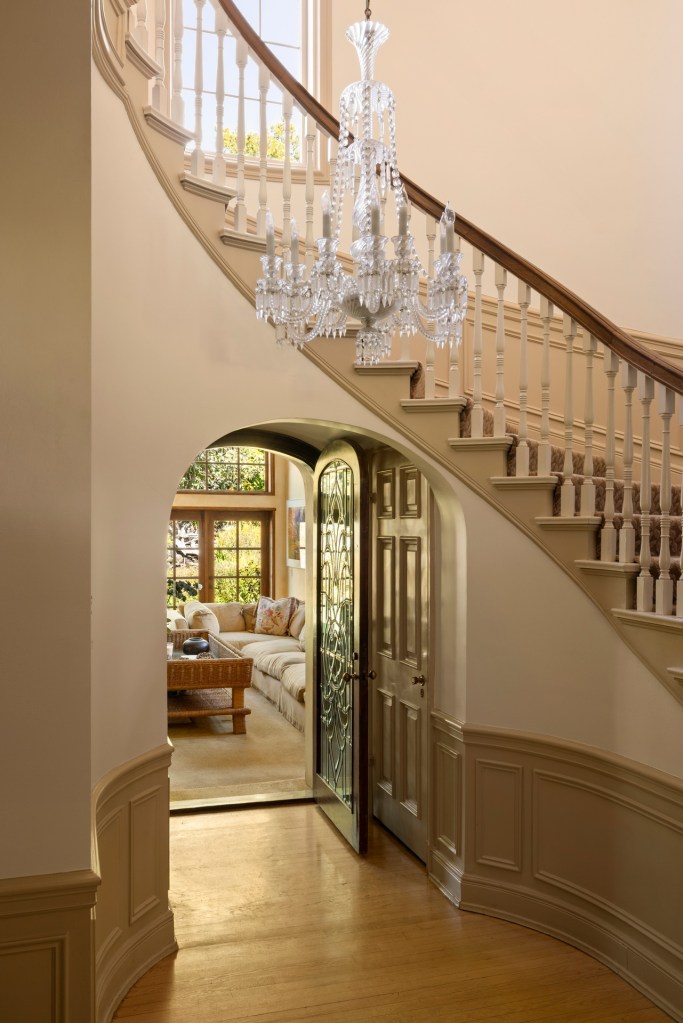
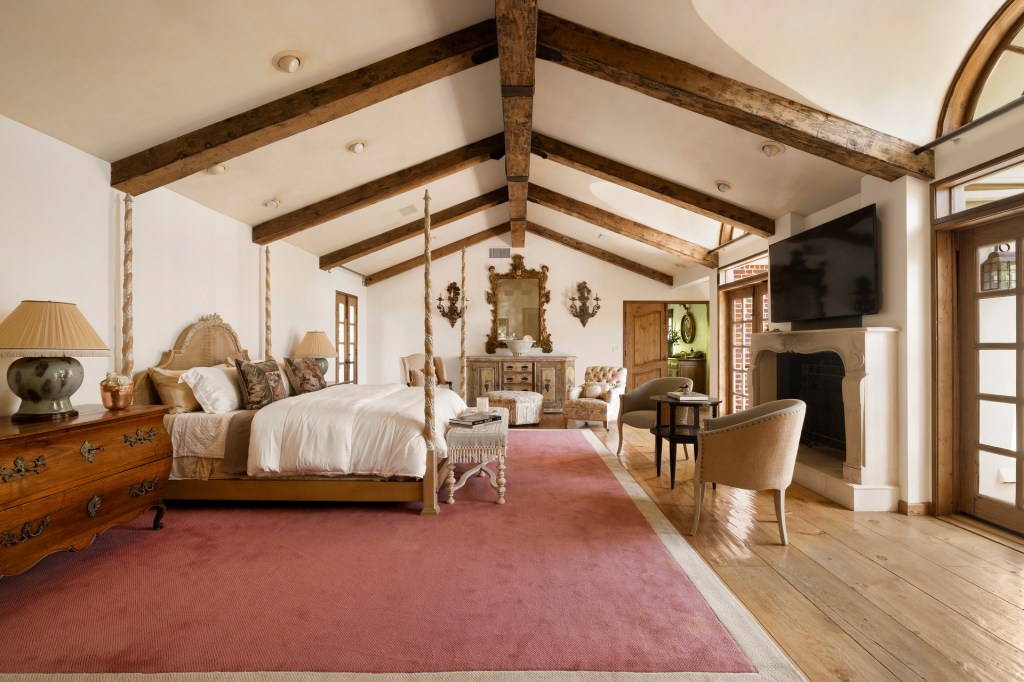
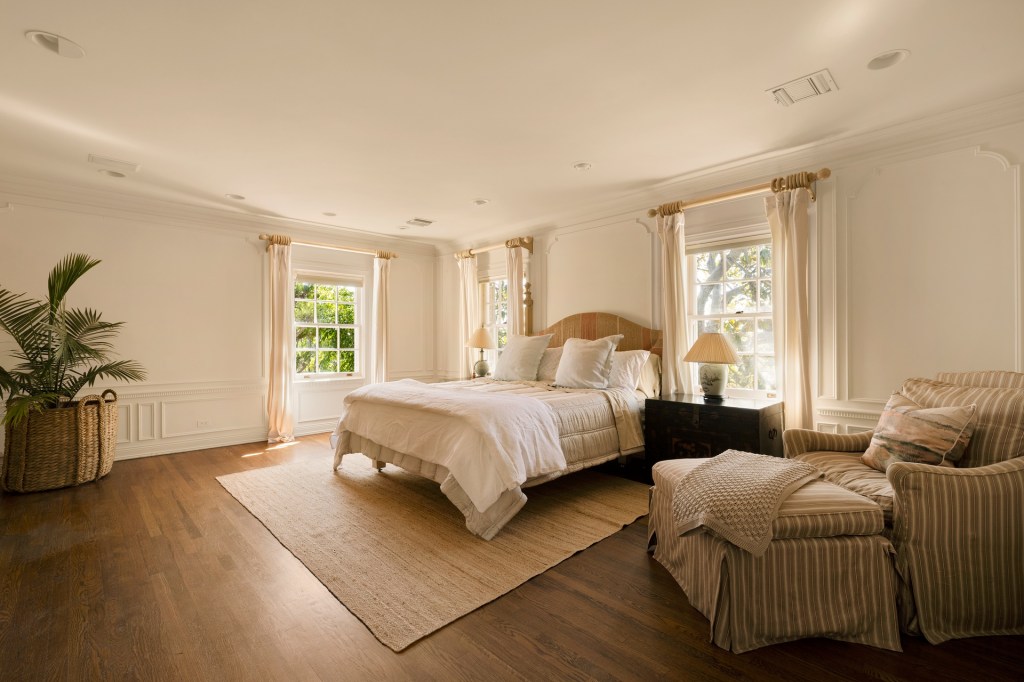
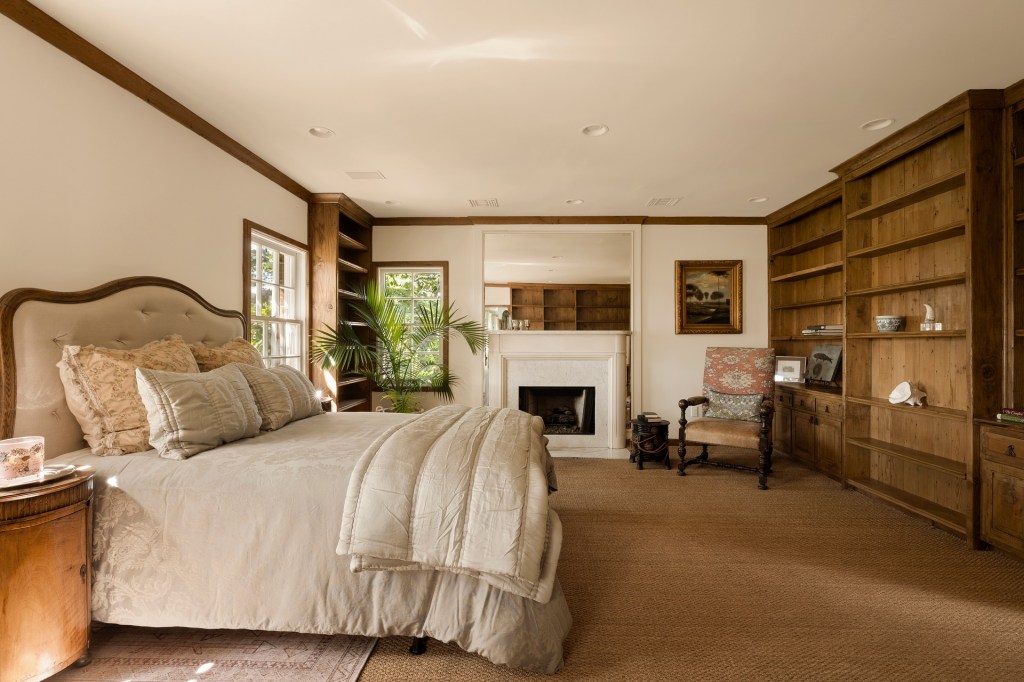
Harlow also reserved the right to relax in a home just as beautiful, built with her money (her mother did transfer ownership to her some months later), as she came and went through its wide, white front door, which is astonishingly still intact. After a hard day’s work, she’d probably walk in and hang a left to take dinner in her dining room of “white and old rose velvet”—with her mother and stepfather, no doubt—and ascend up that elegant winding staircase to her all-white bedroom, which was personalized to the tune of Kitty Packard of Dinner at Eight more than Harlean Carpenter of Kansas City. This one private space of Harlow’s was photographed minimally during her lifetime; only a singular shot of her chaise lounge is known to exist, though she was the verified owner of a bed with a headboard lined in ermine.
“Get a load of this!” Harlow once whispered to Judith Wood (who played Kitty in the stage version of Dinner at Eight) as she took the actress to view the gaudy bedroom with a deceivingly modest laugh.
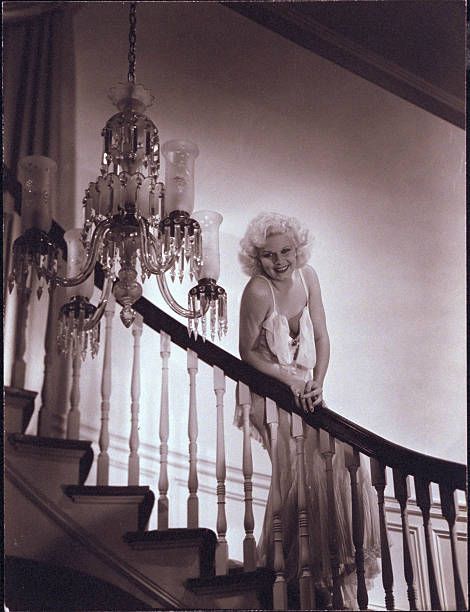
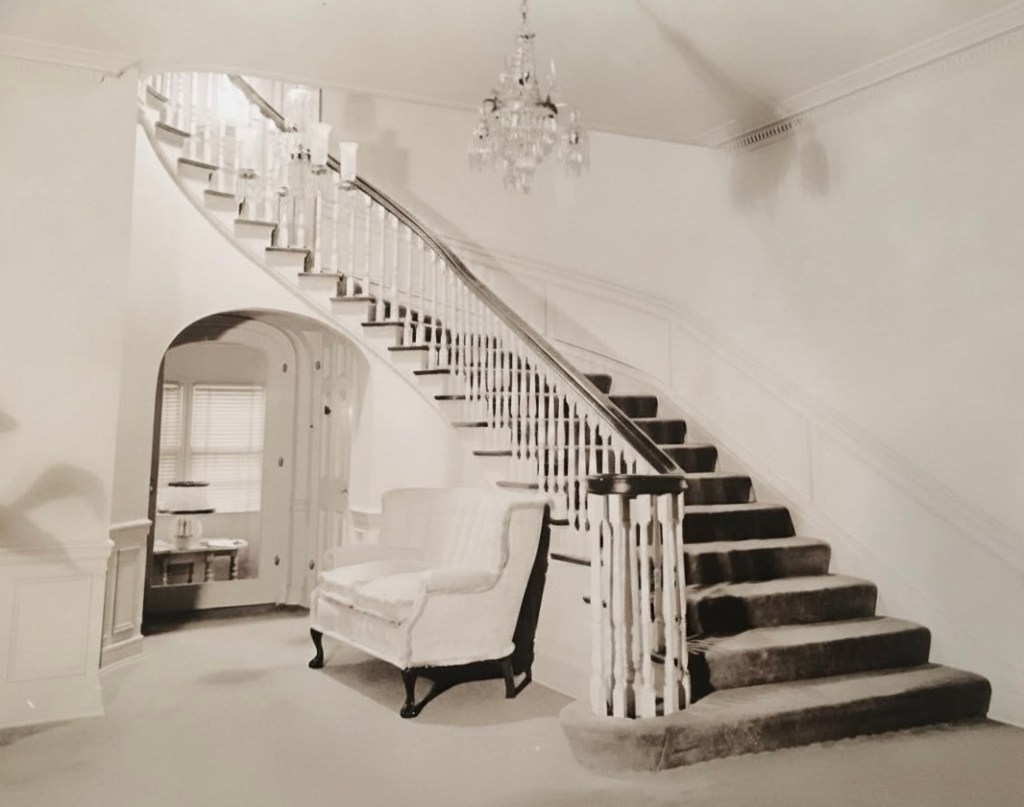
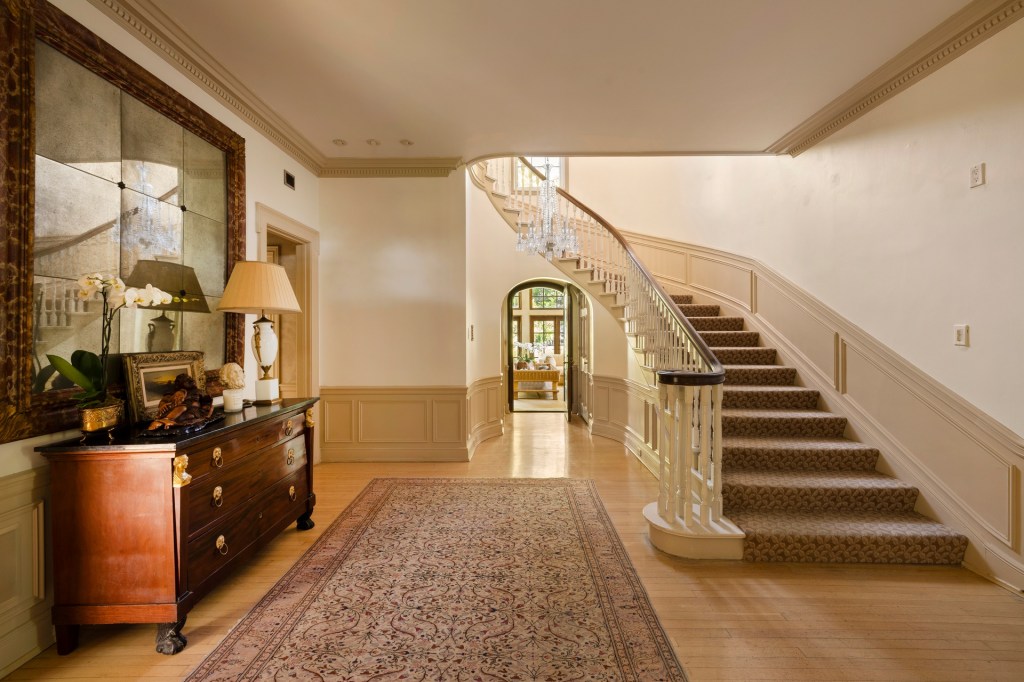
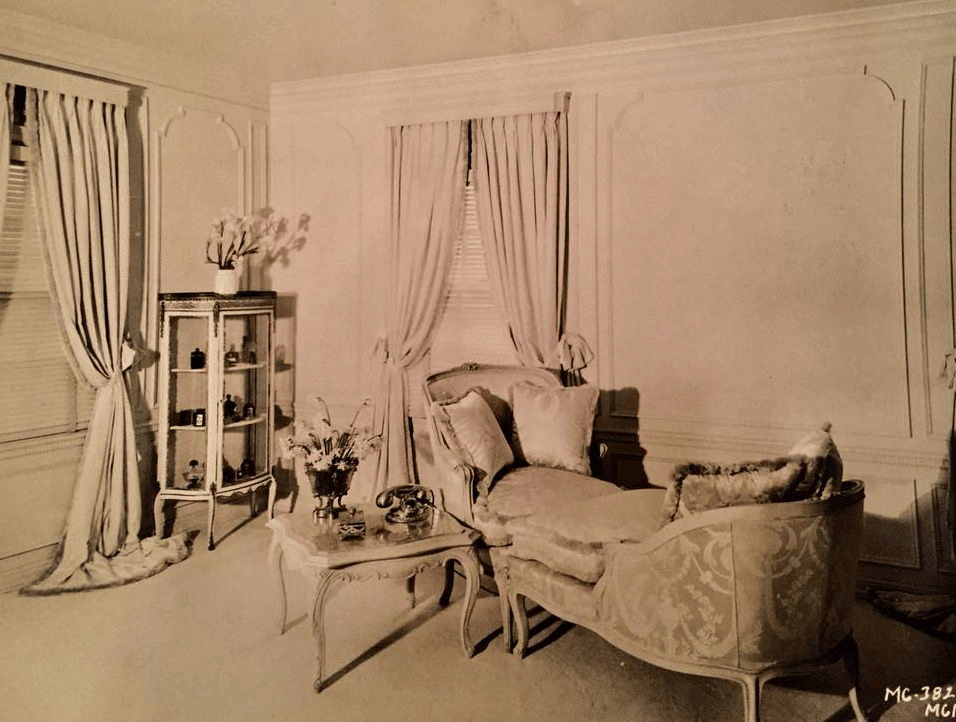
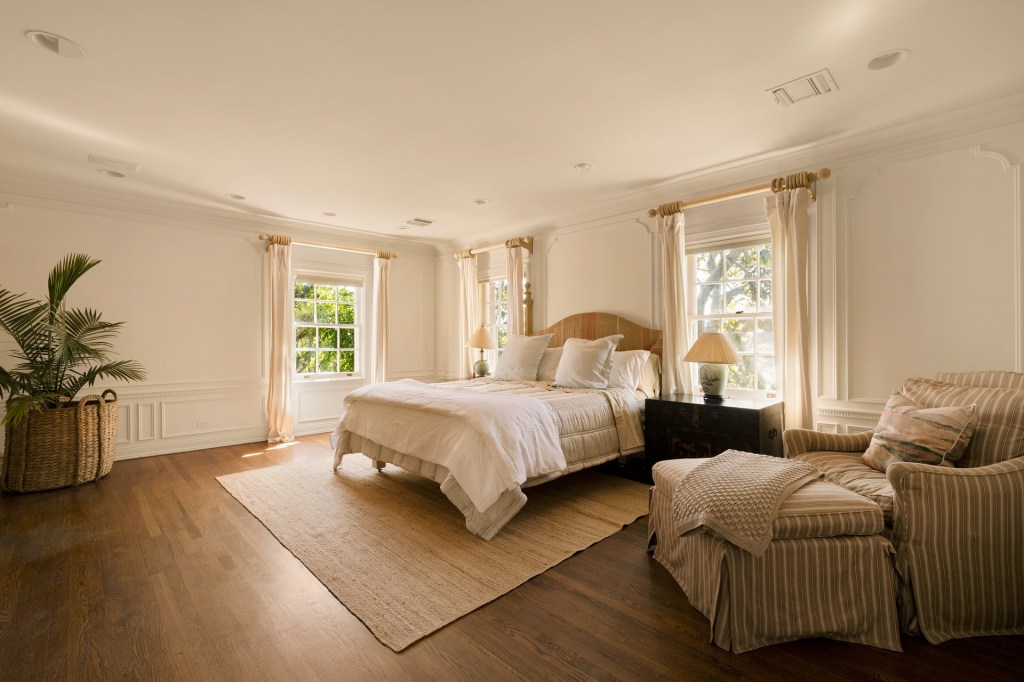
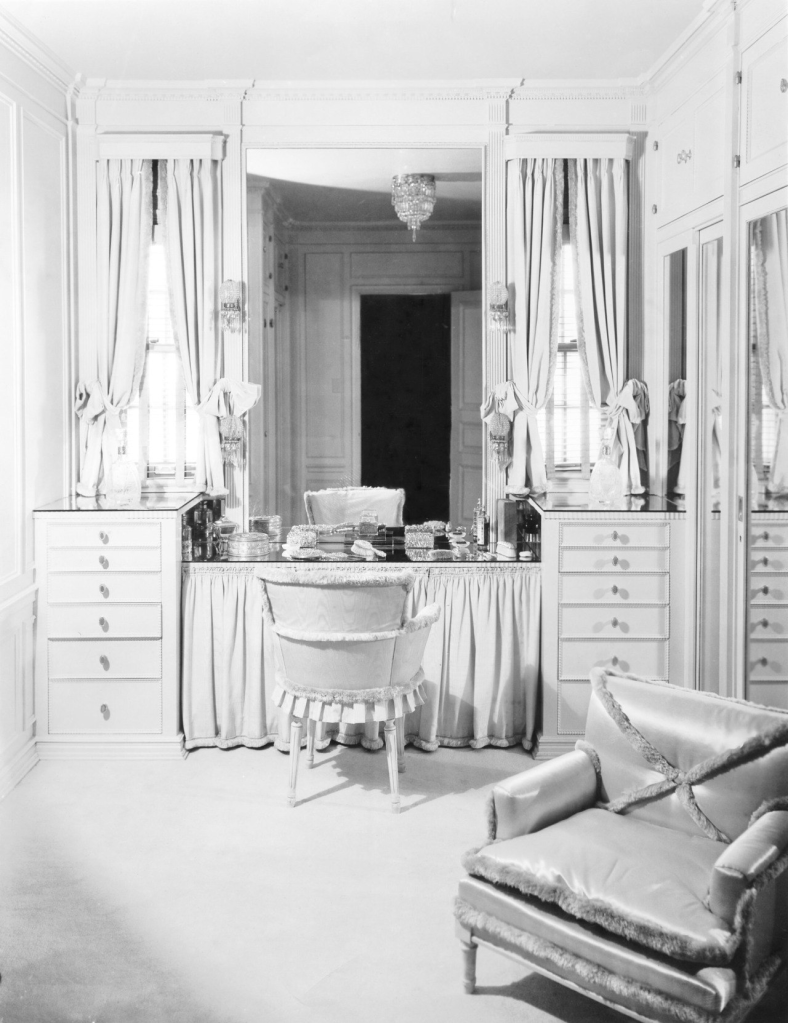
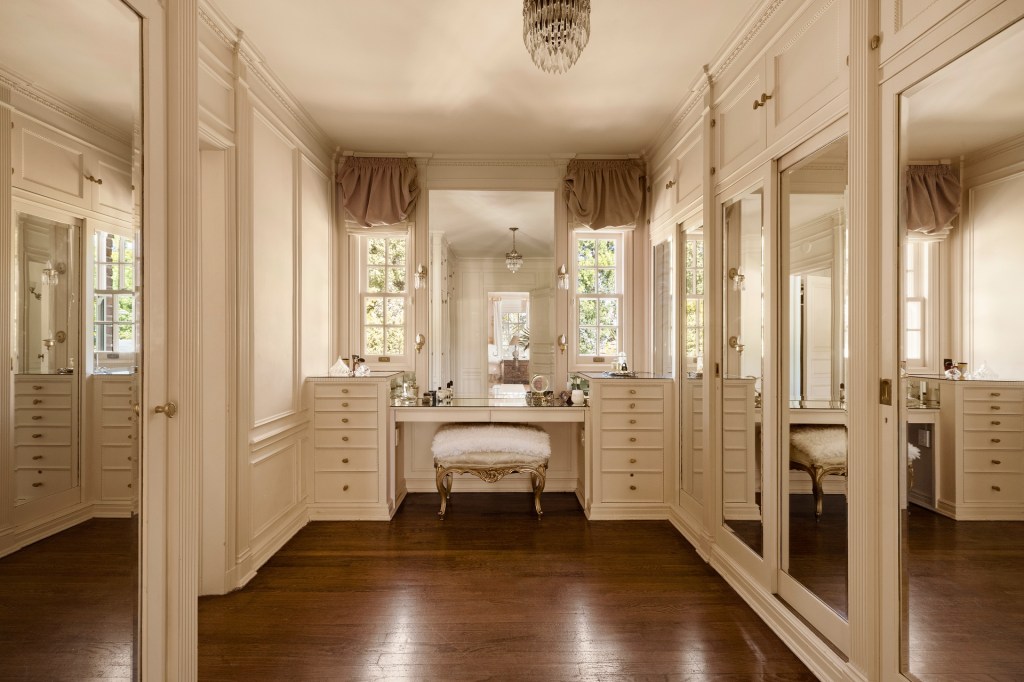
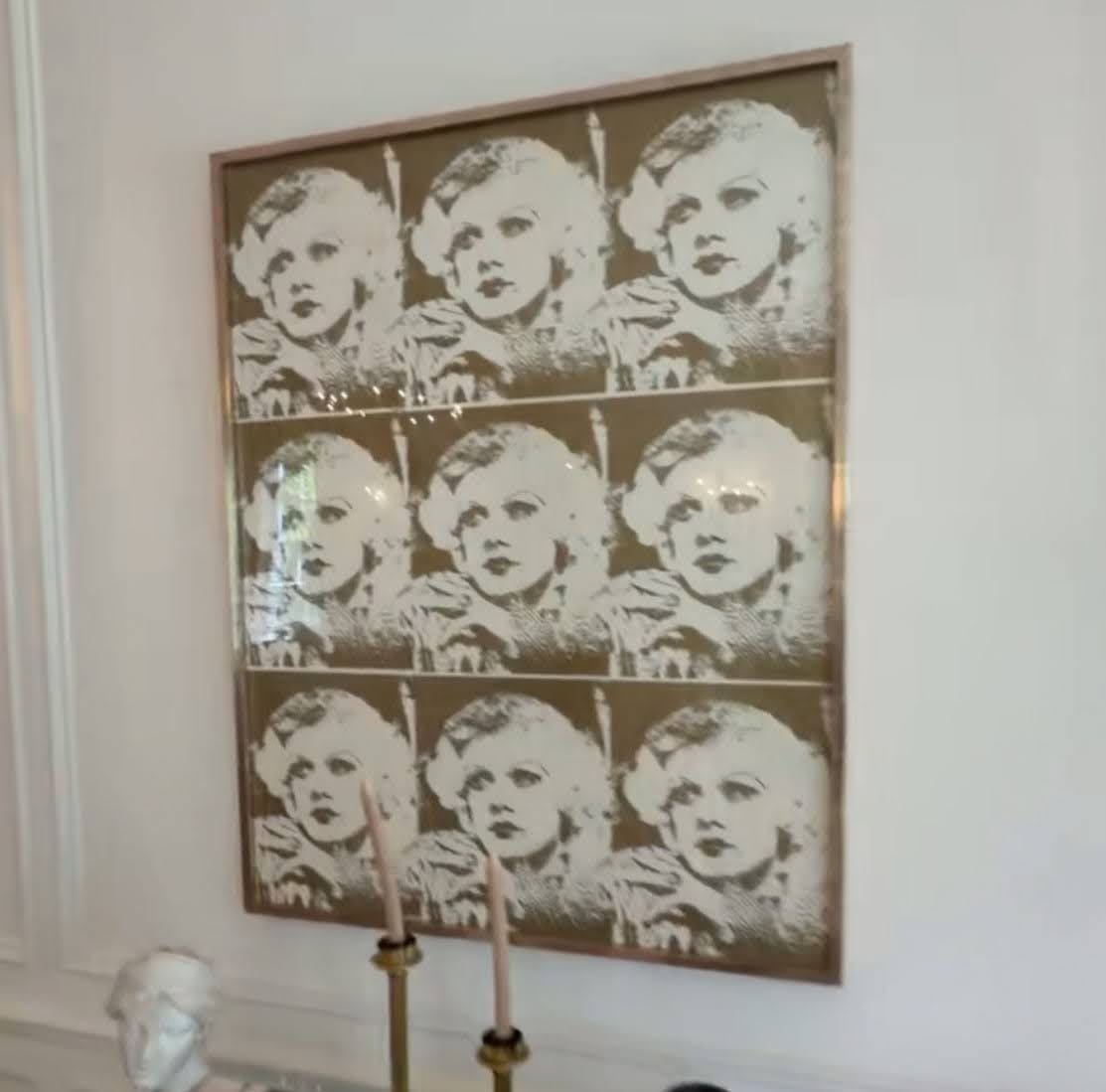
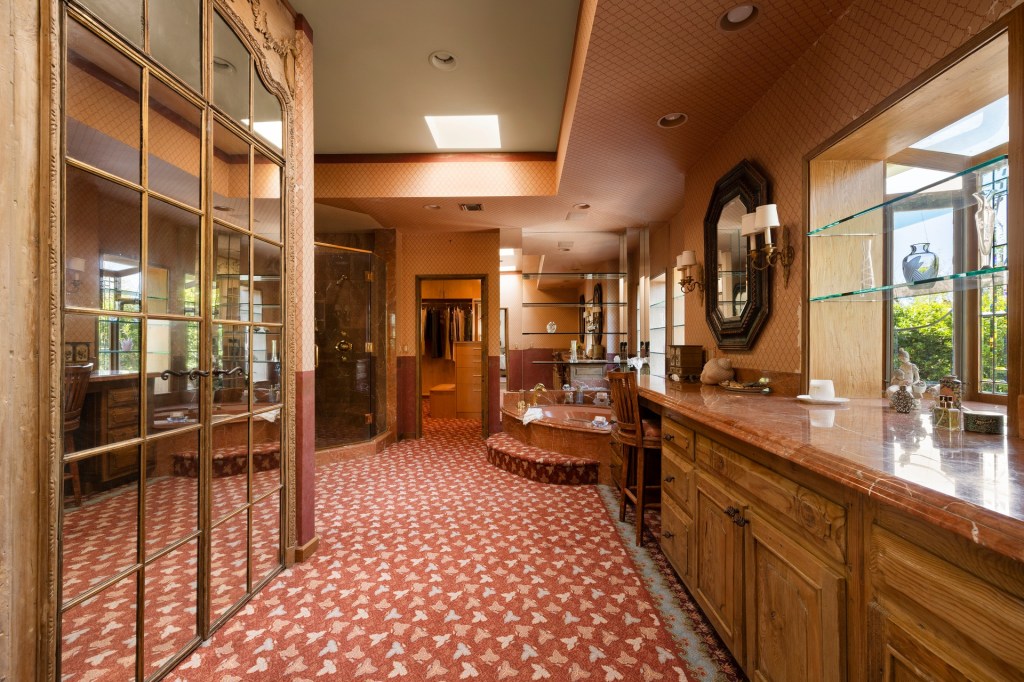
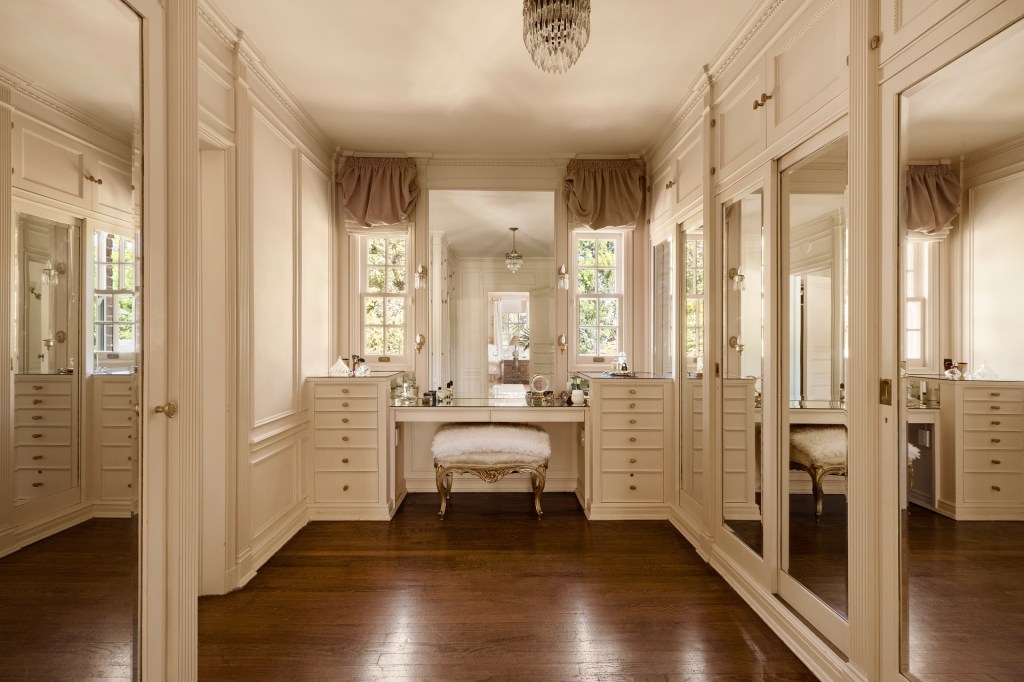
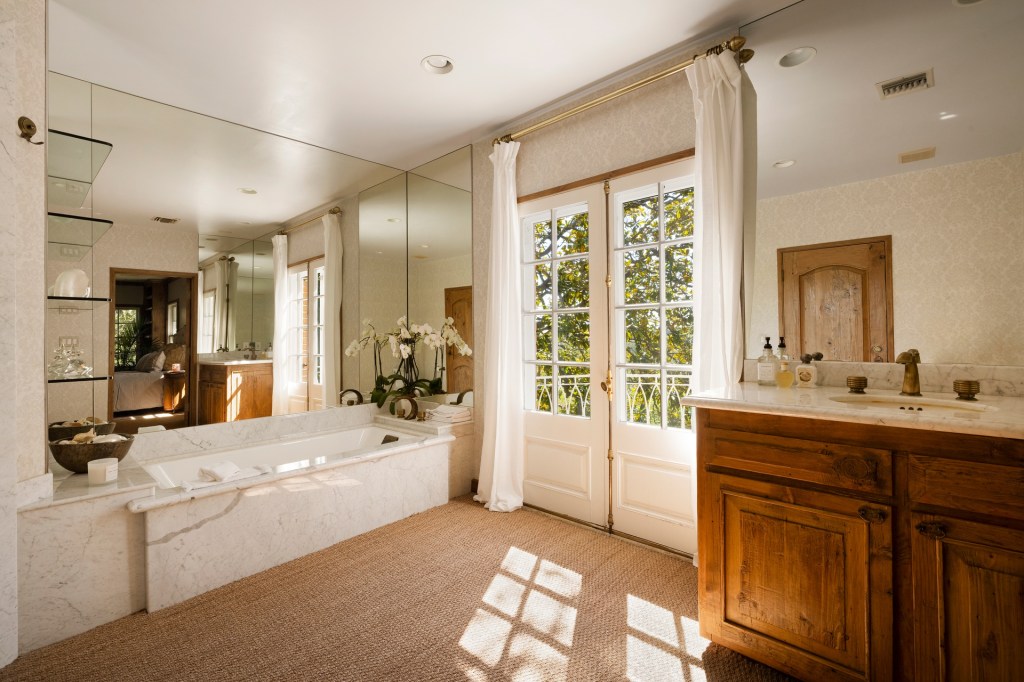
Harlow might even have popped into her ensuite dressing room vanity to take off her makeup and apply her cold cream for the night. The mansion’s future owner can do the same in style, as it remains in the very same spot, all-original down to the same knobs on the drawers (!). In this area was once stunning, Warholesque wallpaper featuring a repeating grid of one of her publicity portraits from Bombshell (1933): as the realtor asserts this was a Harlow-era addition to the home, there’s the possibility of posing the actress (and her mother) as pop art forerunners when Jayne Mansfield, who would use similar ideas for her Pink Palace just a stone’s throw away, was only an infant, though it seems just as likely it was added in the sixties during the style’s heyday. A piece of said wallpaper remains framed in the home to this day.
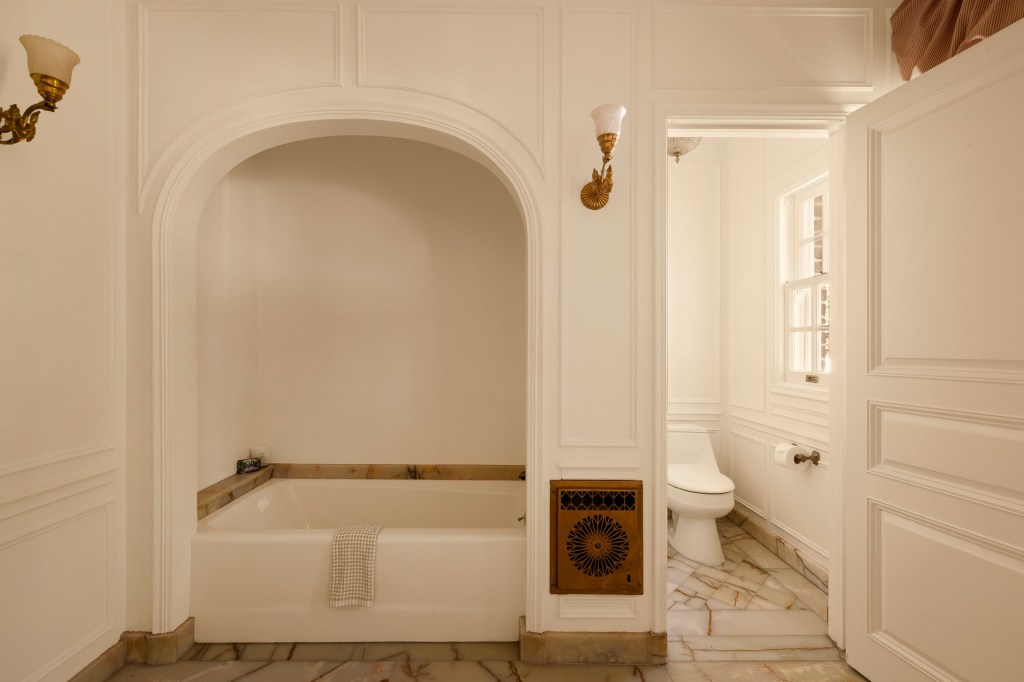
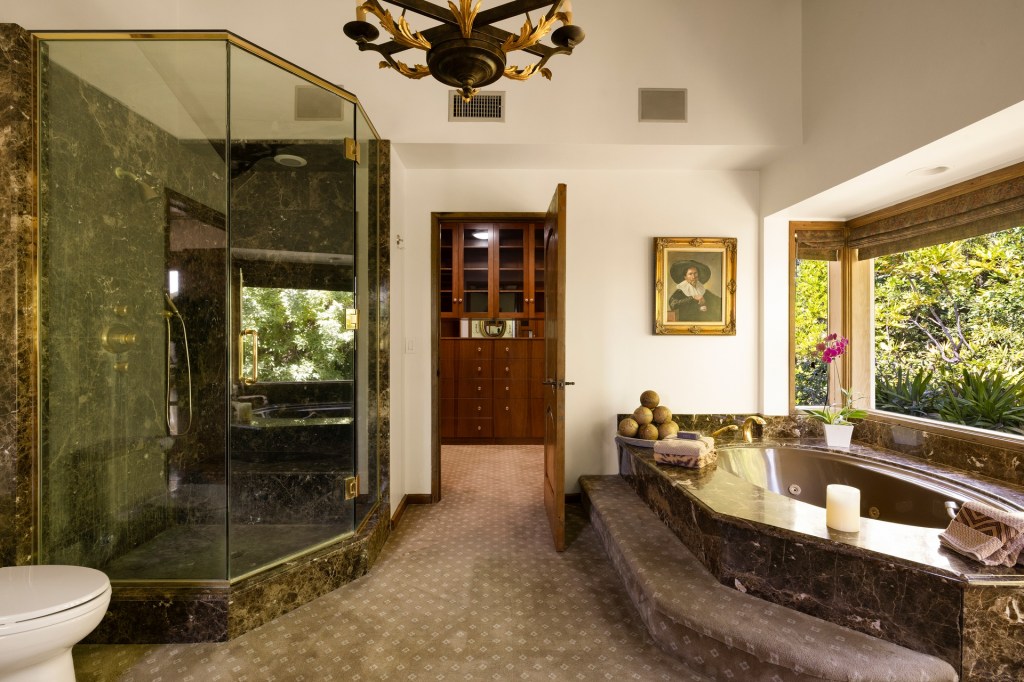
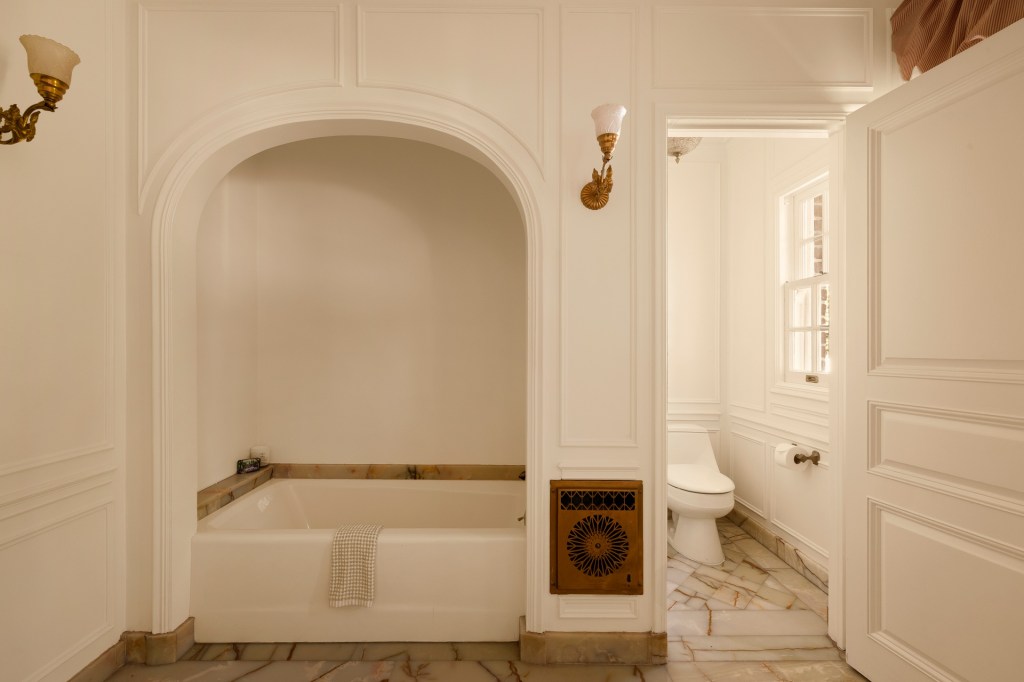
To the left of Harlow’s dressing room vanity is the entrance to her attached bathroom. The deep rectangular standalone bathtub, set under yet another white archway into the wall, would have been a great place to sit and ponder tomorrow’s scenes in a pile of bubbles.
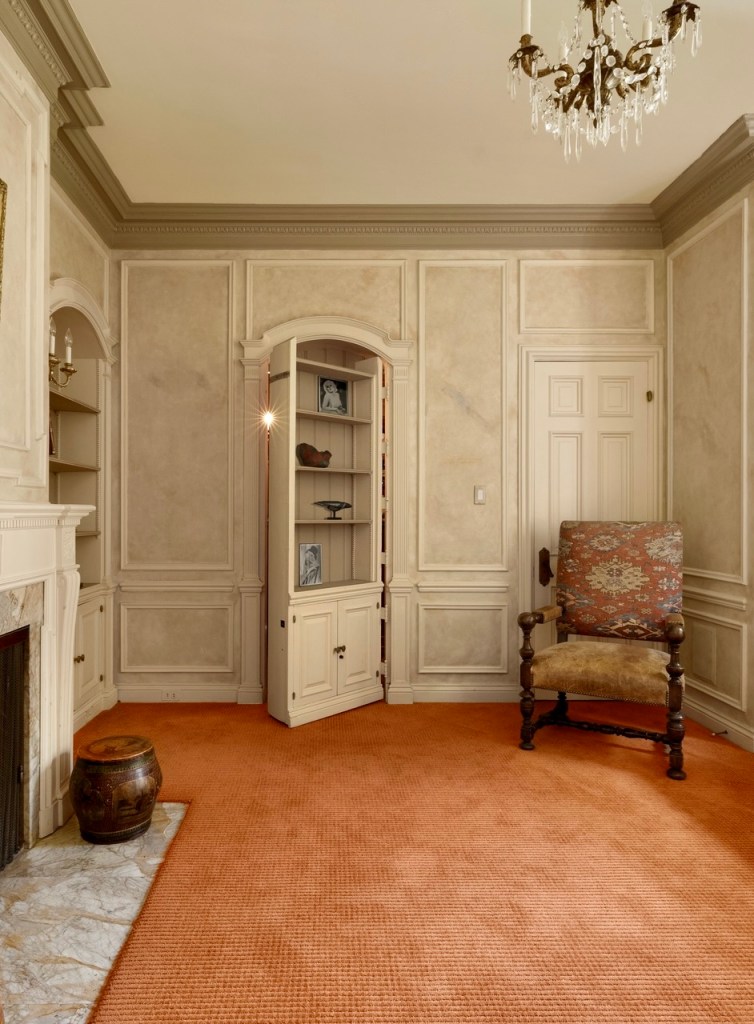
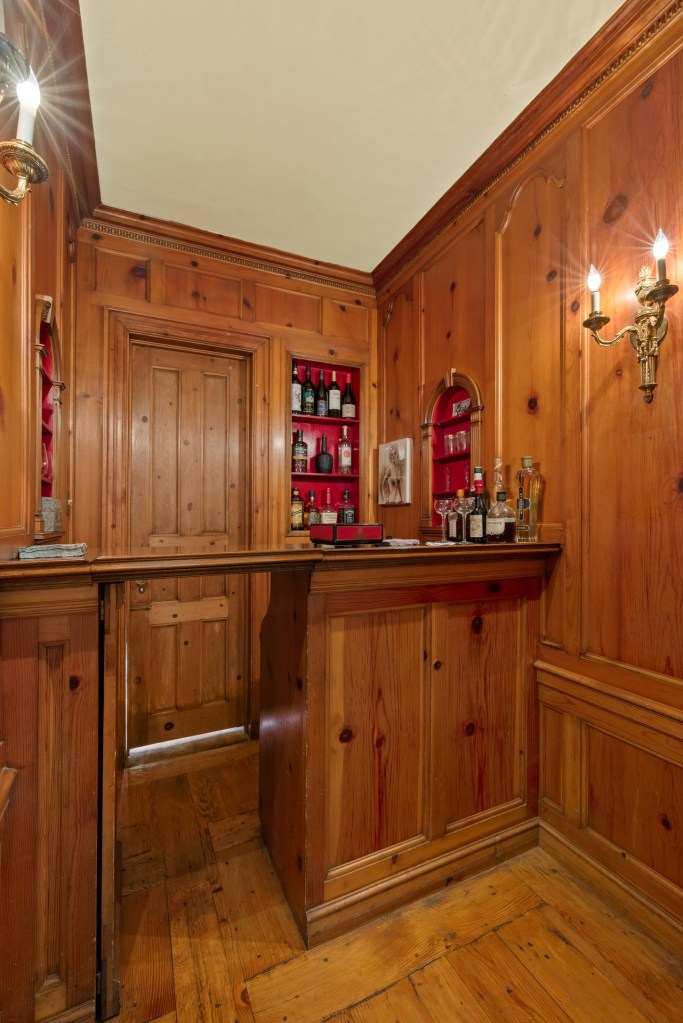
And if the day’s proved especially taxing, there was always the retreat-within-a-retreat that was the wooden bar behind the unassuming arched bookcase in Harlow’s study. While designed and built for clandestine usage during Prohibition, alcohol was legalized again mere months after its completion. As a result, it was openly discussed in a 1934 profile of the home. “That’s the modern touch for you!” read the magazine’s chosen disclaimer.
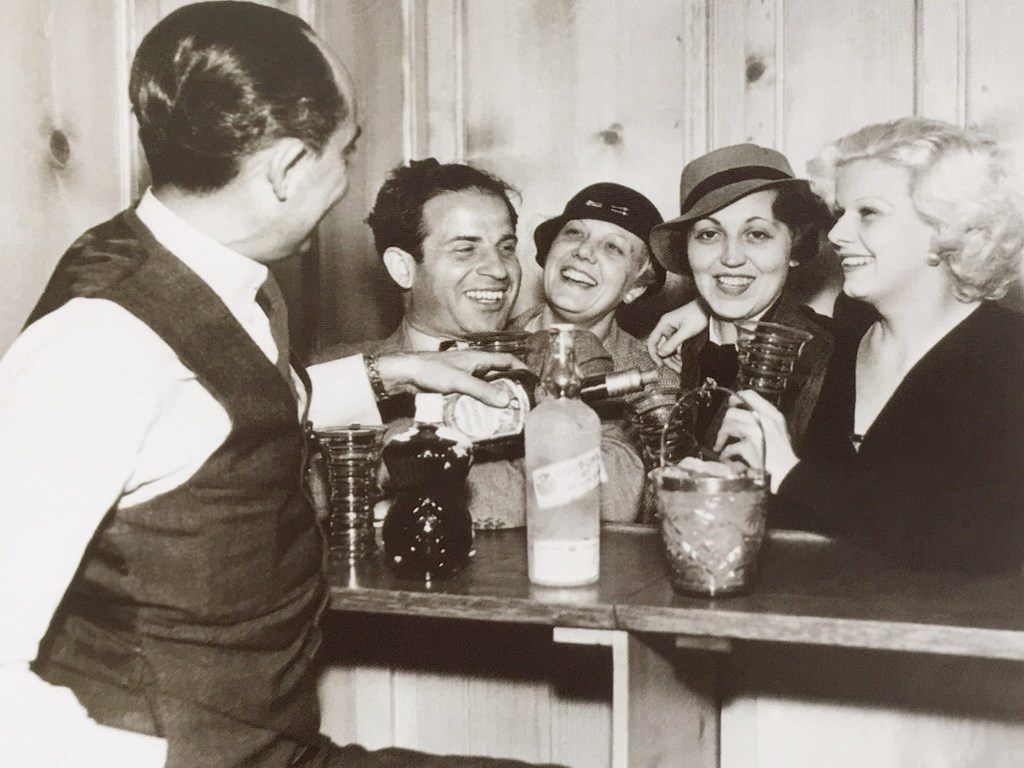
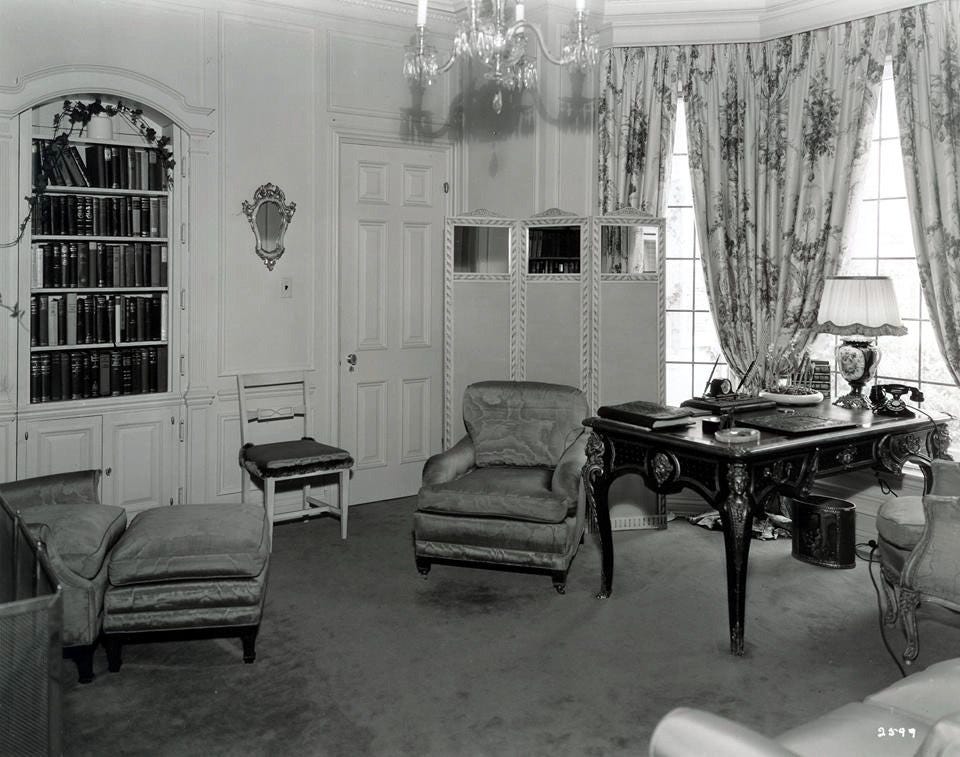
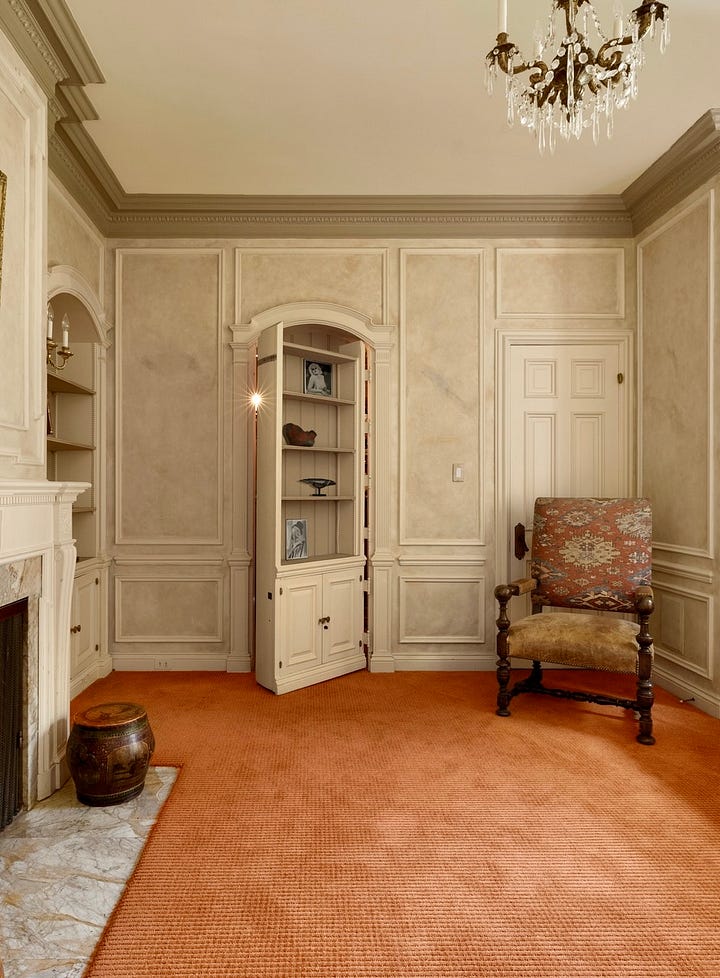
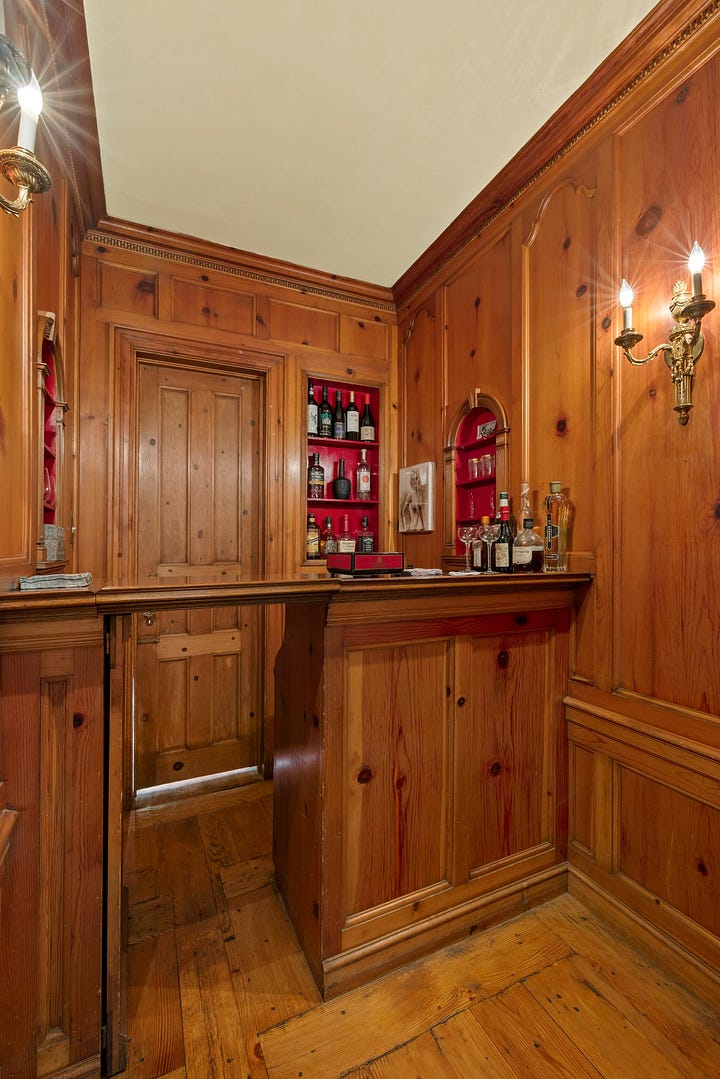
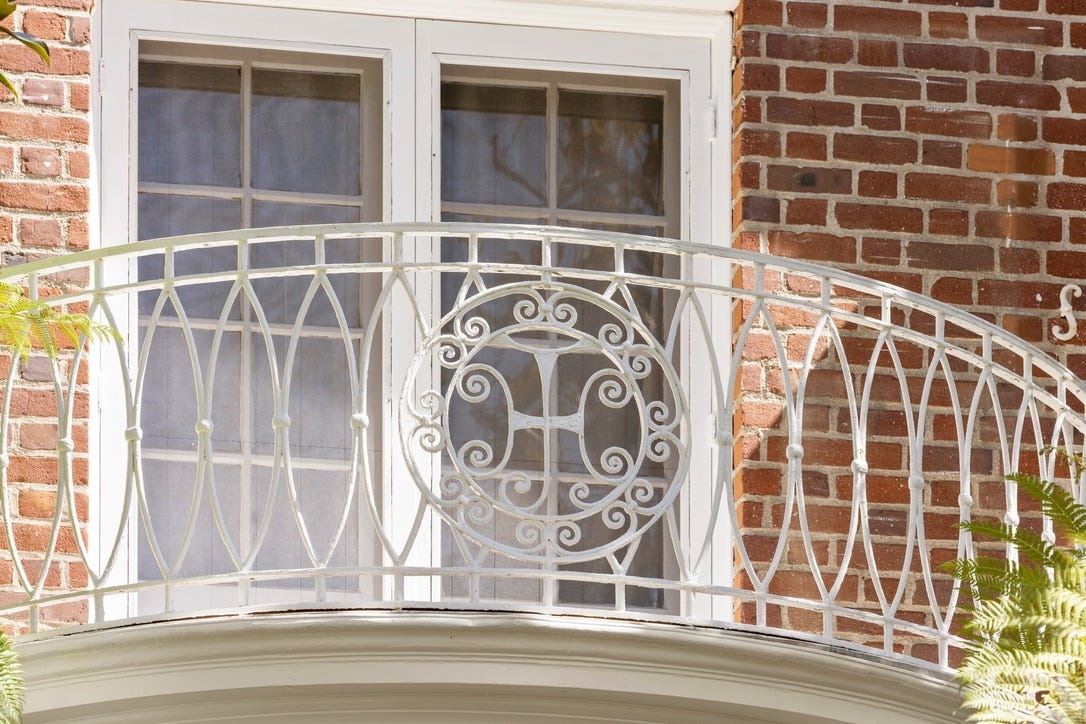
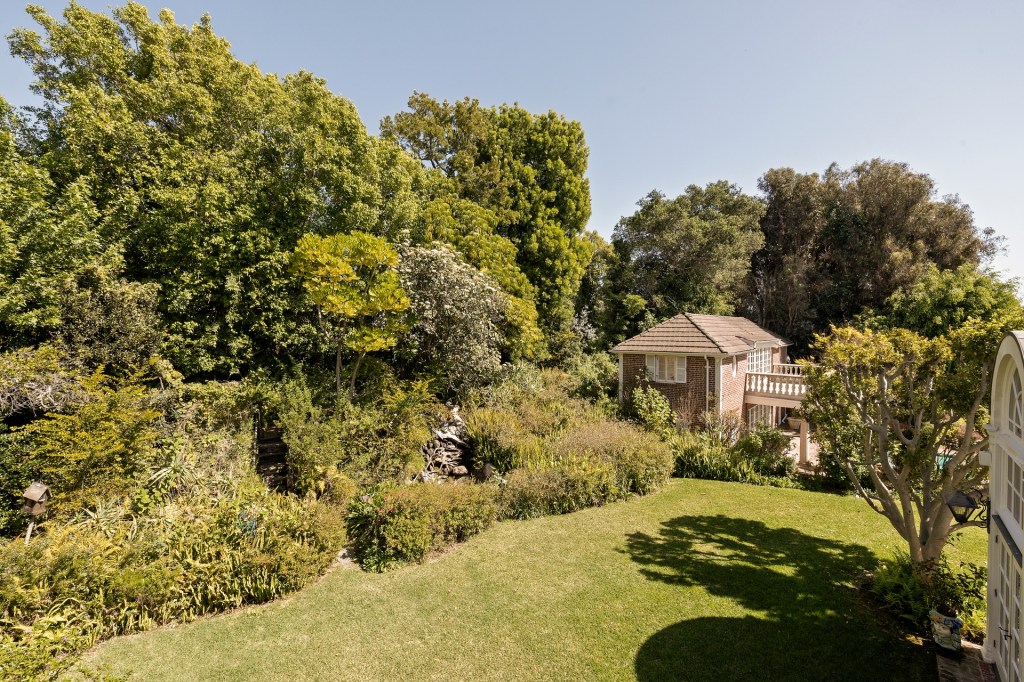
Harlow, like many of us, loved to read, though she was luckier than many of us as she could easily grab a book off the shelf, pour herself a drink, and shut herself away from the world if she so desired during her rare off moments. Perhaps she may have wandered with her chosen book through one of the bedrooms up to the balcony overlooking her land, which still bears “JH” in the center of its white grillwork railing.
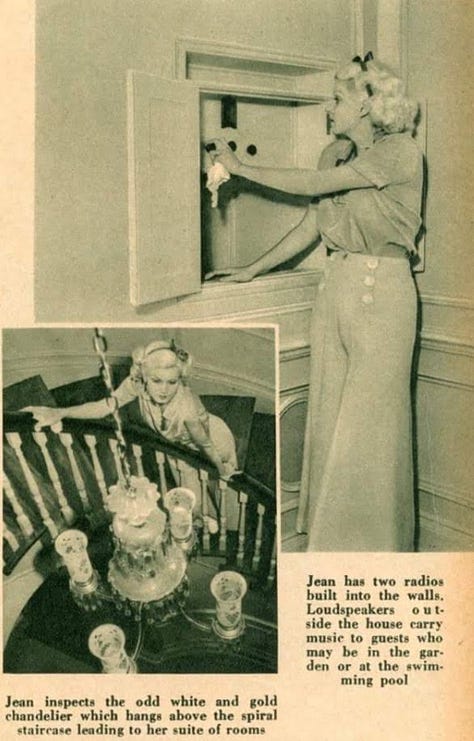
For the rarer full day off, there was no shortage of activities Harlow and her usual small group of friends could partake in. While her estate can still accommodate large parties—and their cars—Harlow herself rarely entertained scores of Hollywood elites, preferring more intimate gatherings with friends. Even so, the wall radio installed in the corner of her downstairs salon was allegedly connected to outdoor loudspeakers, so “guests who may be in the garden or at the swimming pool” before the age of Bluetooth could still relax with the latest program while on a lawn chair or a floatie. What a perk!
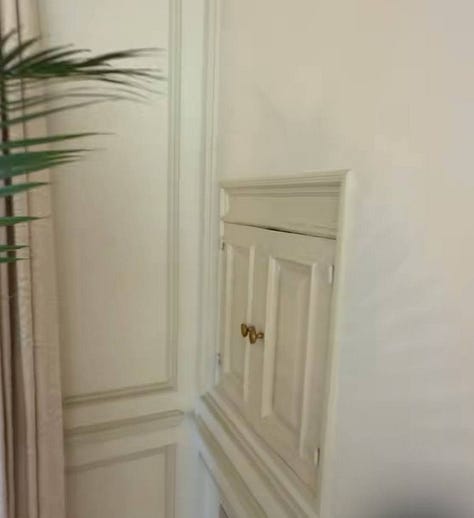
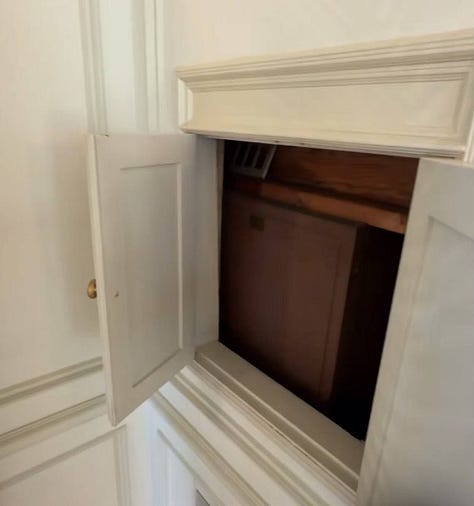
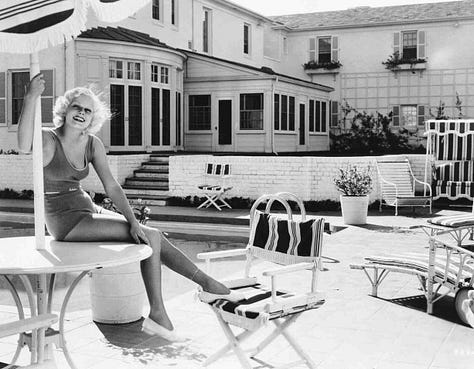
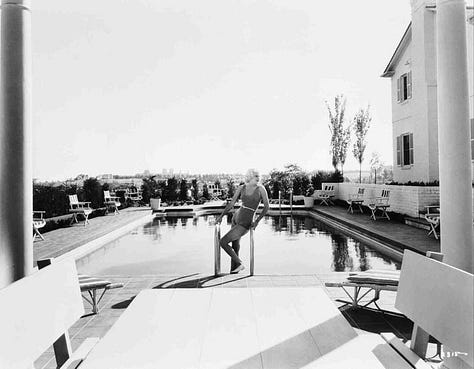
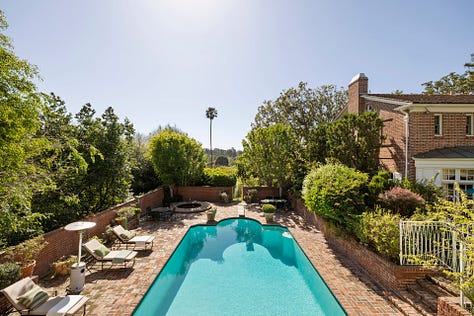
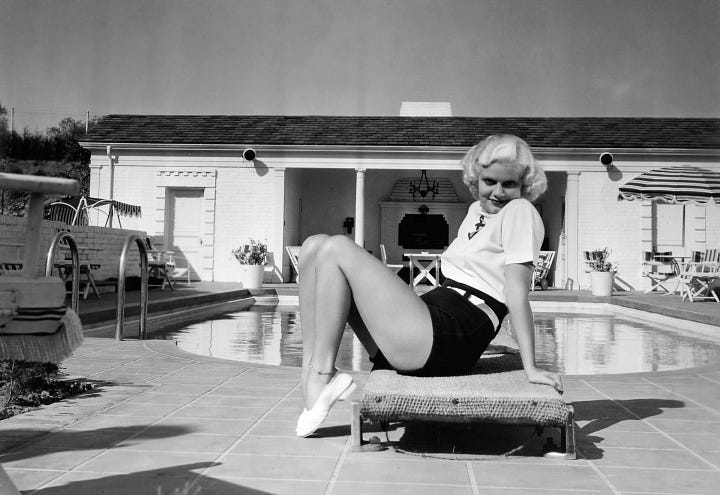
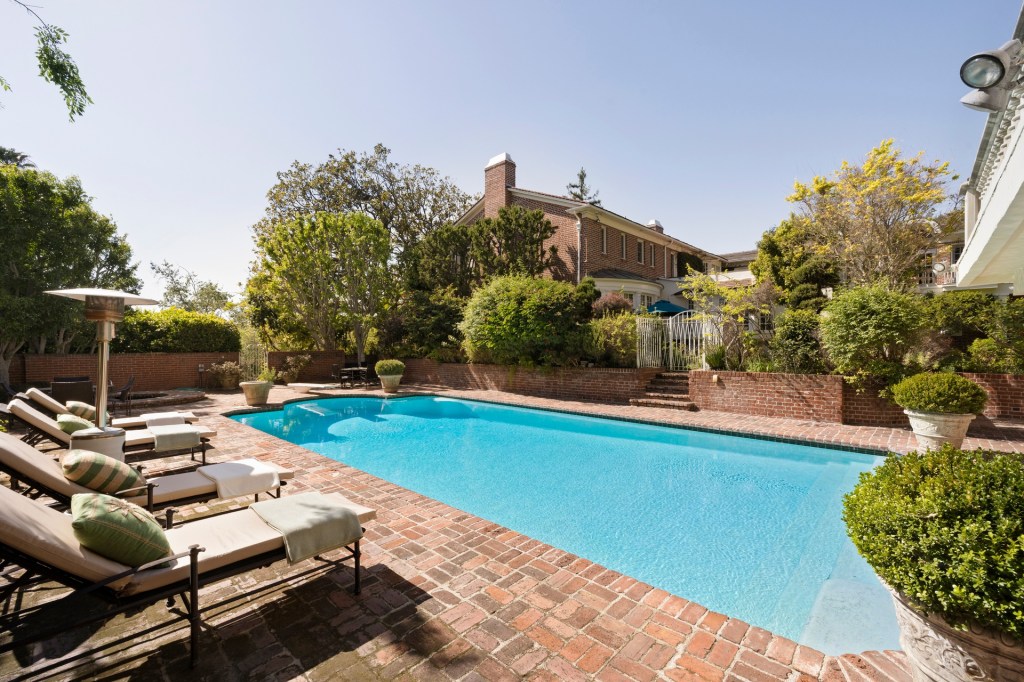
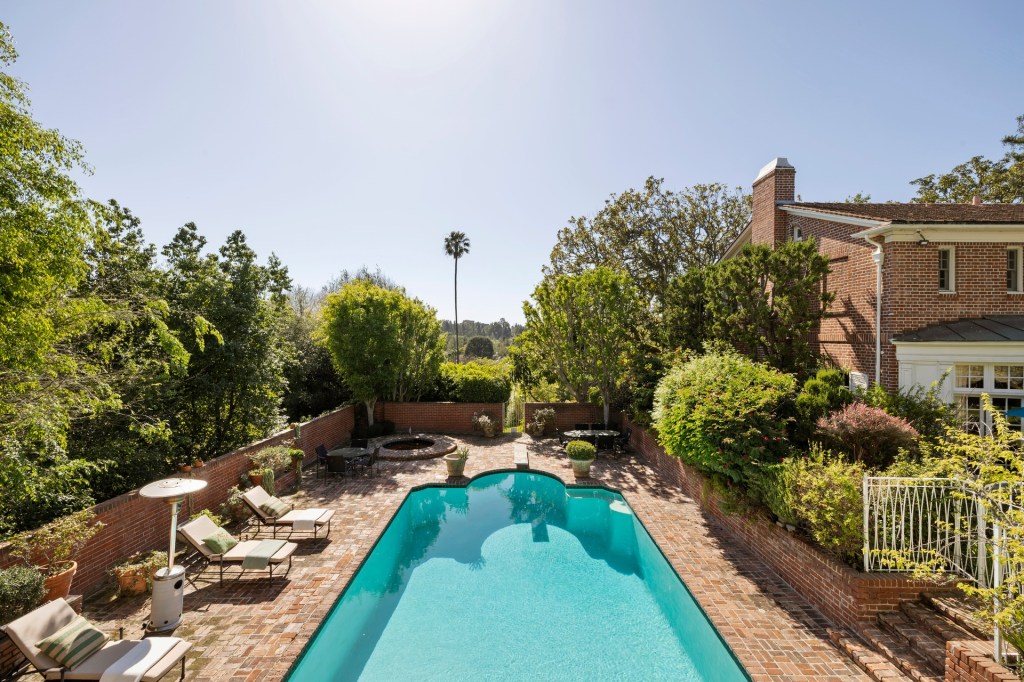
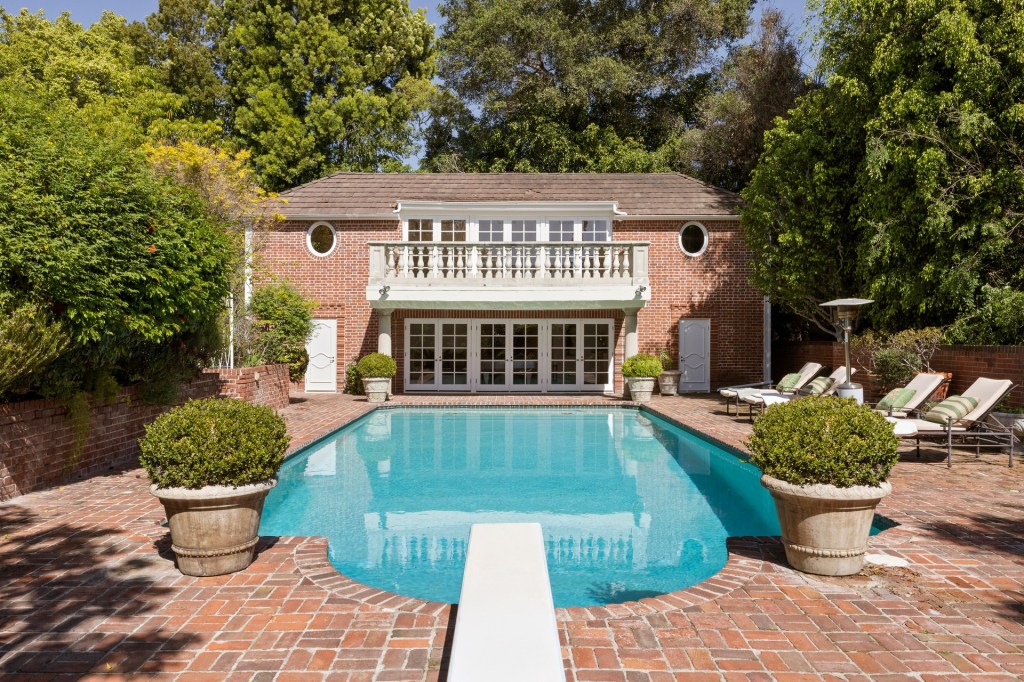
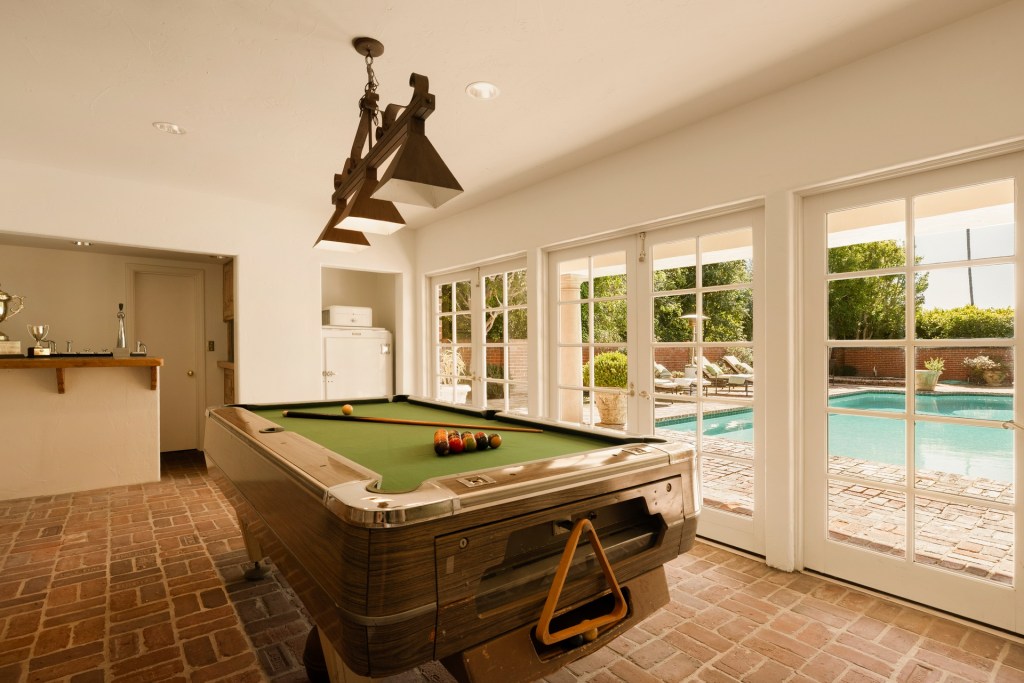
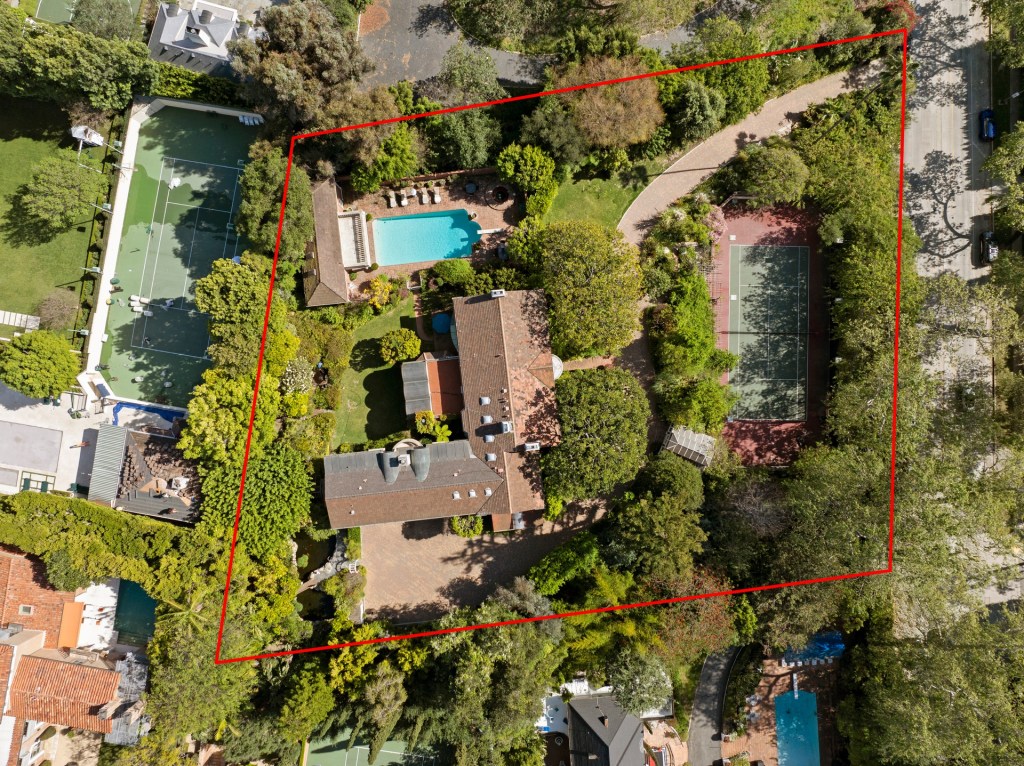
Ephemera left behind by Harlow and her family remains in the house, like captive ghosts forever frozen in time. Coca-Cola and Lucky Strike ads, hawked by the actress early in her career with a radiant smile, are still in evidence, as is her charming poolhouse fridge, which proved useless for the smaller Palm Drive home she moved into in 1936. The pool itself remains the aquamarine gem of the entire estate, also untouched since Harlow left it, diving board and all, since the last publicity portrait she took beside it. Parallel to the house, the pool’s nondescript front entry just off the driveway would have been where studio photographers like Clarence Sinclair Bull and William Grimes lugged their equipment to set up in the yard.
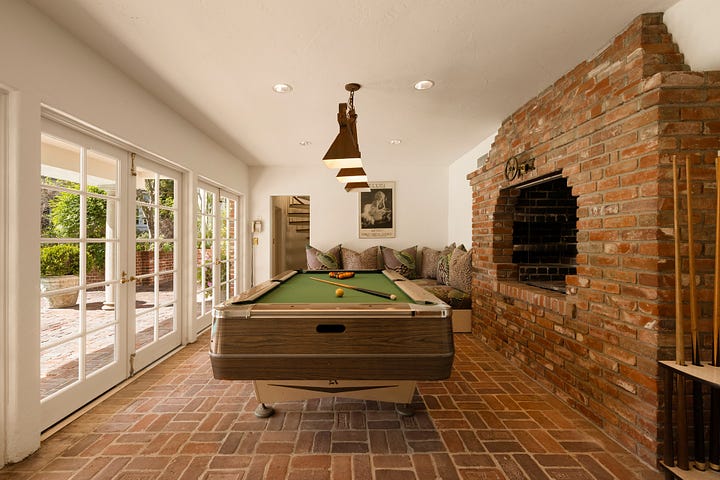
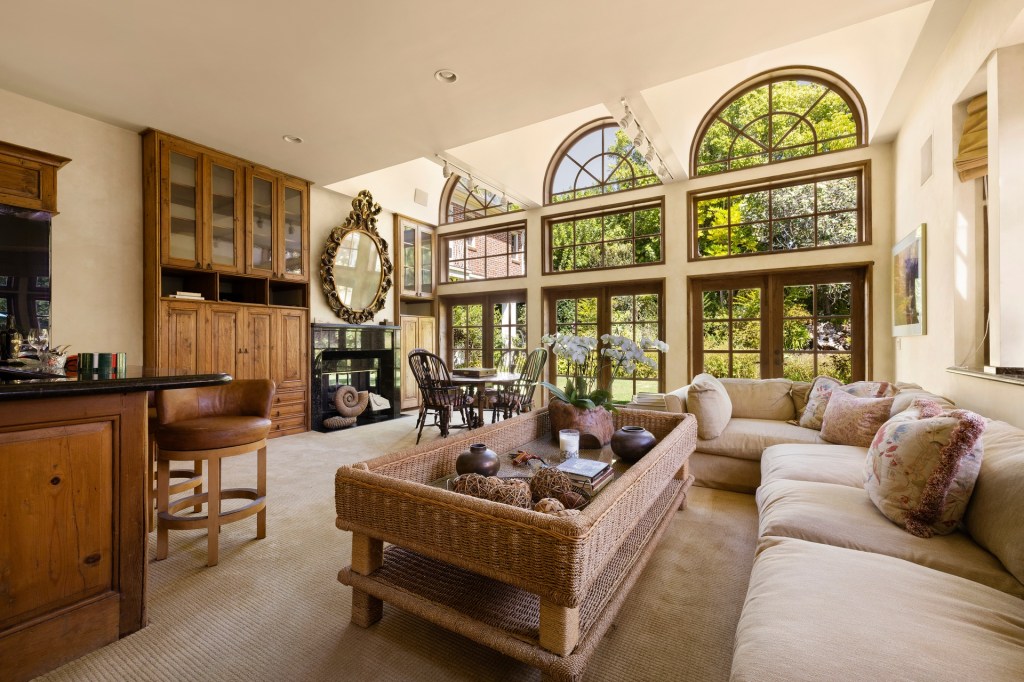
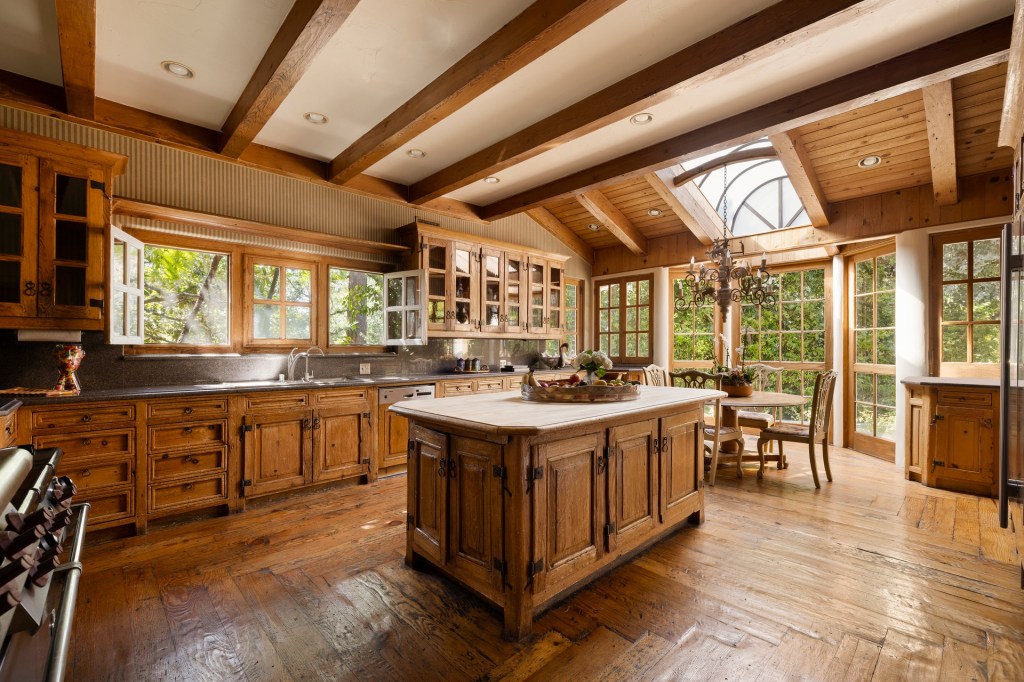
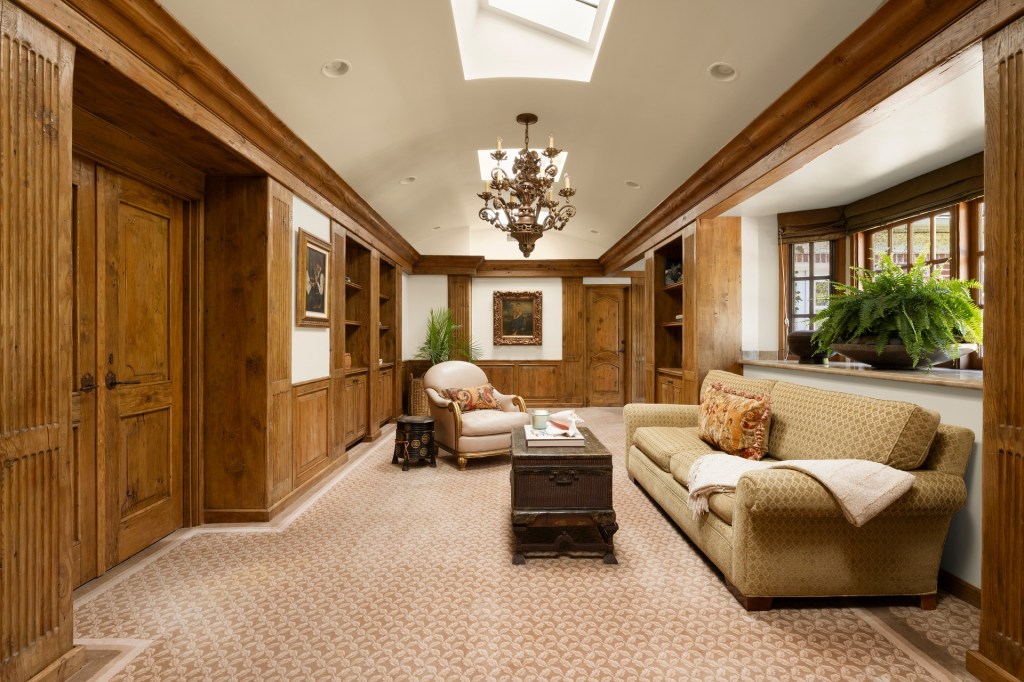
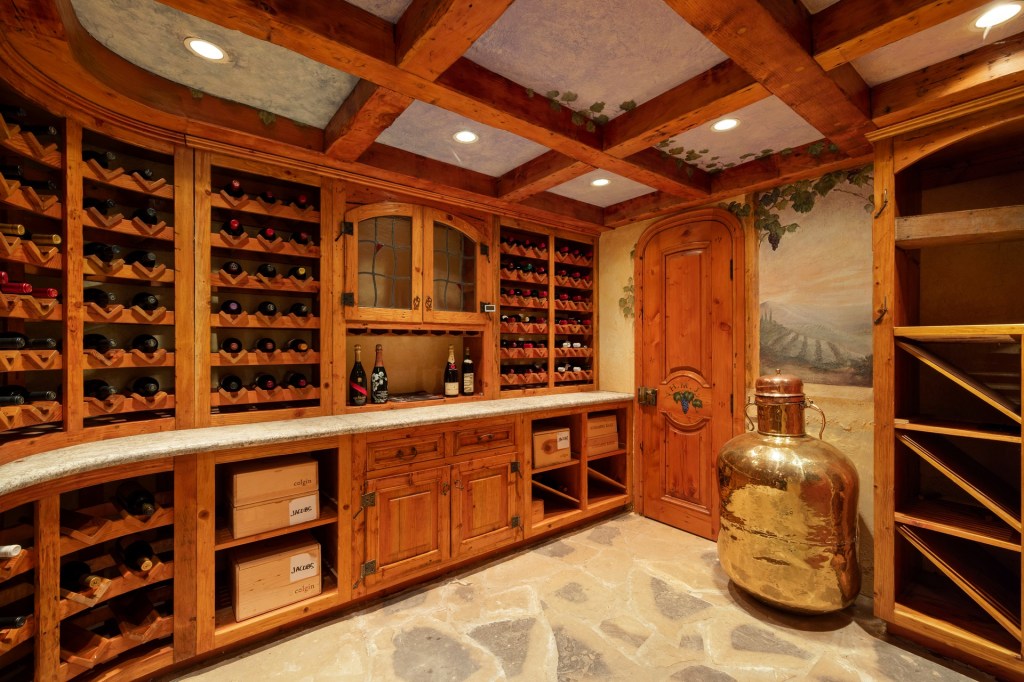
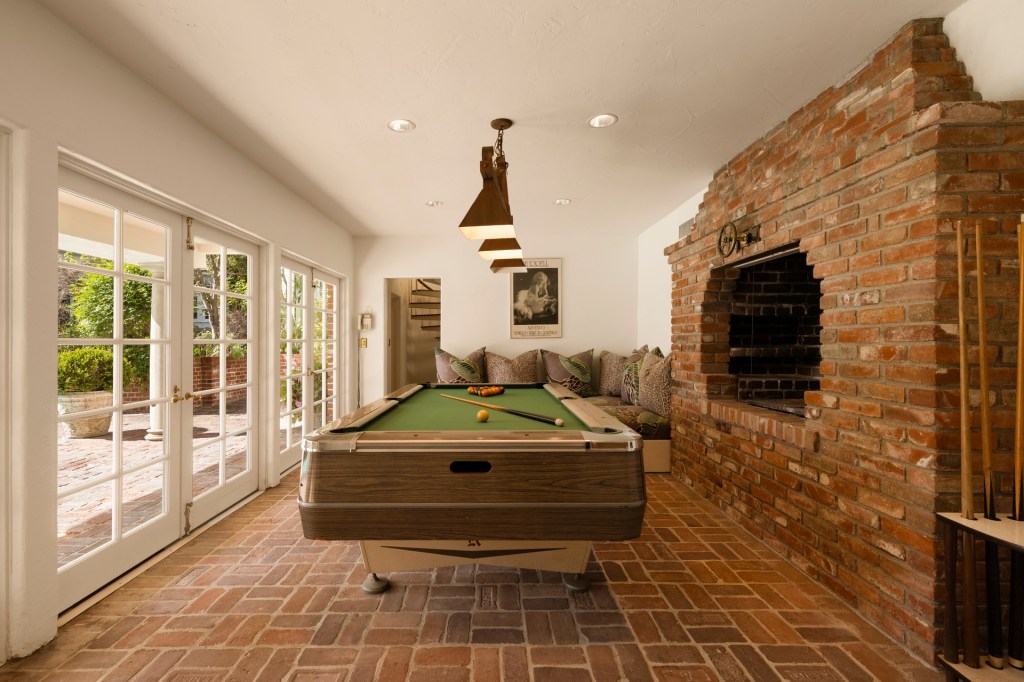
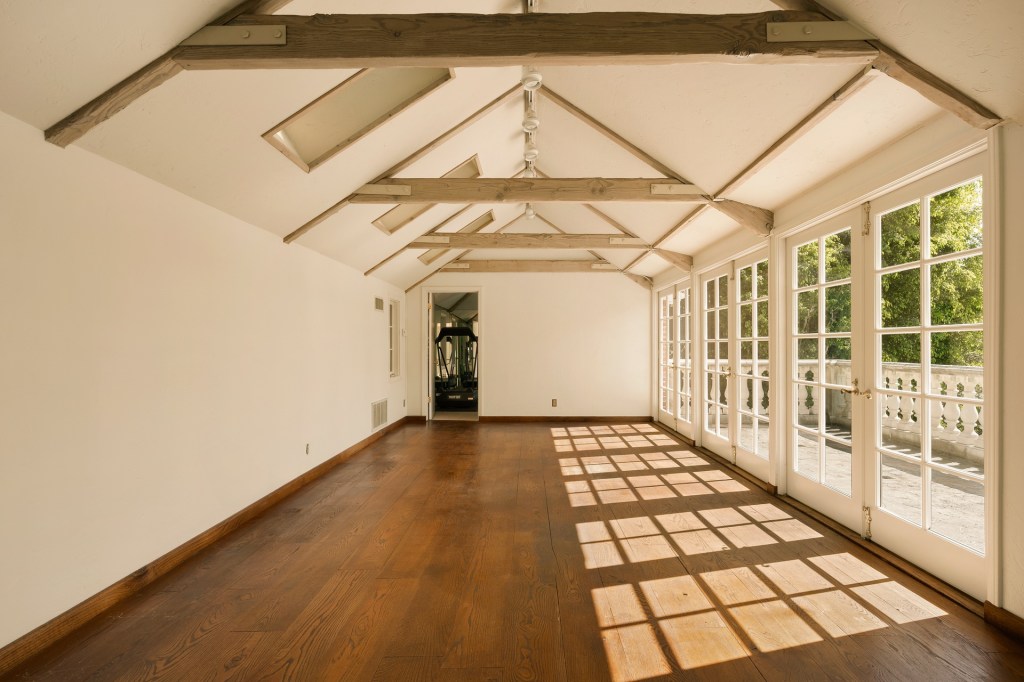
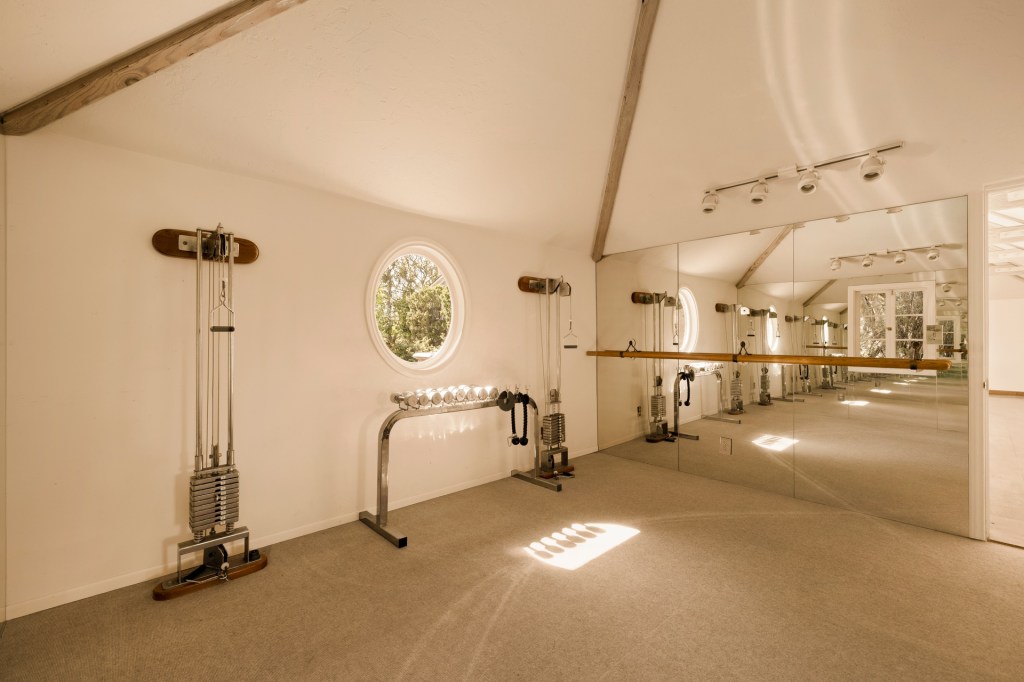
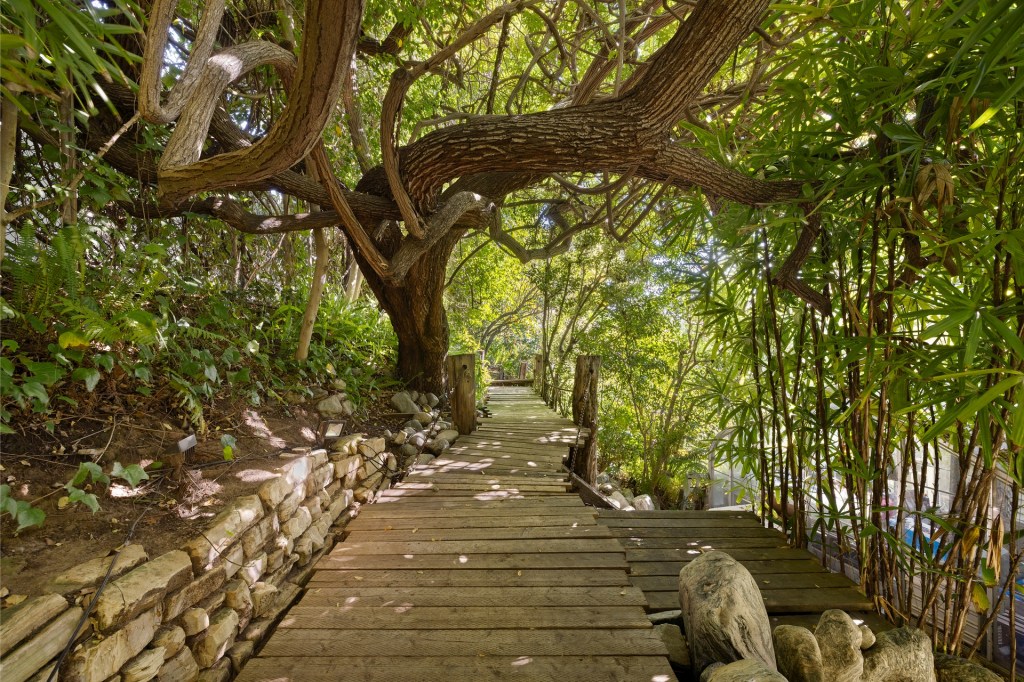
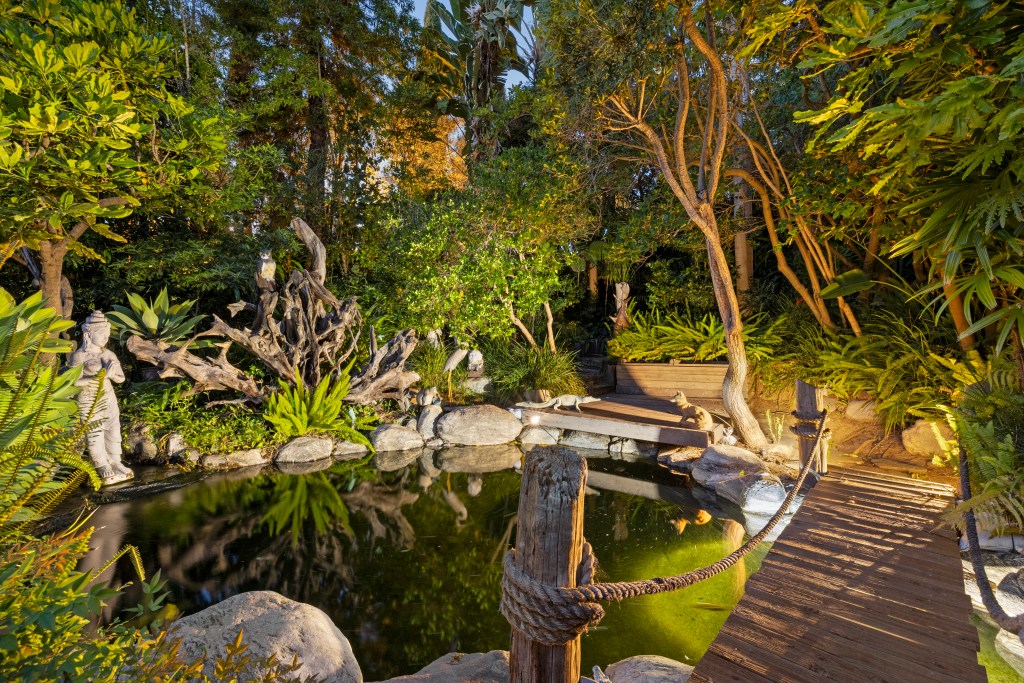
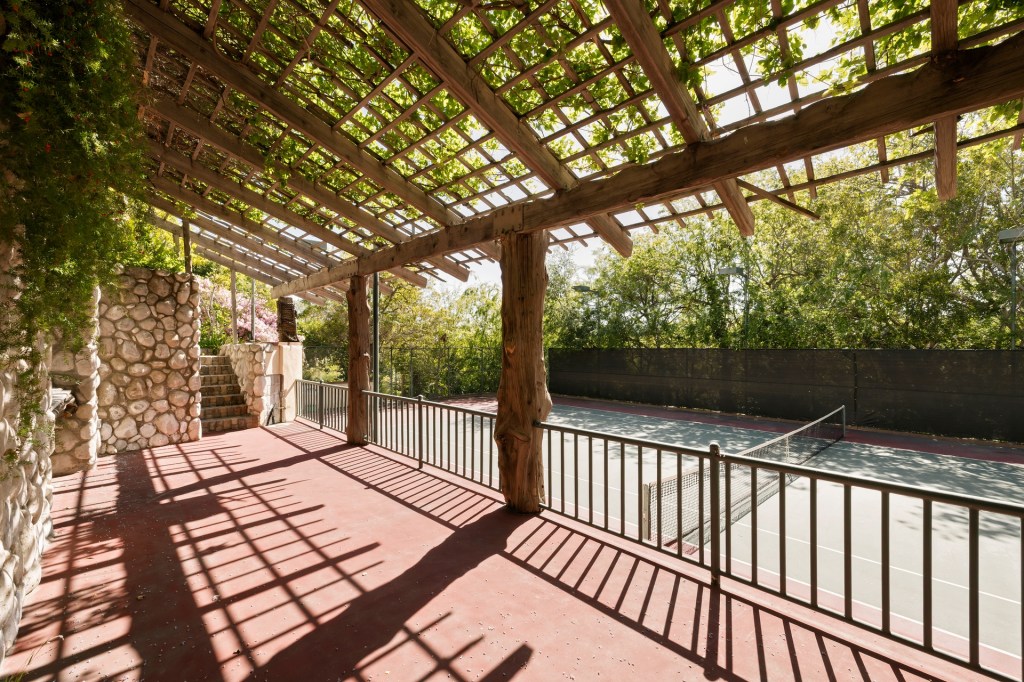
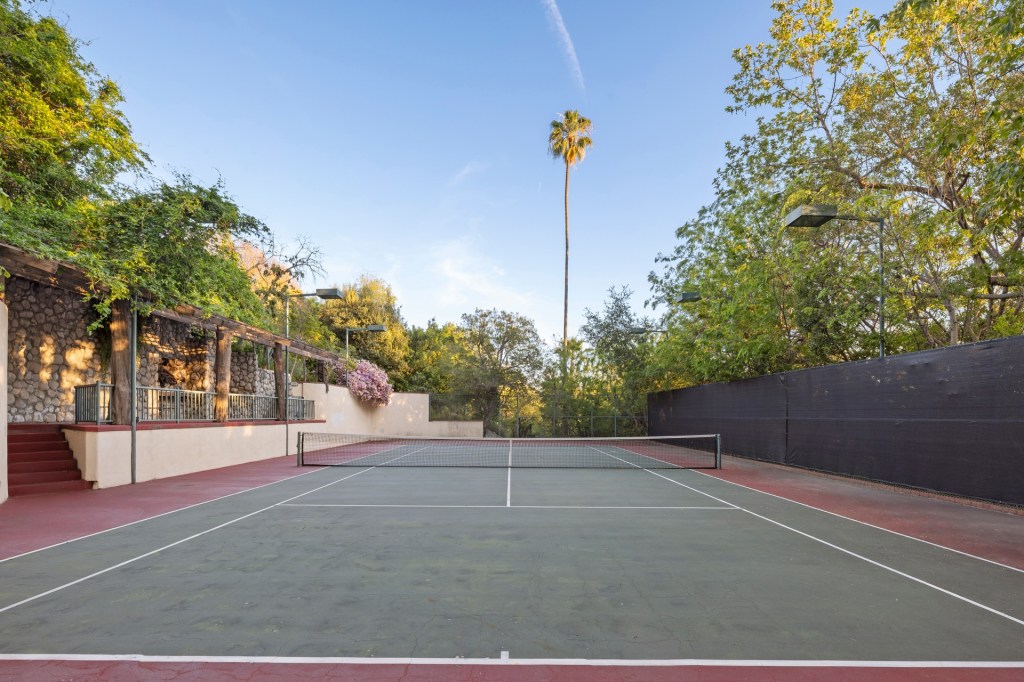
There are of course the not-so-original areas, including the tennis court, wine cellar, nature walk, koi pond, a second story on the poolhouse, and the modern living area just beneath the staircase, all of which were added during a 1980s expansion. It is no longer “The Whitest House in the World,” as its original red brick veneer hidden under yet another layer of white paint has been restored to its former glory. These should be viewed as additional perks for the aspiring owner, as they don’t at all compromise the home’s cohesive style: they can be easily renovated and updated to heart’s content without worry of tarnishing a platinum landmark. So much of the home is intact that this should prove a relief: there’s less specialized maintenance to keep on top of, but just enough originality to humble one into remembering they’re still living under Harlow’s roof.
The new owner, whatever they choose to do with the property, should remember with reverence that the first one to enjoy its extant creamy crown molding had one of the many shades of white in the house named directly for her: “Platinum Blonde.” And while it’s not known to be haunted, Harlow’s legacy lives on with stunning vibrance in the white walls and the very same planter boxes and shades she carefully installed. Perhaps, if they listen closely enough, they’ll hear her resounding laughter echoing through the staircase chandelier. As Ginger Rogers said of Harlow in 1965: “You’d always know when Jean was there because this chiming little laugh would be sounding through the halls.”
If any space holds some of Harlow’s mirth nearly a century after her passing, it’s her platinum-plated escape on Beverly Glen Boulevard.
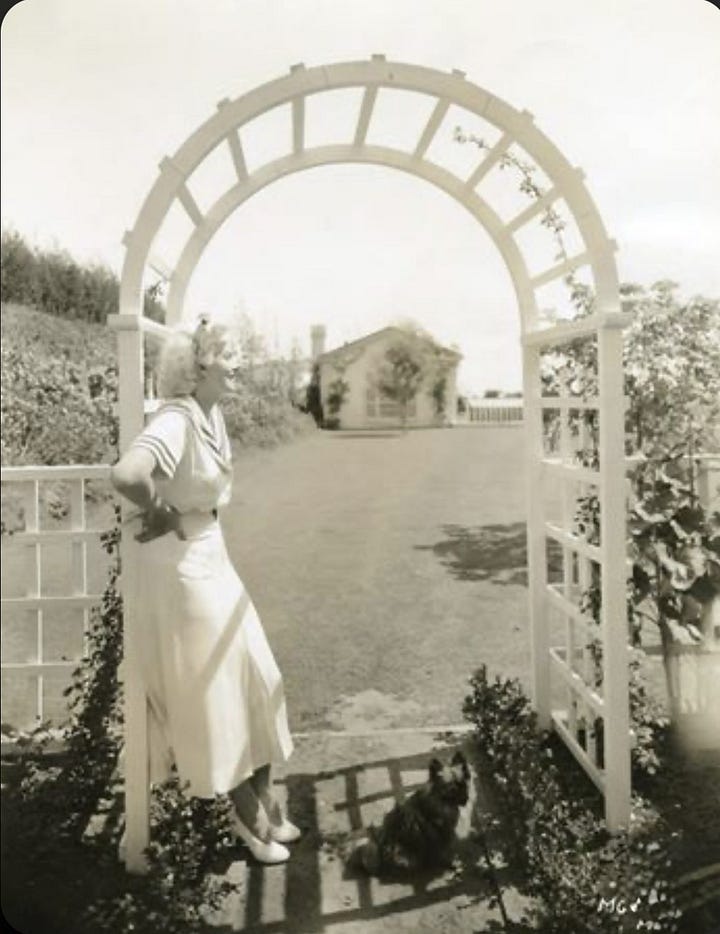
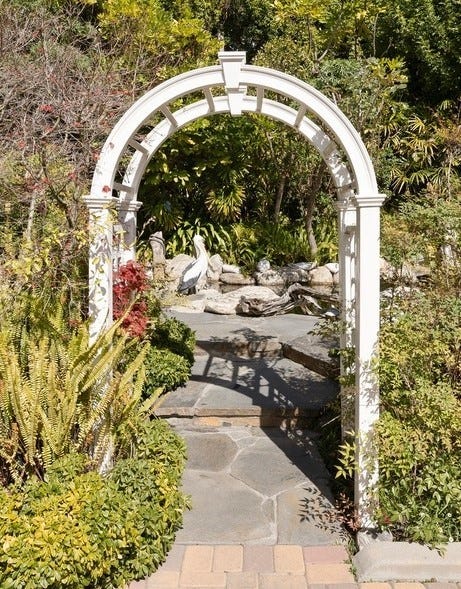
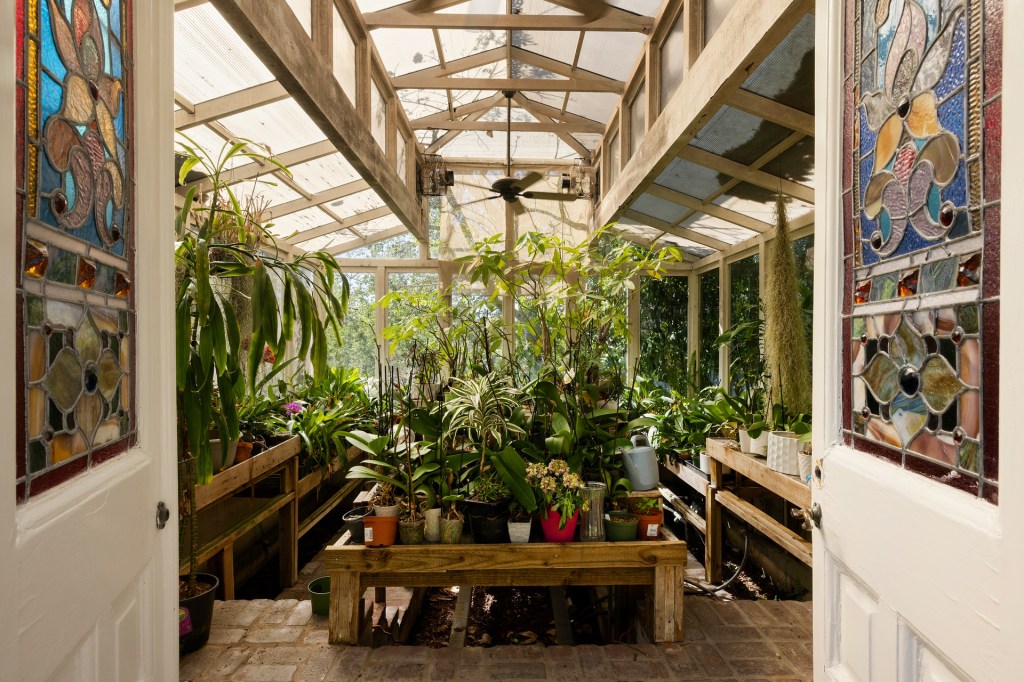
Below is a fuller photo gallery of Harlow’s hallowed home as it appears now, including the modern areas such as the wine cellar and remodeled downstairs living area. That gorgeous checkered-floor walk-in refrigerator, though, is all original. All photos are courtesy Ryan Lahiff.
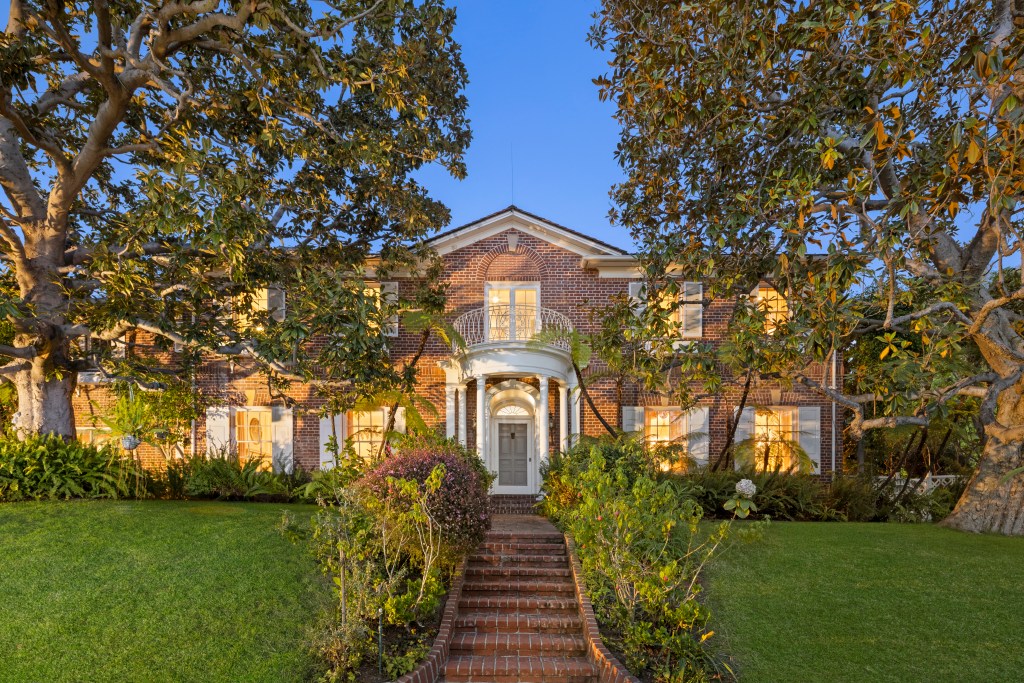
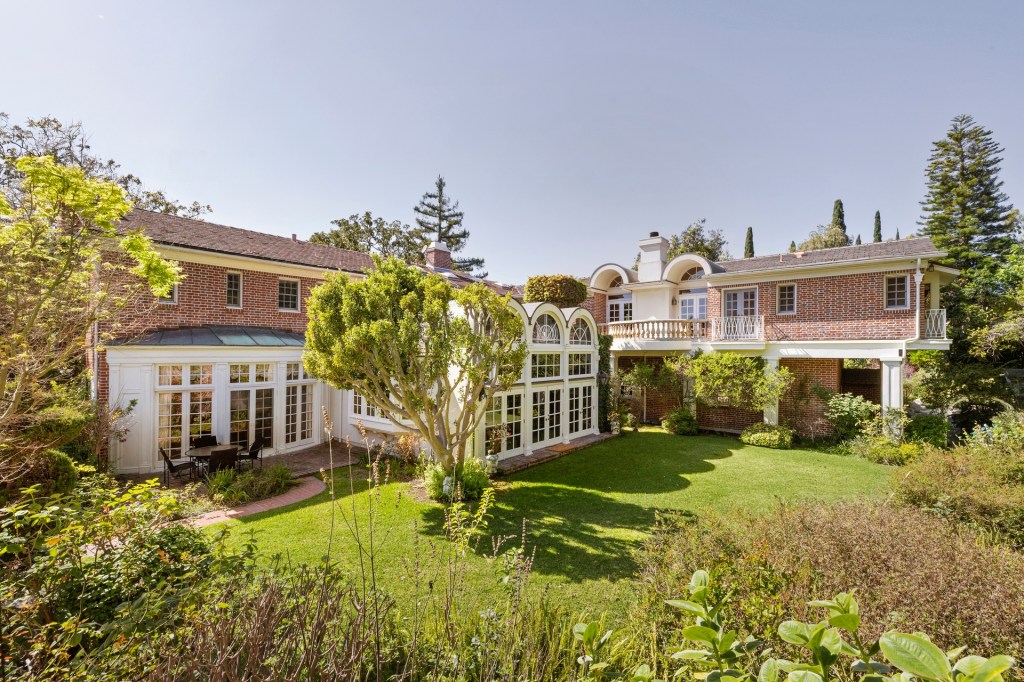
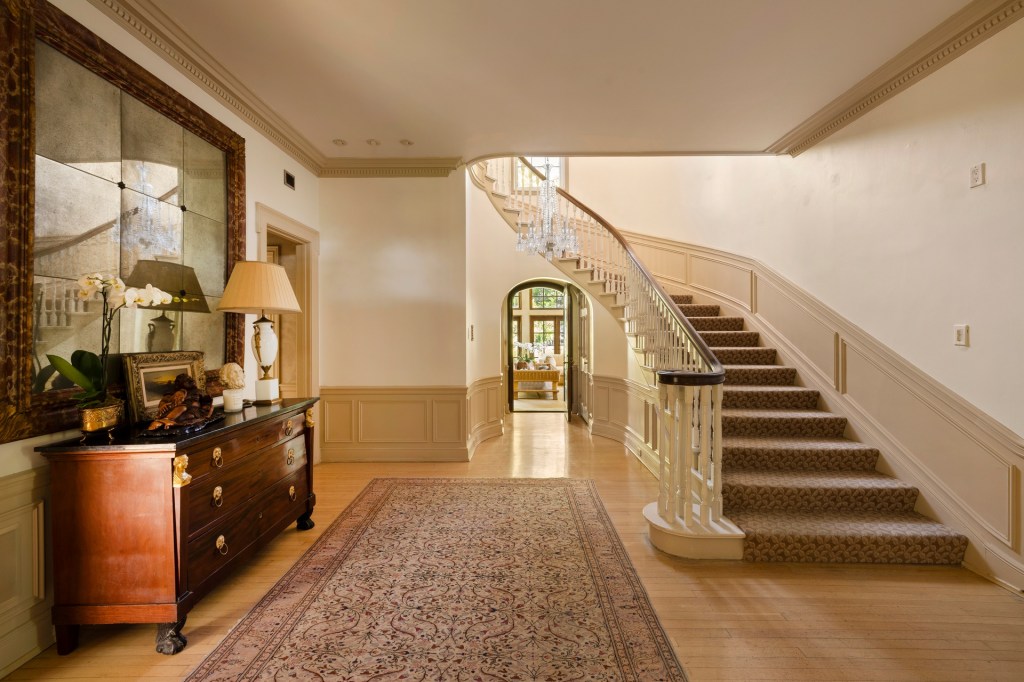
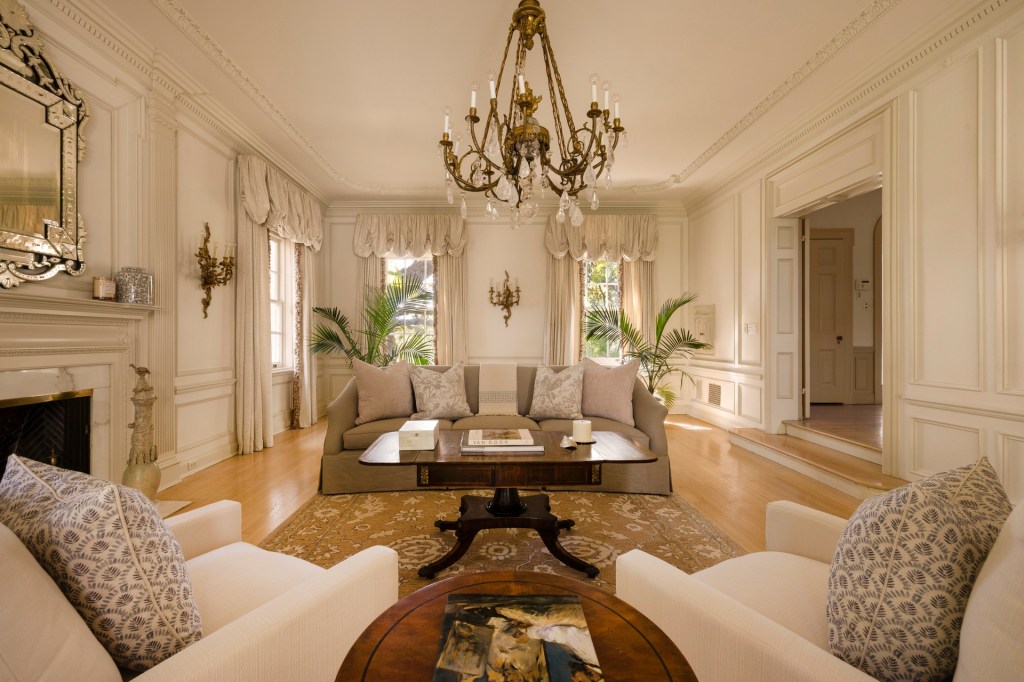
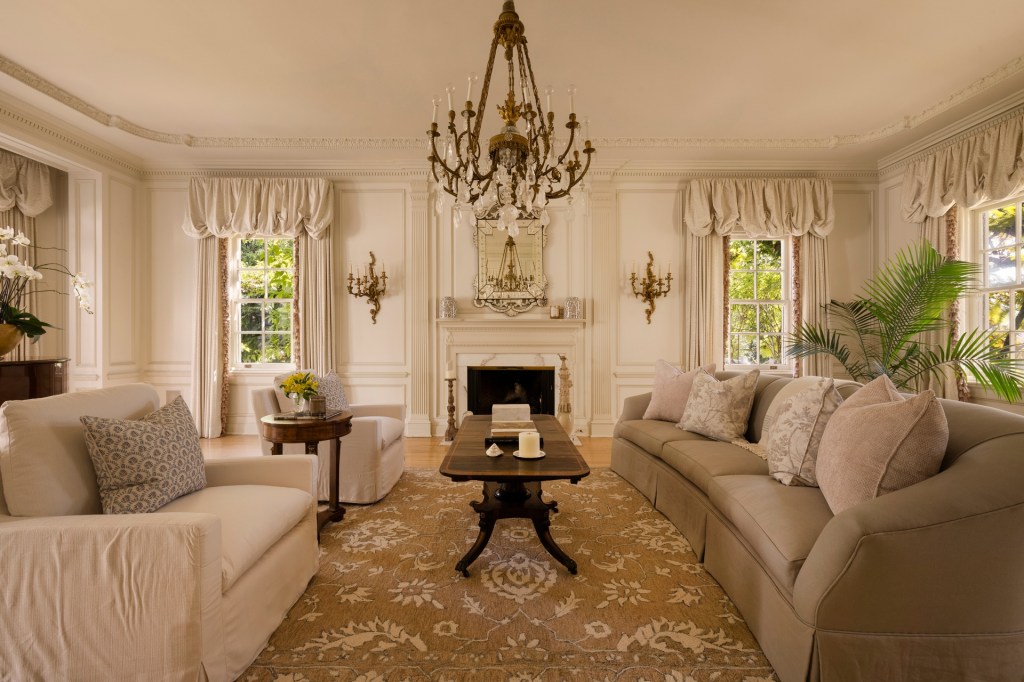
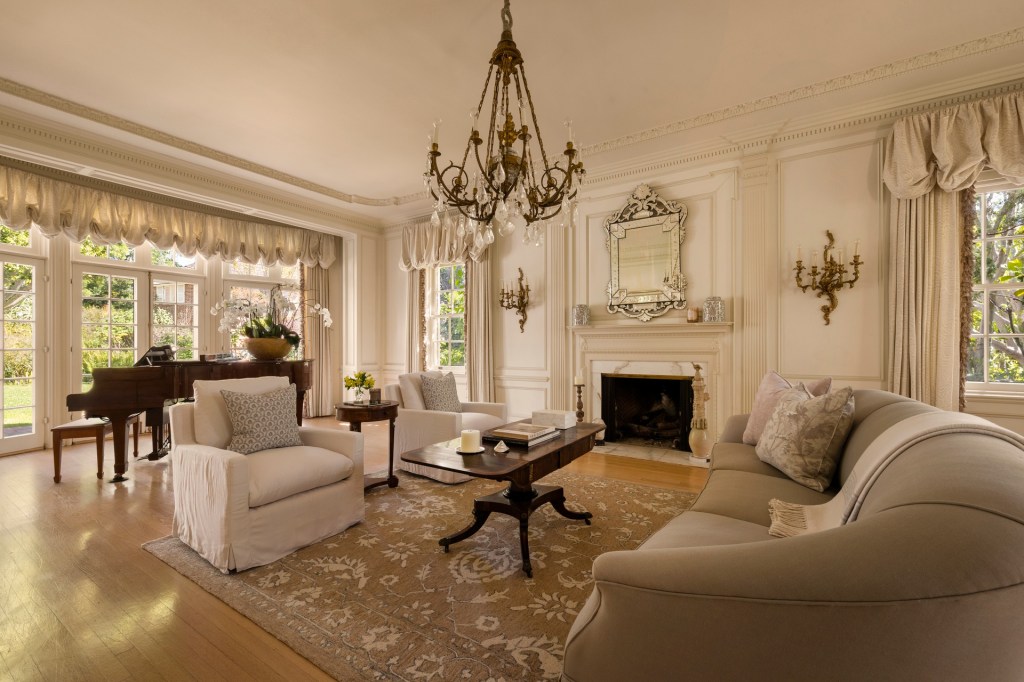
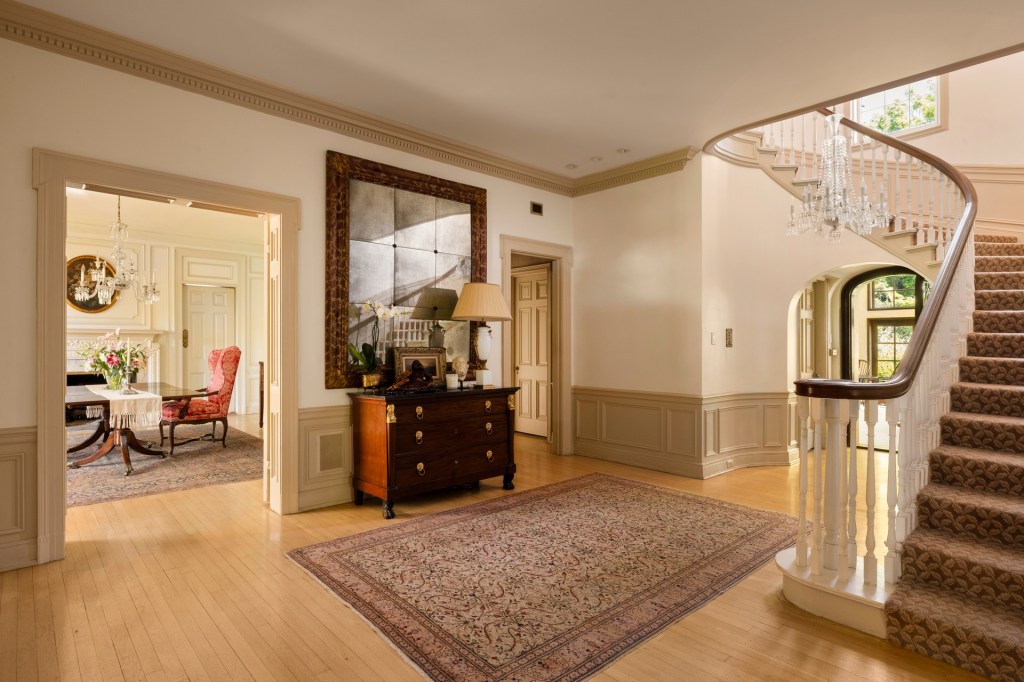
P.S. Many, many thanks to David Kramer and Dan Babic for opening their schedules to give me the opportunity to see Harlow’s house up close and personal, and for their formidable expertise. Theirs are fabulous hands to have this incomparable property rest in.
Sources and Notes:
1. Stenn, David. Bombshell: The Life and Death of Jean Harlow. Doubleday Books, pp. 157-158, 330.
2. Construction permit for 214 S. Beverly Glen Boulevard, filed 6 Sep. 1932, issued 7 Sep. 1932. Los Angeles Department of Building and Safety, https://ladbsdoc.lacity.org/. Accessed 12 Aug. 2026.
3. Construction permit for 214 S. Beverly Glen Boulevard, filed 6 Feb. 1933, issued 7 Feb. 1933. Los Angeles Department of Building and Safety, https://ladbsdoc.lacity.org/. Accessed 12 Aug. 2026.
4. “The Whitest House in the World is Jean Harlow’s”. Motion Picture, June 1934, pp. 48-49, 98.
5. Hampton, Jane. “To Be Happy—Give!” Photoplay, August 1933, pp. 72, 105.
6. Hall, Gladys. “If I Should Die Tomorrow”. Modern Screen, Mar 1935.
7. Biography for C.B. Clyne. Loftway Homes, https://loftwayhomes.com/architects/c-b-clyne. Note: The Loftway site lists the architect’s name as “Charles B. Clyne” with biographical dates of 1881-1940, and asserts he was a designer responsible for Cecil B. DeMille’s Laughlin Park complex. It cites Clyne’s profile among the LA Conservancy’s Architect Biographies as the source of its information. The Conservancy no longer lists a biography for Clyne, and the Loftway link for further information on him leads, erroneously, to a PCAD listing for Walter Gropius. As B. Cooper Corbett is the only known designer of the DeMille residence, and nothing on anyone named Clyne can be located by this researcher in relation to its construction, this claim cannot be substantiated or believed. This appears to be a simple case of mistaken identity, as Cecil Bruce Clyne is easily located in real estate news around Beverly Hills and Los Angeles throughout the 1910s to the 1930s.
8. 1924 voter registration for Cecil Clyne, Ancestry.com. California, U.S., Voter Registrations, 1900-1968 [database on-line]. Provo, UT, USA: Ancestry.com Operations Inc, 2017.
9. 1932 voter registration for Cecil Clyne, Ancestry.com. California, U.S., Voter Registrations, 1900-1968 [database on-line]. Provo, UT, USA: Ancestry.com Operations Inc, 2017.
10. “La Posada Guests.” Redlands Daily Facts, 31 May 1932, p. 4.
11. “Covina Grove Brings $25,000.” Los Angeles Times, 12 Nov. 1939, p. 74.
12. Interview with Ginger Rogers at the premiere of Harlow, May 14, 1965. Getty Images, https://www.gettyimages.com/detail/video/ginger-rogers-interview-talking-about-harlow-movie-news-footage/838439428. Accessed 25 Aug. 2026.

