A lot of us are quite familiar with Jean’s January 1937 visit to Washington, D.C. with Robert Taylor; the pair departed right after completing work on Personal Property. The costars attended President Roosevelt’s fourth annual “Birthday Ball”, having been personally invited.
The purpose of these Birthday Balls was purely charity; all money raised went directly to the president’s Georgia Warm Springs Foundation, which provided care and resources for polio victims. Warm Springs was founded in 1927. FDR soon found monetary difficulties in trying to maintain the organization himself. In 1934, the year after FDR was elected, a national committee was established to help sponsor fundraising events for Warm Springs; this led to nationwide galas in celebration of the president’s birthday. Cities all over the United States began holding yearly dances in local auditoriums for FDR’s special day, January 30. This served a dual purpose; patriotism, and raising money for a good cause. Although the Birthday Balls obviously stopped after FDR’s death in 1945, his legacy was written in stone. Later incarnations of the Warm Springs Foundation eventually led to what is currently the March of Dimes.
Harlow’s well known 1937 Birthday Ball experience arguably wasn’t very fun. Her schedule included a whopping two dozen personal appearances in just under two days. She had caught the flu during her trip and was exhausted from completing final takes on Personal Property; sadly, as we know, her health would never return.
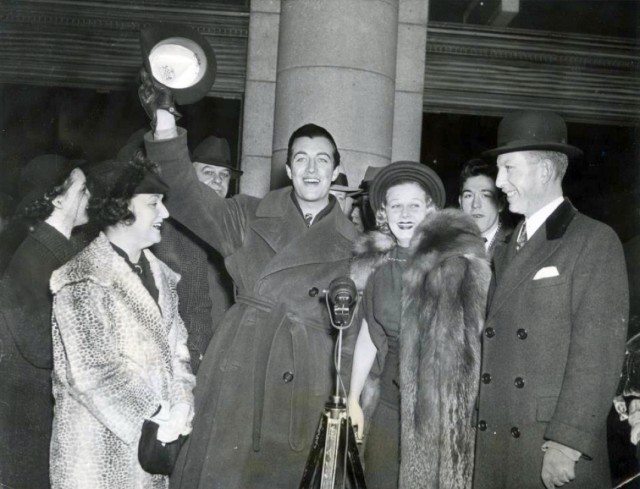
This experience has been pretty thoroughly documented, and hailed as an exciting and pivotal moment in Jean’s career. However, this wasn’t Jean’s first rodeo; her first in the Capitol, but Jean already had ample experience with FDR’s nationwide birthday bashes. She was there for the very first one.
In January 1934, FDR was about to turn fifty two. The eve of his first Birthday Ball was rapidly approaching. Cities across the nation that planned on participating in the festivities were clamoring for entertainment; approximately 4,376 of them. Stars of both film and radio mediums were invited to bolster numerous celebrations up and down the coast of California. One of these cities was Oakland, which planned a huge party in their Municipal Auditorium (the modern day Kaiser Convention Center). In attendance would be a handful of local radio personalities. A professional airshow consisting of Naval Reserve pilots was to do flying stunts over the auditorium; however, this wasn’t enough. There needed to be a recognizable face to represent the ball and make the event a success.
George W. Baker, Jr., chairman of arrangements for the Oakland Ball, had an idea. He’d invite Jean Harlow to come up, last minute, to lead the revue. It might not have worked with other celebrities, but Harlow wasn’t other celebrities.
On January 27, 1934, three days before the Ball, Baker received a telegram from Jean Harlow telling him she’d be there; and she had been in court the very same day. Just one day before, on January 26, a claim was filed by a Sacramento attorney on behalf of the deceased Dorothy Millette Bern, Paul’s estranged wife. The reason: to allocate half of Bern’s estate, of which Jean was executor, to numerous far-flung Bern relatives.
This threat didn’t hold much water and never happened, though it would be over a month of back-to-back court appearances. Imagine being Jean on this very day. January 26, 1934 also happened to be the day she formally ended her forced suspension, and returned to work at MGM to fulfill the remainder of her contract. Two days before that, she modeled for Clarence Sinclair Bull in her first portrait session of the year. It’s quite a mirror to the plot of Bombshell (1933). You have a stepdad you hate in one corner, pulling you out of your life’s work to shake more money out of you, until you finally work up the gumption to defy him; as soon as you do, here comes an attorney, trying to shake half of your dead husband’s estate from your pockets. She must have had some insane self-control.
In spite of all this frenzy in Jean’s personal life, she gladly accepted George W. Baker’s invitation. She’d leave for Oakland first thing in the morning on the day of the ball, January 30, taking a Southern Pacific train directly from Hollywood. From there, she’d be escorted to the Hotel Oakland, where she’d stay during her short visit. Locals were ecstatic; Harlow in person!
Jean officially arrived at Oakland’s South Pacific train station at First and Broadway on the morning of January 30, 1934. Of course, her parents were not far behind.
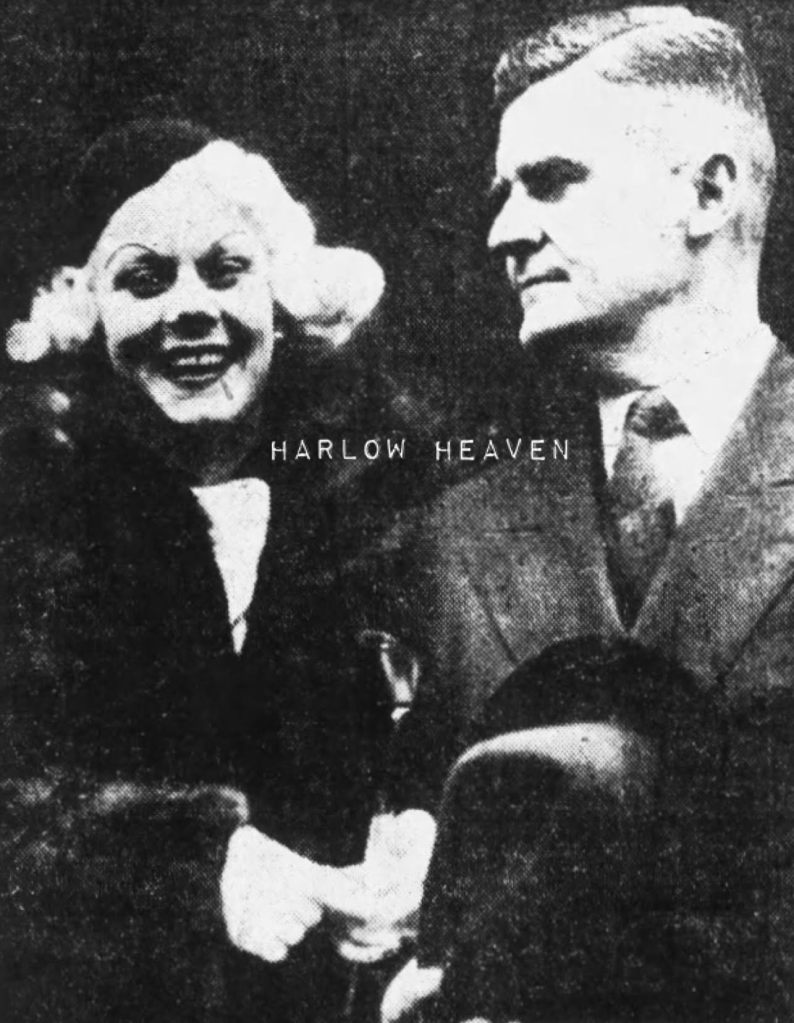
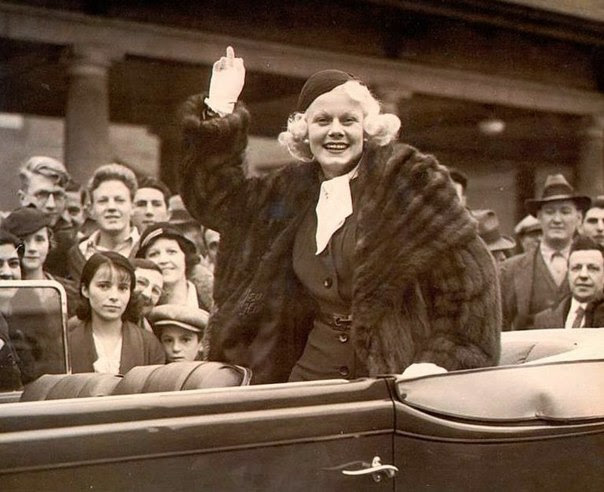
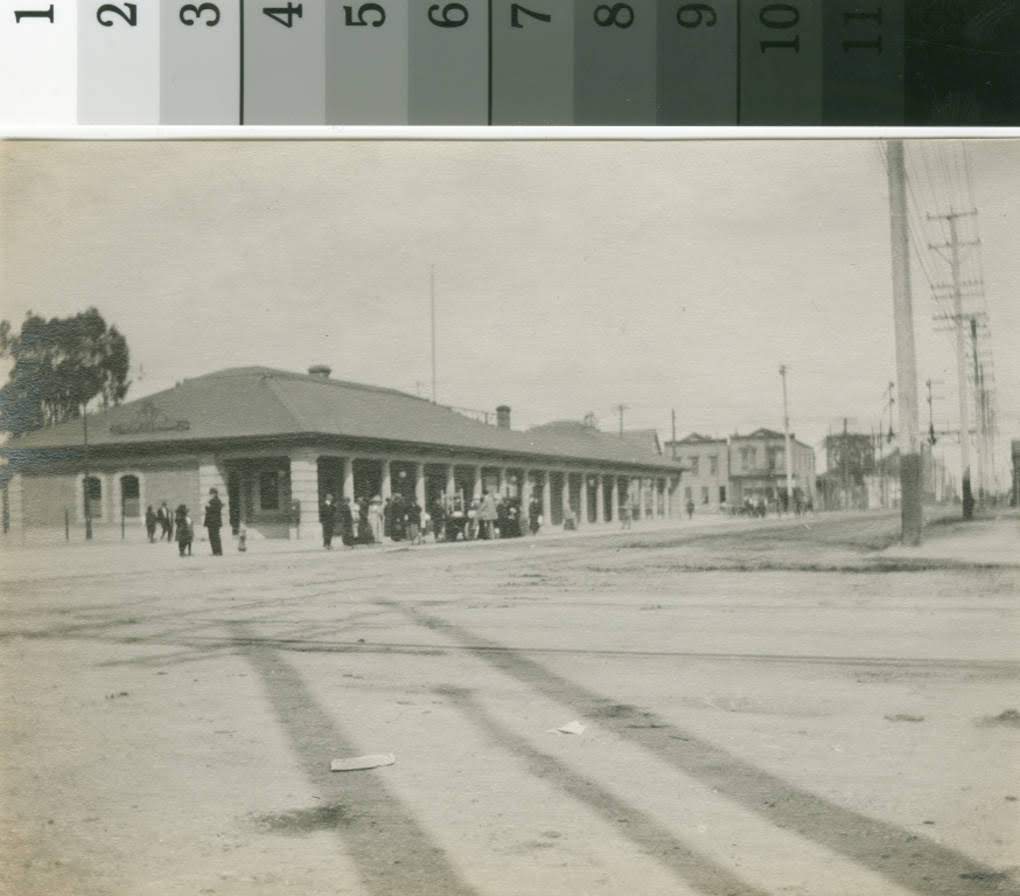
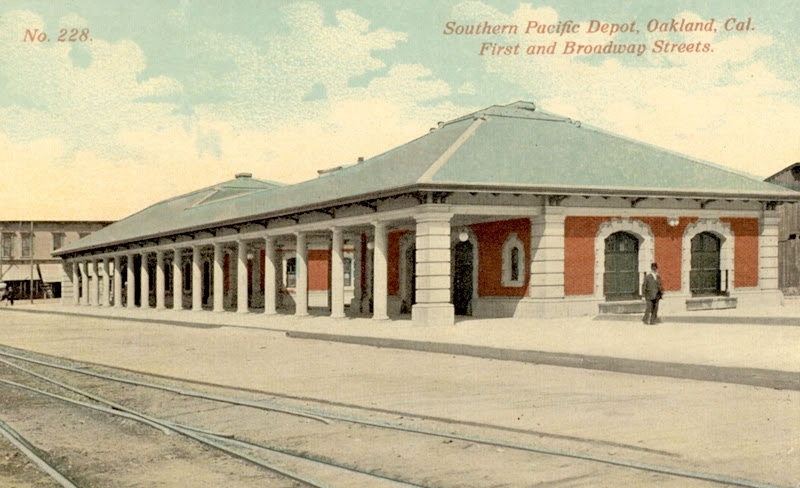
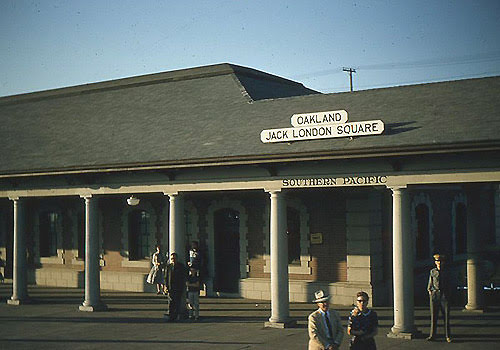
Upon her arrival at City Hall, Jean was presented with a key to the city by Mayor William McCracken. Just a few hours before the ball was slated to begin, she was fêted with a dinner at Oakland’s Claremont Country Club.
The Oakland Tribune, January 30, 1934
Eastbay residents will take part tonight in the “world’s biggest birthday party”.
In honor of President Roosevelt’s natal day, thousands will gather at the Oakland Municipal Auditorium for a gala public ball and entertaiment — and at the same time multitudes in some 6000 other cities will celebrate similarly.
Citizens of Oakland, Berkeley, Piedmont, Emeryville and San Leandro will join in the auditorium party; Alameda will hold a similar affair in the Neptune ballroom, and other Eastbay cities will hold separate celebrations.
President Roosevelt will send his fifty-second birthday message to the Auditorium party, and to all the others, through a special radio setup. Proceeds of the parties will go to a project backed by the President, the Warm Springs foundation for the relief of those suffering from infantile paralysis.
MISS HARLOW ARRIVES FOR CELEBRATION
Jean Harlow, “platinum blonde” of the screen, who will be the headline attraction of the Auditorium celebration, arrived here from Hollywood this morning, “eager to help all of you at your party”. She came here especially to take part in a stage revue which will be an entertainment feature of the birthday ball.
The Auditorium party, which those in charge promise will be the biggest and most spectacular in the state, also will have as a headline act an aerial raid and night “attack” by a hell diver squadron of United States navy planes from the Oakland airport. Lieutenant-Commander Francis B. Connell will lead the planes in breath-taking stunts over the Auditorium.
“Defending” the building from the mock raid will be a battery of anti-aircraft guns from Fort Winfield Scott, backed by powerful searchlights. The display will give Eastbay residents their first opportunity to see how attacking planes are “spotted” at night and driven away.
BALL SCHEDULED TO START AT 8:00 P.M.
The ball will start promptly at 8 o’clock, following the mock attack from the sky. Then will come a procession of stars of the screen and radio, led by Miss Harlow.
The blonde star was welcomed to Oakland on her arrival at the First Street and Broadway station of the Southern Pacific this morning by a crowd of admirers and a reception committee headed by George W. Baker, Jr. of Piedmont, general chairman of the birthday ball. She was accompanied by her stepfather and mother, Mr. and Mrs. Moreno [sic] Bello.
The reception committee which greeted the star included: William J. Hamilton, chairman of the Alameda County Board of Supervisors; John Hassler, Oakland City Manager; Mayor Edward N. Ament of Berkeley; Richard A. Carrington Jr., publisher of the Oakland Post-Inquirer; Joseph R. Knowland, publisher of the Oakland Tribune, and John Bonner, president of the Oakland Chamber of Commerce.
WELCOMED BY MAYOR
Miss Harlow was escorted from the train to Oakland City Hall, where she was met on the steps by Mayor William H. McCracken and welcomed. The Mayor presented Miss Harlow with a large bouquet of flowers and gave her the traditional keys to the city.
There will be more than 30 radio artists at the ball, from the National Broadcasting Company studios and the Columbia, Don Lee network, who will take part in the celebration. Artists from KLX, KTAB, KROW and KLS also will appear.
Dance music for the big party will be provided by Lee Searight and his 20-piece orchestra.
ADDRESS TO BE HEARD
President Roosevelt’s national radio address will be received in the Auditorium and amplified at 8:30 P.M. The Drums Corp from Oakland Post No. 5 and the Bugle Corps from Berkeley Post No. 7 will stage a patriotic and military flag pageant preceding the President’s address. And when the word comes over the air that the President is about to speak and acknowledge the many parties being held in his honor throughout the nation, all lights in the Auditorium will be darkened and a spotlight will be flashed on a large portrait of the President. At the conclusion of President Roosevelt’s address, Searight’s Orchestra will strike up a dance tune and the big party will go into full swing.
WILL PRESENT STARS
Ernie Smith, radio announcer, will be master of ceremonies and will present Jean Harlow and all of the radio stars to the audience. Tommie Harris of the National Broadcasting Company will direct the program. The entire feature act, “Hodge Podge Lodge”, from the Don Lee Columbia studios will be presented as one of the special attractions. Edna O’Keefe, Dennison Parker, Helene Hughes, Jeane Ellington, Ronald Graham, Arnold Maguire, Dick Aurandt, Bob Bence, Lorna Martin, Mavis Ludlowe and Pauline Dugart will appear in person in this comedy.
Stars from the National Broadcasting Company’s studios, who will appear in person to entertain the crowds, are the Coquettes, Tommie Harris and John and Ned, harmony duo.
CITIZENS WELCOMED
The ball will be an informal affair. This was emphasized again today by Chairman Baker. Every citizen of the entire community is invited and urged to attend. At 9 P.M. Chairman Baker will send a telegram to President Roosevelt, wishing him a happy birthday for the citizens of the Eastbay cities and telling him how many persons are at his birthday party here.”
Well, was that enough detail for you on how Jean’s night went? Are your eyes burning yet? Have you memorized the list of entertainers? Let’s go back to Jean receiving the keys to the city. Columnist Nancy Barr Mavity of the Oakland Tribune interviewed Jean shortly after receiving the prestigious gift and provided us with some choice, very Jean quotes, for lack of a better word.
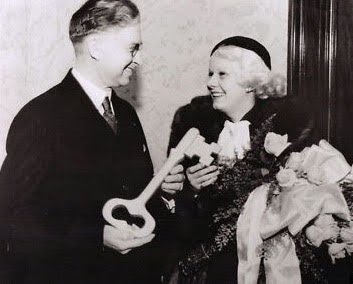
The funniest part of this interview is when Jean reveals this is, in fact, her seventeenth city key. When asked if she kept them, she laughs and nods, noting that she’s yet to find a keyhole that will fit them. That statement by itself reminds me of why I love this woman.
Jean Gets 17th Key to the City
by Nancy Barr Mavity
Jean Harlow, the platinum-haired siren of the screen, is just a hard working girl who went into pictures on a bet.
This was her smiling revelation today when she arrived in Oakland to be the belle of President Roosevelt birthday ball at the Auditorium tonight.
Although she arrived before breakfast, and thought it was a “bit early to smile”, the smile was there to greet the autograph seekers and the police motorcycle patrol thronging at the station to escort her to the City Hall to receive the key to the city of Oakland.
Incidentally, she revealed later, it is her seventeenth city key and she keeps them all.
“Of course I do,” she said, “it’s fun, though I’ve never found any keyholes big enough to fit them.”
Jean Harlow is one screen star who admits the rights of the public, even though that public at times interferes with personal affairs of its idols.
“If you’re interested or in love, it’s the kind of thing you’d like to have belong to you but you can’t keep anything secret in Hollywood,” she said, “the gossip columns had myself and my husband engaged before we’d got around to think of it ourselves. It was a good guess, as it turned out maybe a case of forcible suggestion, though I don’t think so.”
Miss Harlow admits that she’s “scared half out of her wits” when she sees a preview of one of her own pictures for fear it will not be liked. She also prefers comedy to “siren” parts because she believes it is harder to make people laugh than to make them feel emotional.
A very serious young person she is when she begins to talk about affairs of the pictures in which she has won to stardom.
“I got my start on a bet,” she said, “when a girl whom I was entertaining at luncheon wagered $200 I wouldn’t last a single day in pictures. I won the bet, but I’ve had to work a lot in consequence.”
“The NRA code does not affect the key men or the stars in the industry. We still work 24 hours a day if they want us to. And sometimes they do.”
Personality counts far more than beauty in the qualifications for stardom, says Miss Harlow, and there is no telling just what sort of personality will “go over”.
“You can’t talk of Mae West as a dominating influence, and forget that Janet Gaynor is a dominating influence of an entirely different type,” she said, “it’s all an individual problem and there is room for many different individualities to suit different publics. We belong to the public, and giving them what they want is our job.”
“Critics really do not count so much. We must try to please the masses and give them what they want to see. That’s why no actress is ever bored by her ‘fans’. It doesn’t go stale to find that people like you. The people who see the pictures, after all, are the ones that count.”
Ambition, natural talent, and personality are Jean Harlow’s three requirements for success as a motion picture actress with the important rider that the day of the “beautiful but dumb” has passed.
As for the hours when she is not working in the studio, she admits a consuming ambition for success which has not been notably achieved — to “break a hundred” on the golf course.
What a mind, and what wisdom beyond the twenty-two years she had here.
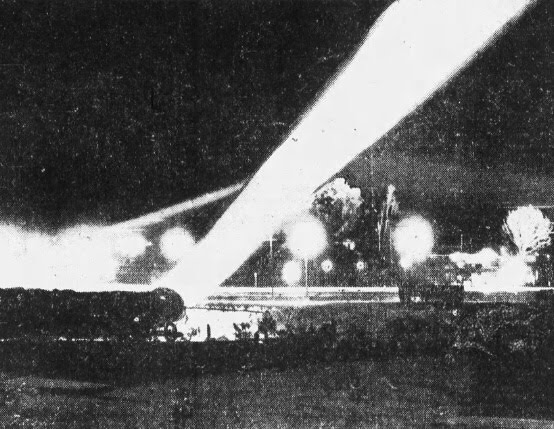
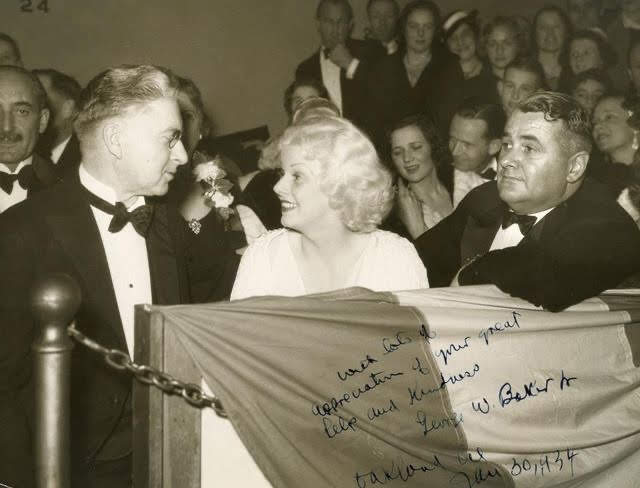
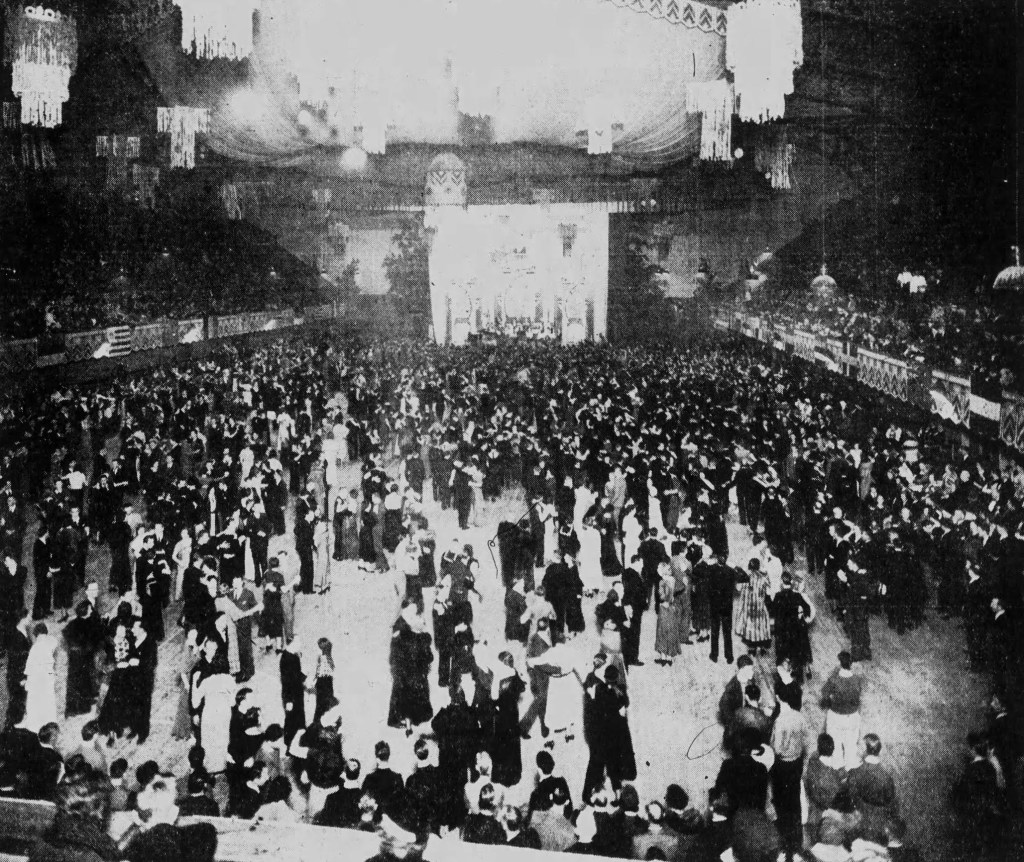
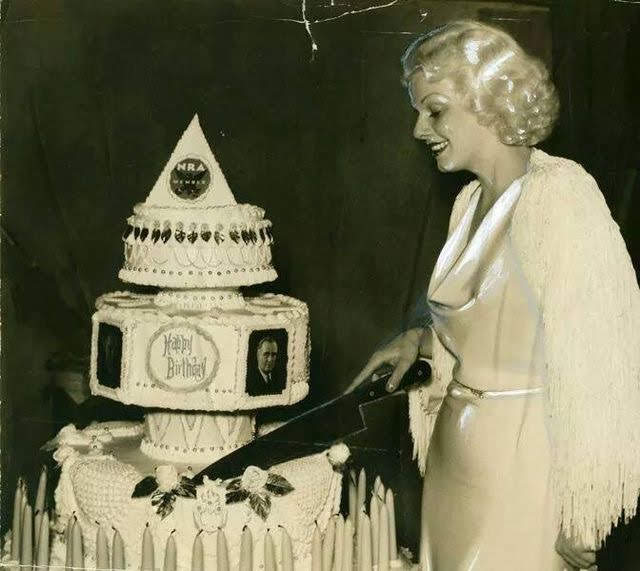
Ten thousand is probably an exaggeration, as the paper itself admits the definite numbers wouldn’t be ready until the following day. Nonetheless, thousands of people did attend, and George W. Baker wrote to the President the following day informing him of his success, and to expect a big check on the way.
This seems like a huge event by itself, but then you remember this was only one of thousands of cities across the country that celebrated that night. I’m not sure the exact day Jean returned home, but we know for sure it was a short vacation; she had been settled back at home for awhile by February 4, when she officially moves her belongings and stops living with third husband Hal Rosson. Four days later, she would appear in the same dress she wore to Oakland at a party for the Pasadena Police Department. Busy, busy, busy, constantly working — a trait that defined Jean’s personality quite well. Reminds me of this 1930 quote from Variety:
“I want a mode of expression. I have a highly nervous temperament. The only way I can lose myself, take my mind off myself, off everything, is to have one. I am never really happy except when I am working. Of course I think all of us, unless we have something to do, grow a bit mad.”
No doubt that Jean was experiencing the same thought process during this difficult period in her personal and professional lives. But as usual, she didn’t sulk under the weight of her woes and kept on being the same friendly, generous presence everyone knew her to be; one can only wonder the memories Oakland citizens had of her after the night of January 30, 1934. Certainly, there had to be some fond ones.


Thank you for all the many pictures, and personal articles, thoughts & sayings, I’ve never seen before, all very exciting!!
LikeLike
Thanks for reading. You’re very welcome!
LikeLike