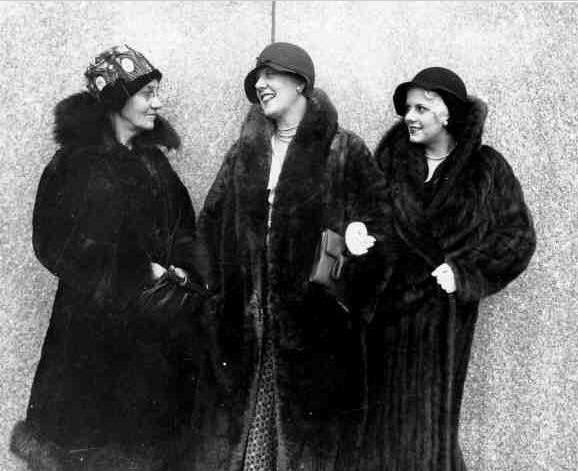
Found a new-to-me-and-probably-to-you picture of Jean Harlow and her mother, from the Kansas City Times, August 1930:
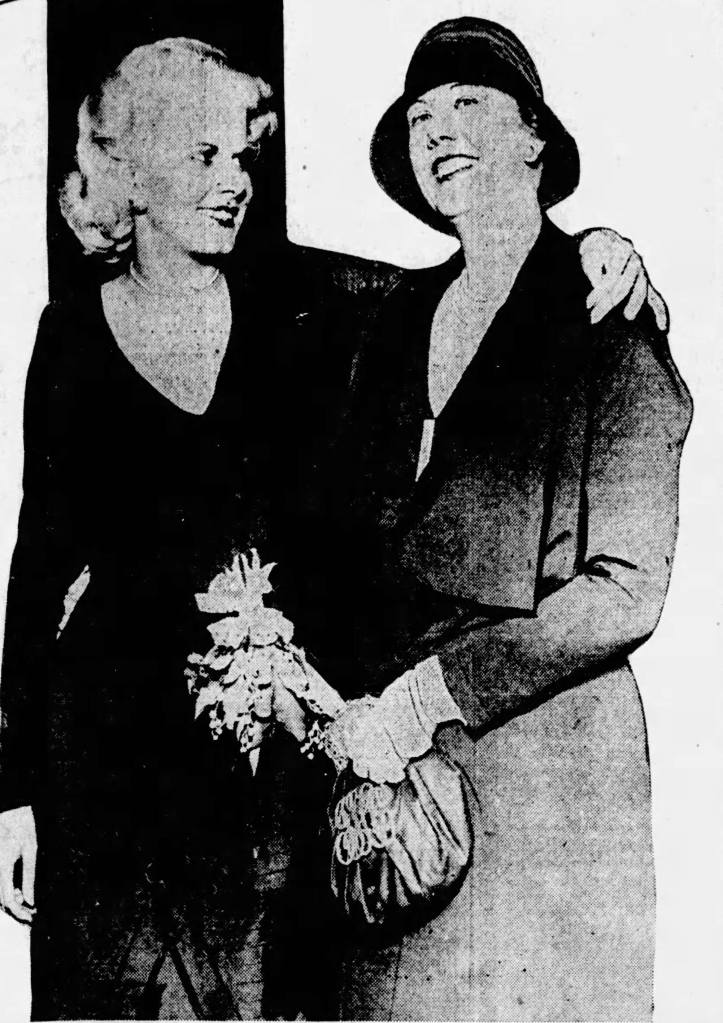
The two were in town on August 14, on their way to New York on the Santa Fe Chief for the regional premiere of Hell’s Angels (1930). The pair stopped off at Union Station for a short hometown visit with Harlow’s grandparents, before setting off for New York again and arriving the next day, August 15. This visit reminds me of another one to Kansas City Harlow made the next year in December, 1931. I posted about it on Twitter:
https://platform.twitter.com/widgets.jsToday in Harlow History, December 8, 1931: 89 years ago today, Jean Harlow made the rounds in her hometown, Kansas City, Missouri (accompanied by mother and stepfather) at the very beginning of her East Coast personal appearance tour. Shown here at the Hotel Baltimore: pic.twitter.com/ANP0hXS8Hu
— Harlow Heaven (@harlowheaven) December 9, 2020
Back to August, 1930. The article that accompanied this portrait is pretty humorous, at least to me; it makes mention of Howard Hughes and Billie Dove also making an appearance, but being utterly unrecognized in favor of Harlow:
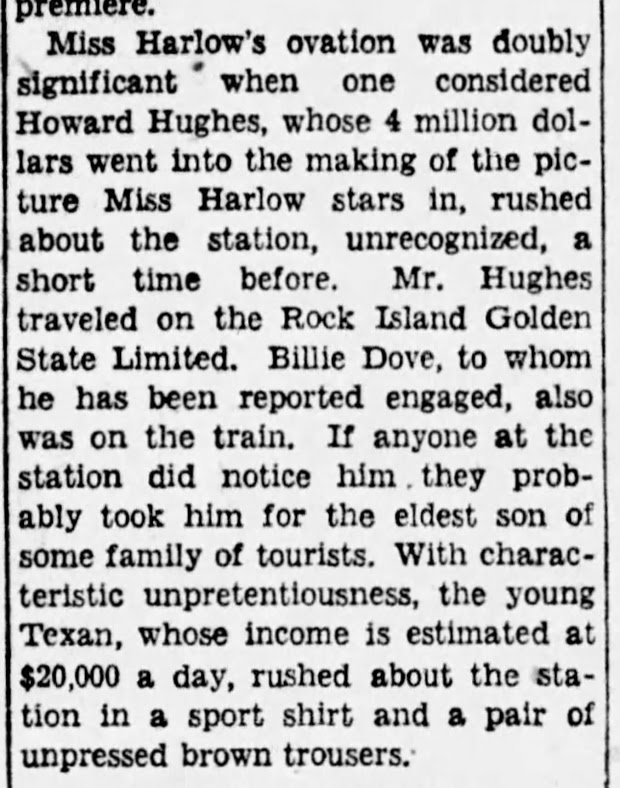
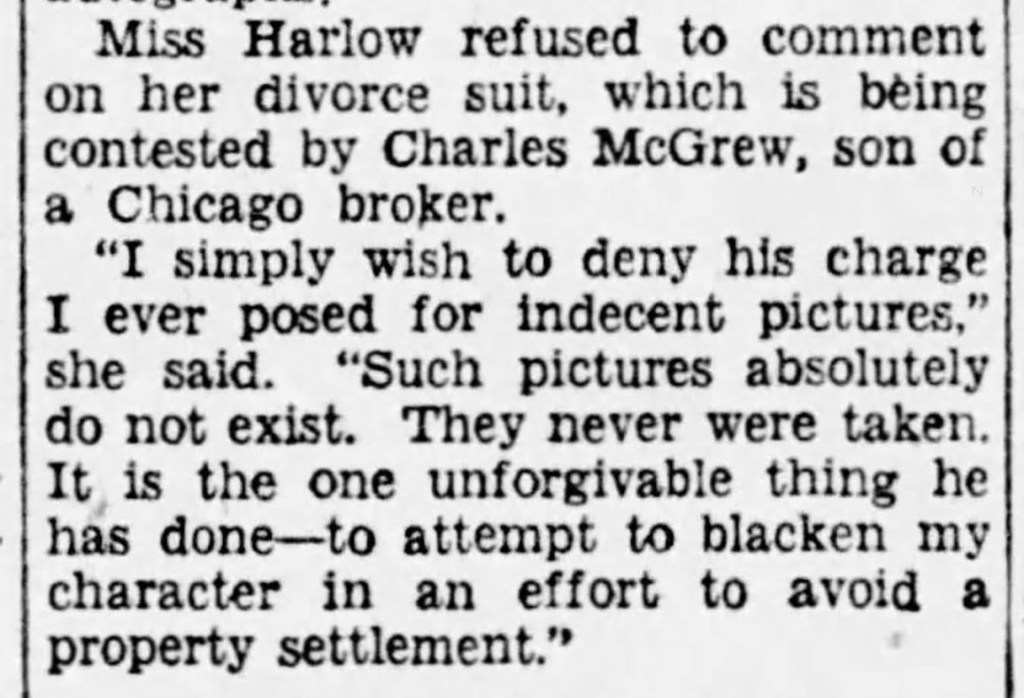
The combination of the writer calling Hughes “unpretentious” and likening him to a tourist was enough to get a laugh out of me. Also notable about the article is Harlow’s resolute denial that she had never posed for an “indecent picture”, which was mentioned by soon-to-be-ex husband Charles McGrew II in their divorce suit, filed late the month before in July 1930.
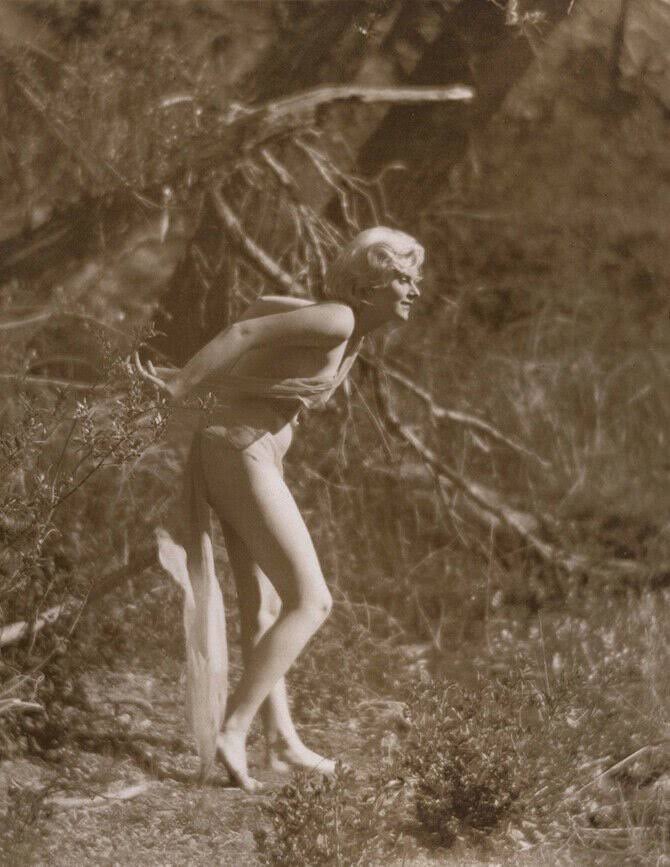
As you know, such portraits (the infamous Griffith Park sitting by Edwin Bower Hesser, 1929) do exist. The fact that they were simple, artful studies of the female form (as was Hesser’s specialty) meant nothing to McGrew, and potentially legions of captivated moviegoers who had been properly fooled by Harlow’s onscreen persona. It was a valiant effort on Harlow’s part to deny them, given a very warranted fear that it would do further damage to her career, but as time would later tell, it wouldn’t. They are now some of the most talked about pictures of Harlow, and among the most famous in Edwin Bower Hesser’s portfolio.
Adding to the levity of the article is the presence of Maurice Chevalier, who was on the same train on his way to New York in order to sail for Paris. He, too, was interviewed by the Kansas City Times.
His presence would cause a bit of trouble for Harlow once the Chief left for Chicago. Photographers pressured the two stars to pose together, but Harlow refused, citing her recent divorce scandal and a fear that the portrait would be misattributed to a nonexistent affair. “My reputation!” Harlow exclaimed. The issue was remedied by Harlow’s mother, who stood in between her daughter and Chevalier.
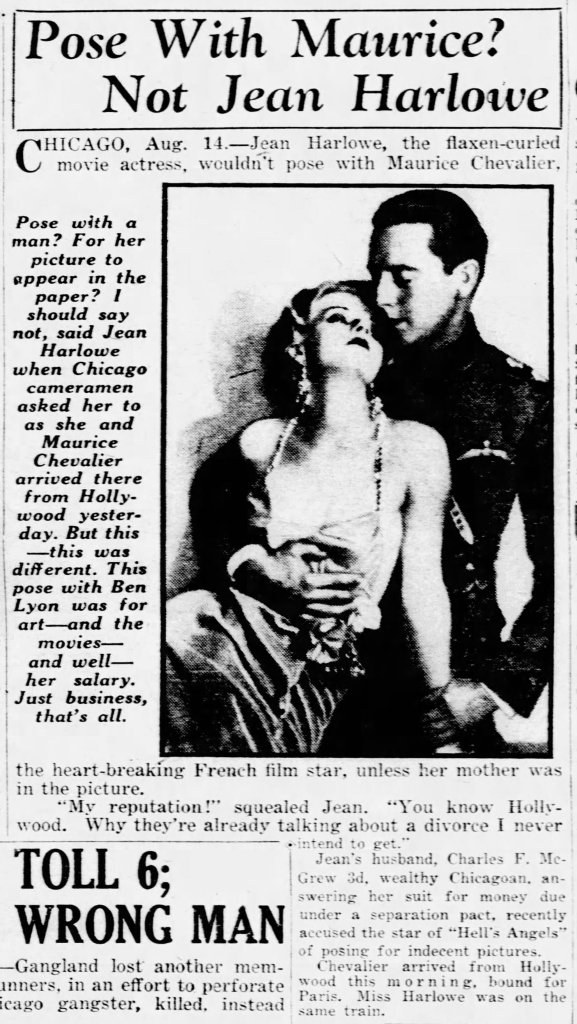
This item, which unfortunately butchered her name as “Harlowe”, appeared in the Daily News the same day she arrived in New York. Here’s the portrait in question:
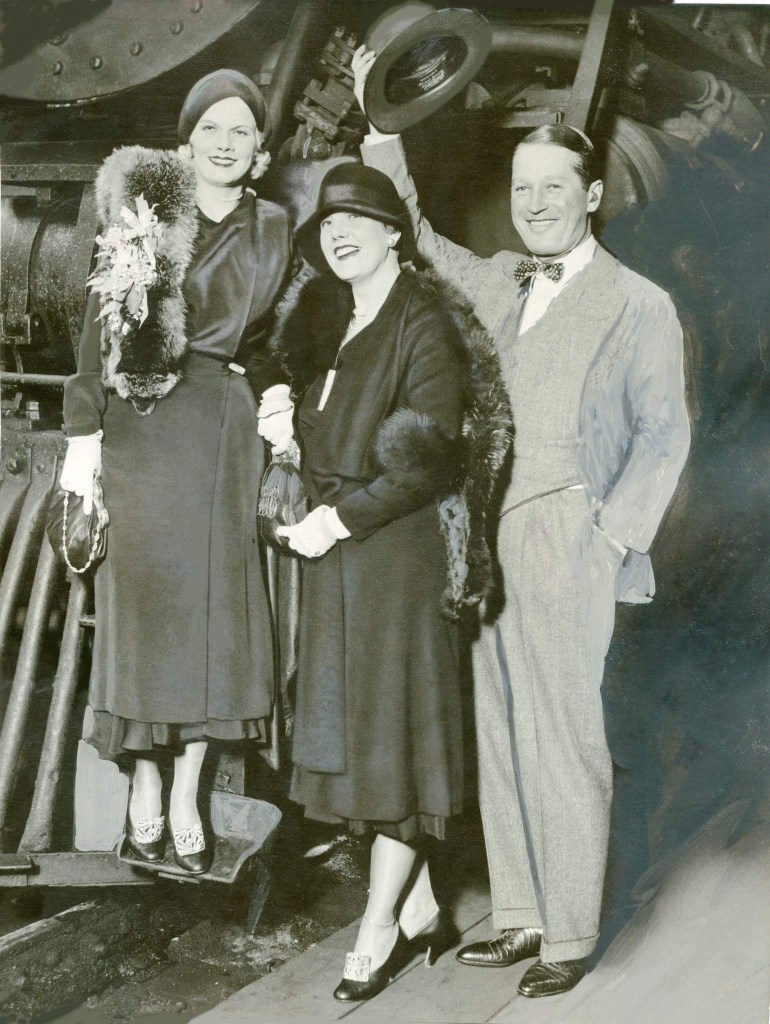
Here’s Harlow as she appeared the morning she arrived in New York, which was again accompanied by a press snipe detailing her denial of divorce suit and indecent pictures…and again, misspelling her surname (and referring to McGrew II as “the third”):
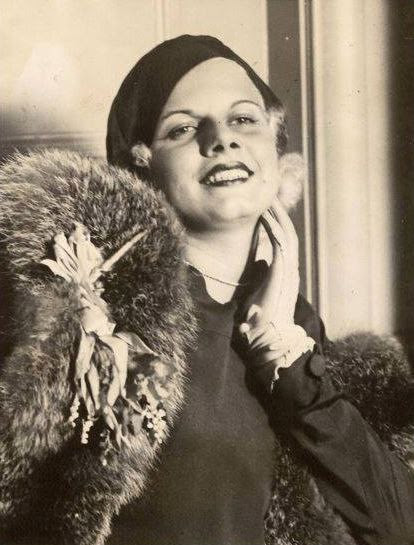
As stated by the snipe, Harlow attended the film’s premiere that very night, which was so momentous it had a dual showing at both the Criterion (also known as the Olympia) and Gaiety Theatres, both on Broadway. She would make personal appearances at each showing, something she hated, and Hughes would subject her to them constantly until her signing with Metro-Goldwyn-Mayer in spring 1932.
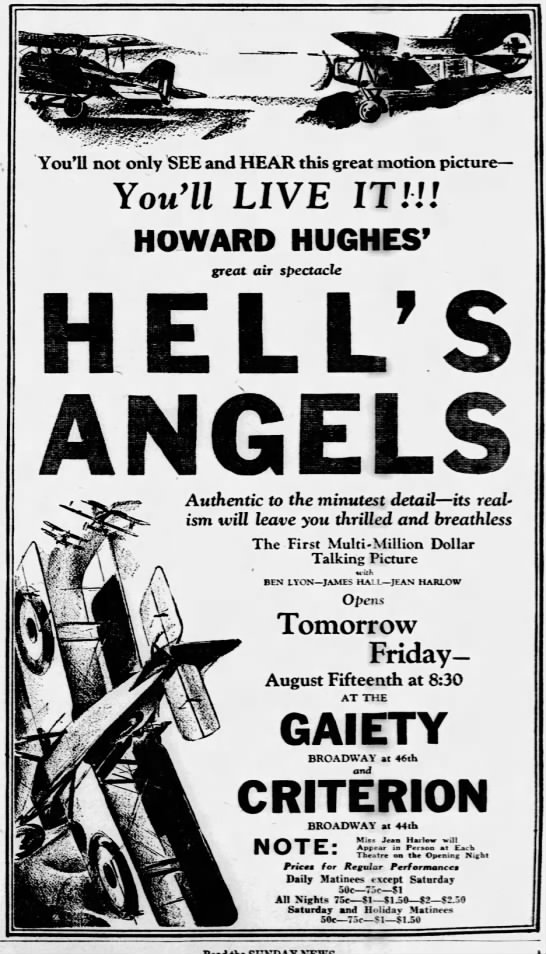
Following this: Hughes not having much else in mind for his bright young star, and devoid of any new picture ideas using her, continued to send Harlow around the country on Hell’s Angels promotional duties; acting as nothing much more than a walking, talking billboard. Harlow would return to Kansas City for more personal appearances that same November, just after being loaned out to MGM for a role in The Secret Six (1931).
On a closing note, here’s how Jean looked upon her (second) arrival to Kansas City on November 20, 1930:
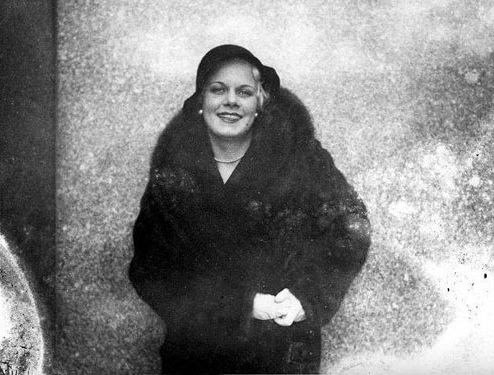
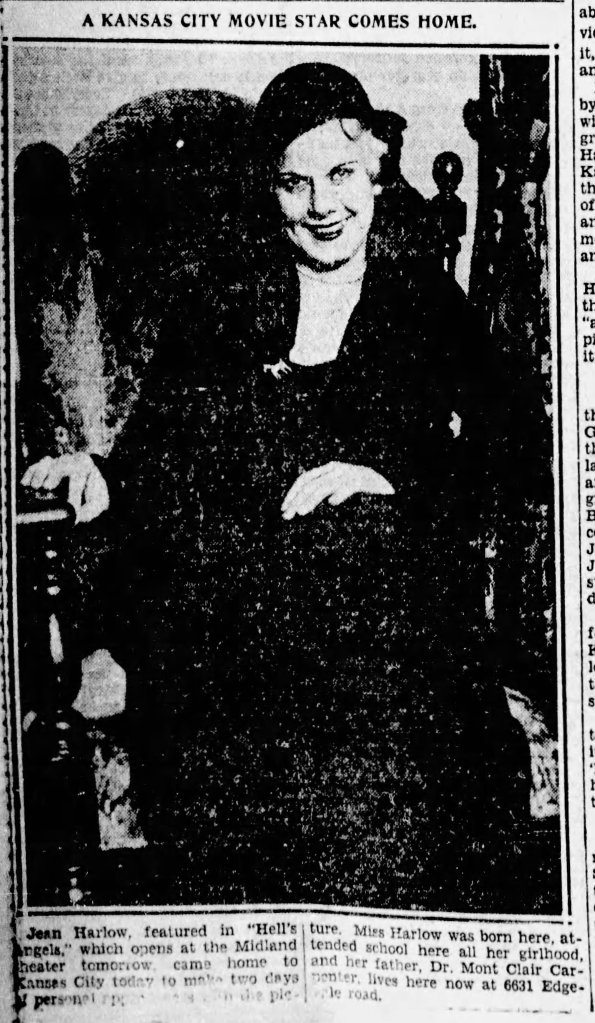
In the midst of a whirlwind of unfavorable publicity, this hometown paper was more sympathetic. From the November 20 article:
“Miss Harlow has that greatest and most admirable of traits that you like to find, and so seldom do, in either movie or stage actresses–an absolute lack of ostentation or a high-hat air. Her handshake is the firm, friendly one of a boy, her laugh infectious and not forced. She knows when a joke is on herself […] That’s one of the reasons that the average person who meets Jean Harlow falls. It’s a cinch that Midland audiences will tomorrow and Saturday. She has what it takes–the art of being a good fellow. And that has to be born in you, not cultivated.”

